Category: media & arts – Page 156
The Art of Flying in the Movies — By A. O. Scott | The New York Times Magazine
“What if we could counterfeit reality so completely that the representation would partake of the essence of the original, closing the gap between the world and our imagination of it? What if we could fly?”
CGI VFX Shorts HD: “Story of R32”
Check out this short film Directed by the talented Vladimir Vlasenko, about a lonely robot who just tries to attract attention to himself. For more information, please see the details and links below:
Director & CG — Vladimir Vlasenko.
Director of photography — Igor Guryev.
Sound & music — Nikita Troepolskiy, Igor Smirnov, Danil Varakuta.
Rotoskopy — Maxim Artemenko.
Actors — Nadya Vecherya, Nastya Borsh, Alexandr Sheweiko, Alexandr Koval.
Software used 3dsmax and After Effects.
Watch the making of here: https://www.youtube.com/watch?v=YPzzxhfzsE4
Website — http://vk.com/vladimir_vlasenko
Facebook — https://www.facebook.com/vlasenkovladimir
Behance — https://www.behance.net/vladimirvlasenko
Vimeo — http://vimeo.com/vladimirvlasenko
SUBSCRIBE — to TheCGBros for more inspiring content!
https://www.youtube.com/user/thecgbro?sub_confirmation=1
Why the history of maths is also the history of art — By Lynn Gamwell | The Guardian
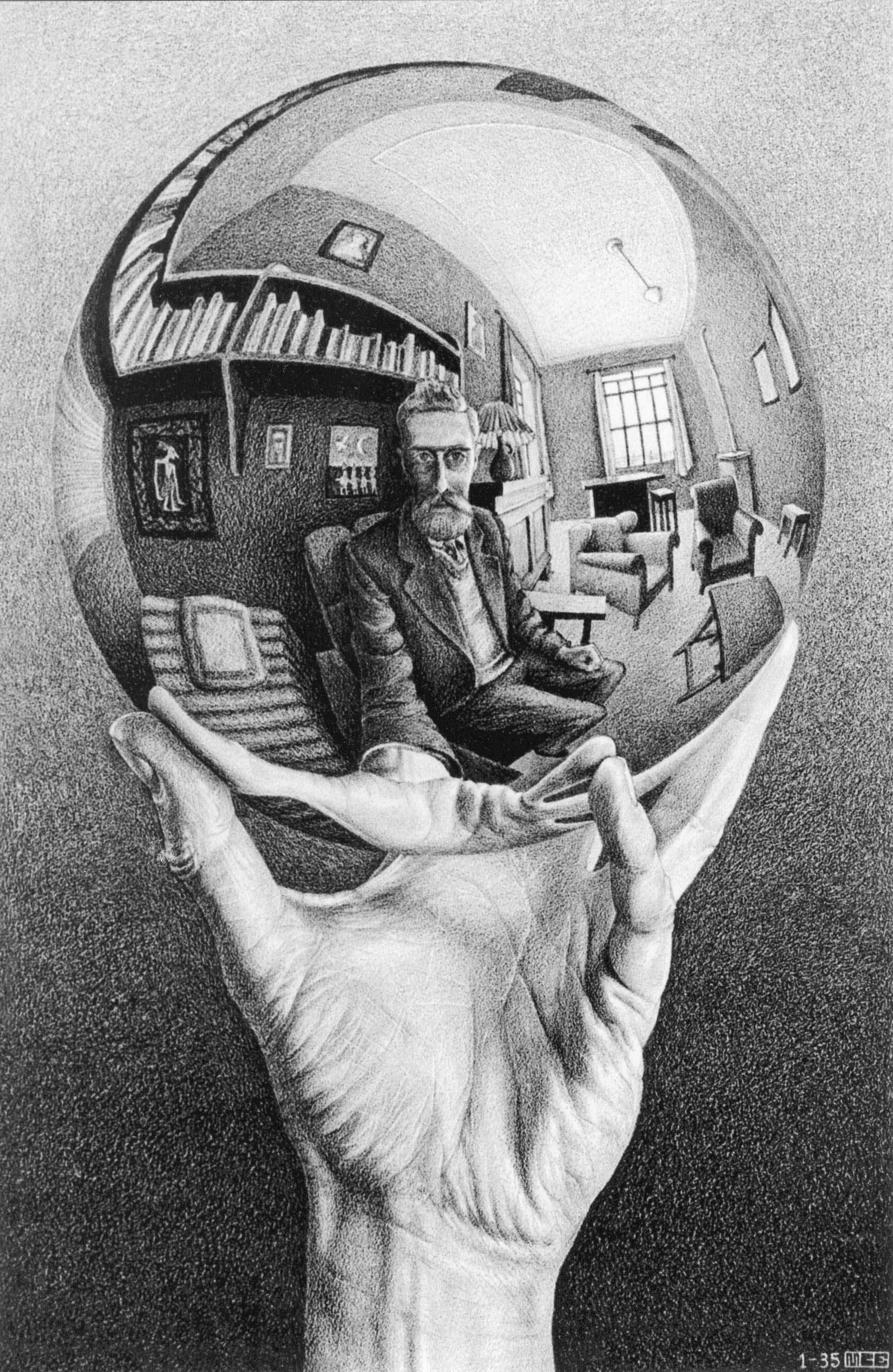
“In her new book Mathematics and Art, historian Lyn Gamwell explores how artists have for thousands of years used mathematical concepts — such as infinity, number and form — in their work. Here she choses ten stunning images from her book that reveal connections between maths and art.”
The Big Bang of Art and Tech in New York — By Frank Rose | The New York Times
“What happens when you put artists and technologists together? Forty-nine years ago last month, Robert Rauschenberg and a Bell Telephone Laboratories engineer named Billy Kluver answered that question with a tennis match.”
Q&A With A Space Artist — By Sarah Keartes | Popular Science
“Instead of buying photos of our solar system, artist Michael Benson decided to create his own—and to do it better. The longtime space aficionado learned to piece together mosaics by combining hundreds of NASA images into one planetary landscape. Spacecraft typically record in various color filters to see different elements of the same view. By overlaying them, Benson creates a detailed, true-color picture of the cosmos.”
Alternative media choked on YouTube: petition
According Representative Press and StormCloudsGathering - YouTube channels both ‘guilty’ of reporting quotes, statistics, and facts that paint US foreign policy in a negative light, Google is actively denying them advertising revenue while continuing to allow more offensive coverage of the same subjects by mainstream media channels.
A petition has been circulated from Change.org, calling on Google to reverse its policy changes which deny advertising at so-called “sensitive” content. It can be signed via the link below.
https://www.change.org/p/larry-page-cofounder-google-susan-w…ting-on-wa
Problems in the way Google sees the information media revolution of the internet are implied in the recent Mont Order society Seven Point program embedded below, which designated Google as a neoconservative-leaning organization. Disruptive technologies, and the potential of nanotechnology, were also addressed in the same section of the Mont Order program, which held a more positive view of individual technologies rather than the companies and executives promoting them.
In a book by Google executives called The New Digital Age, Google claimed that “enforcing the law” is not censorship, despite the fact that all censorship consists of creating laws to stifle and shut down criticism. This shows a profound refusal to accept basic logic or terminology, matched only by Google’s chauvinist alliance with US mass surveillance and belief the US government must disarm and conquer the entire world to bring security.
The beauty of bikes — redesigning two wheels — By Rowan Moore | The Guardian
“For bicycles are messengers. Picasso recognised that they carry meaning when he made a saddle and handlebars into a bull’s head, and Duchamp (in his case, non-meaning) when he put a bicycle wheel in an art gallery.”
Lessons from the PC video game industry — By Chris Dixon | Medium
“The subtitle to this post is a variation of William Gibson’s famous remark: “The future is already here — it’s just not very evenly distributed.” An obvious follow up question is: if the future is already here, where can I find it?”