Toggle light / dark theme

How do you trust a robot you’ve never met?

Many of the environments where human-facing universal robots can provide benefits — homes, hospitals, schools — are sensitive and personal. A tutoring robot helping your kids with math should have a track record of safe and productive sessions. An elder-care assistant needs a verifiable history of respectful, competent service. A delivery robot approaching your front door should be as predictable and trustworthy as your favorite mail carrier. Without trust, adoption will never take place, or quickly stall.

Trust is built gradually and also reflects common understanding. We design our systems to be explainable: multiple AI modules talk to each other in plain language, and we log their thinking so humans can audit decisions. If a robot makes a mistake — drops the tomato instead of placing it on the counter — you should be able to ask why and get an answer you can understand.

Over time, as more robots connect and share skills, trust will depend on the network too. We learn from peers, and machines will learn from us and from other machines. That’s powerful but just like parents are concerned about what their kids learn on the web, we need good ways to audit and align skill exchange for robots… Governance for human–machine societies isn’t optional; it’s fundamental infrastructure.

Mathematical model could help boost drug efficacy by getting dosing in rhythm with circadian clocks

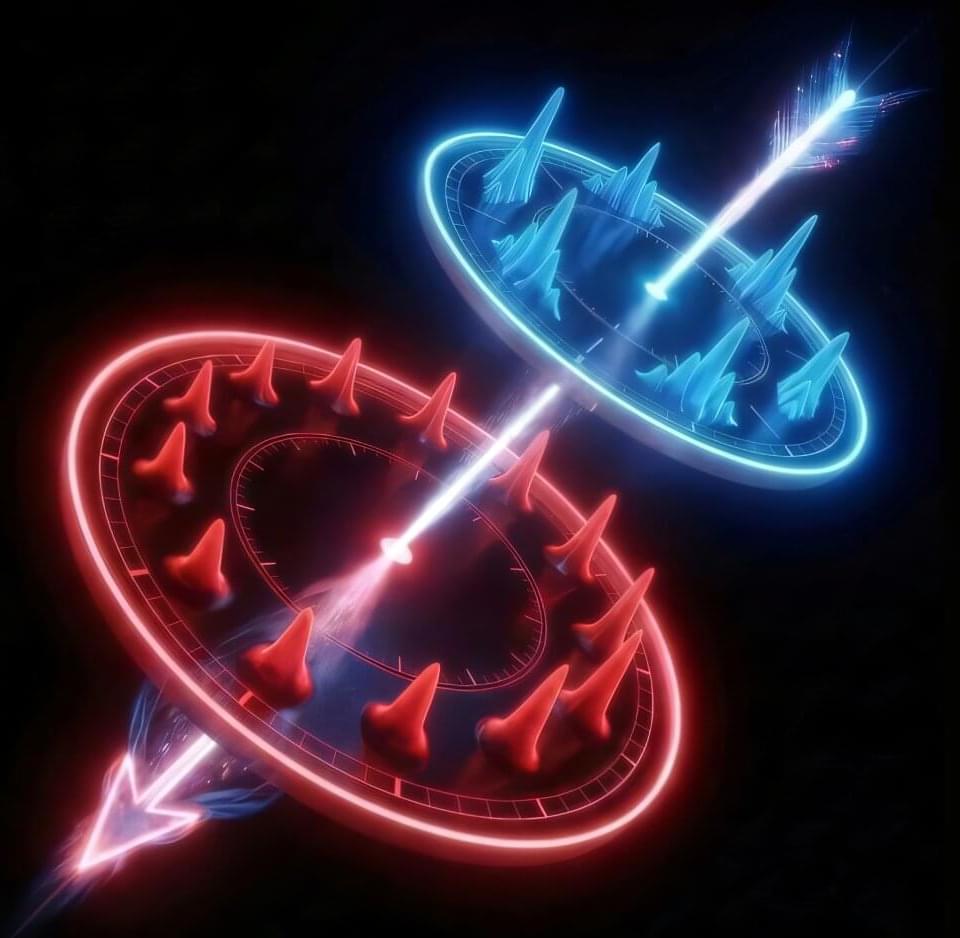
Researchers at the University of Michigan have developed a mathematical model that reveals how our circadian rhythms can have dramatic impacts on how our bodies interact with medicines.

This could help doctors prescribe medicines to have the best intended effect by syncing the dosing up with the natural clocks of their patients.

“These findings provide a mechanistic basis for chronotherapeutics—optimizing drug efficacy by considering circadian timing,” said the new study’s author Tianyong Yao, an undergraduate researcher in the U-M Department of Mathematics. “This could improve treatment for conditions such as ADHD, depression and fatigue.”

When mathematics meets aesthetics: Tessellations as a precise tool for solving complex problems

In a recent study, mathematicians from Freie Universität Berlin have demonstrated that planar tiling, or tessellation, is much more than a way to create a pretty pattern. Consisting of a surface covered by one or more geometric shapes with no gaps and no overlaps, tessellations can also be used as a precise tool for solving complex mathematical problems.

This is one of the key findings of the study, “Beauty in/of Mathematics: Tessellations and Their Formulas,” authored by Heinrich Begehr and Dajiang Wang and recently published in the scientific journal Applicable Analysis. The study combines results from the field of complex analysis, the theory of partial differential equations, and geometric function theory.

A central focus of the study is the “parqueting-reflection principle.” This refers to the use of repeated reflections of geometric shapes across their edges to tile a plane, resulting in highly symmetrical patterns. Aesthetic examples of planar tessellations can be seen in the work of M.C. Escher. Beyond its visual appeal, the principle has applications in mathematical analysis—for example, as a basis for solving classic boundary value problems such as the Dirichlet problem or the Neumann problem.

Michael Freedman | The Poincaré Conjecture and Mathematical Discovery

Millennium Prize Problems Lecture 9/17/2025
Speaker: Michael Freedman, Harvard CMSA and Logical Intelligence.

Title: the poincaré conjecture and mathematical discovery.

Abstract: The AI age requires us to re-examine what mathematics is about. The Seven Millenium Problems provide an ideal lens for doing so. Five of the seven are core mathematical questions, two are meta-mathematical – asking about the scope of mathematics. The Poincare conjecture represents one of the core subjects, manifold topology. I’ll explain what it is about, its broader context, and why people cared so much about finding a solution, which ultimately arrived through the work of R. Hamilton and G. Perelman. Although stated in manifold topology, the proof requires vast developments in the theory of parabolic partial differential equations, some of which I will sketch. Like most powerful techniques, the methods survive their original objectives and are now deployed widely in both three-and four-dimensional manifold topology.

Computer advances and ‘invisibility cloak’ vie for physics Nobel

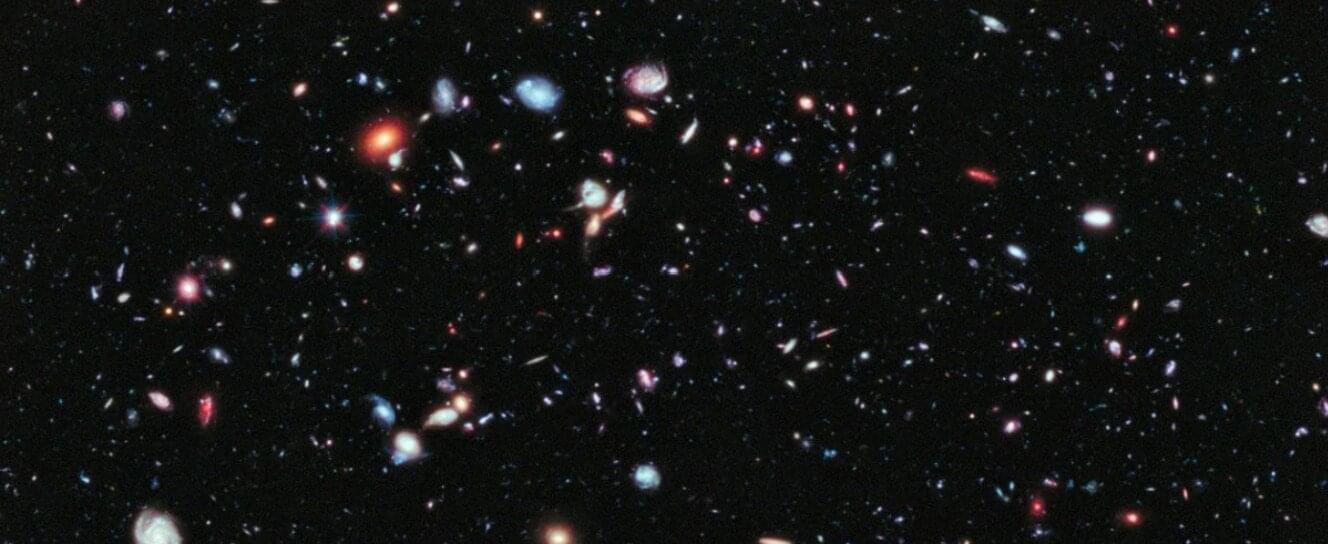
A math theory powering computer image compression, an “invisibility cloak” or the science behind the James Webb Space Telescope are some achievements that could be honored when the Nobel physics prize is awarded Tuesday.

The award, to be announced at 11:45 am (0945 GMT) in Stockholm, is the second Nobel of the season, after the Medicine Prize was awarded on Monday to a US-Japanese trio for research into the human immune system.

Mary Brunkow and Fred Ramsdell, of the United States, and Japan’s Shimon Sakaguchi were recognized by the Nobel jury for identifying immunological “security guards”

Virtual particles: How physicists’ clever bookkeeping trick could underlie reality

A clever mathematical tool known as virtual particles unlocks the strange and mysterious inner workings of subatomic particles. What happens to these particles within atoms would stay unexplained without this tool. The calculations using virtual particles predict the bizarre behavior of subatomic particles with such uncanny accuracy that some scientists think “they must really exist.”

Virtual particles are not real—it says so right in their name—but if you want to understand how real particles interact with each other, they are unavoidable. They are essential tools to describe three of the forces found in nature: electromagnetism, and the strong and weak nuclear forces.

Real particles are lumps of energy that can be “seen” or detected by appropriate instruments; this feature is what makes them observable, or real. Virtual particles, on the other hand, are a sophisticated mathematical tool and cannot be seen. Physicist Richard Feynman invented them to describe the interactions between real particles.

Finding buried treasures with physics: ‘Fingerprint matrix’ method uncovers what lies beneath the sand

Can we reveal objects that are hidden in environments completely opaque to the human eye? With conventional imaging techniques, the answer is no: a dense cloud or layer of material blocks light so completely that a simple photograph contains no information about what lies behind it.

However, a between the Institut Langevin and TU Wien has now shown that, with the help of innovative mathematical tricks, objects can be detected even in such cases—using what is known as the fingerprint .

The team tested the newly developed method on metal objects buried in sand and in applications in the field of medical imaging. A joint publication on this topic has just been published in the journal Nature Physics.

A new approach to magnify wave functions when imaging interacting ultracold atoms

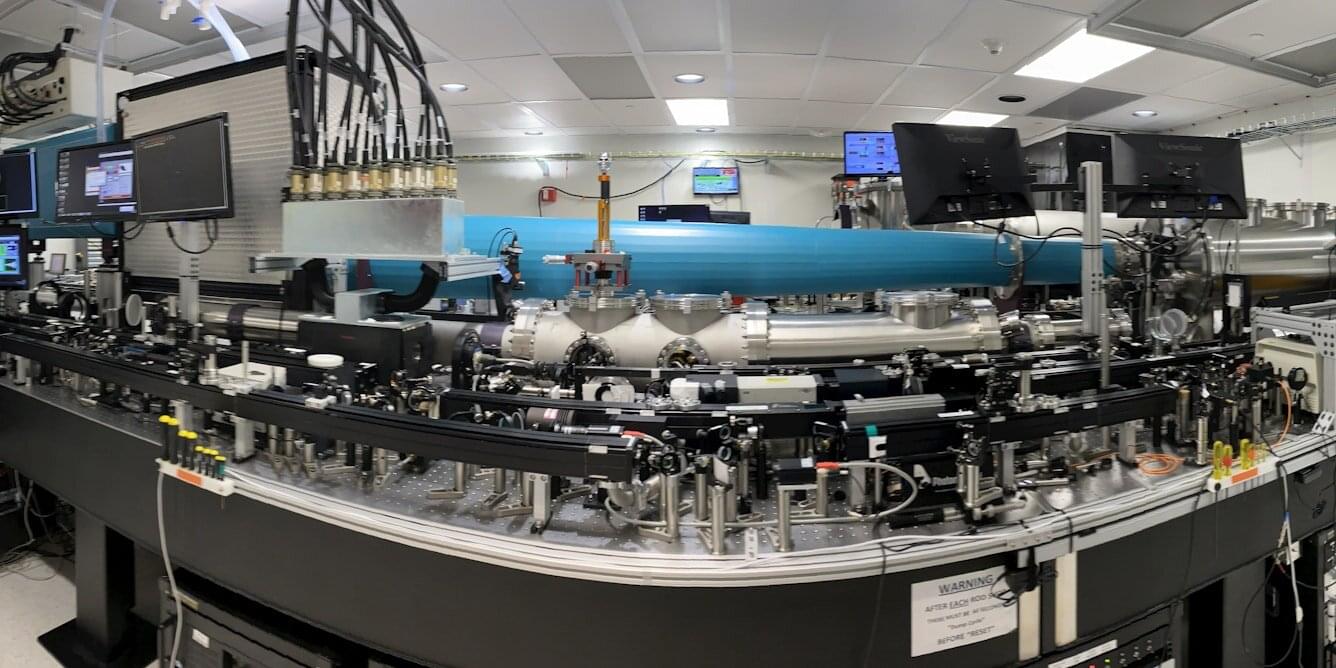
The precise imaging of many-body systems, which are comprised of many interacting particles, can help to validate theoretical models and better understand how individual particles in these systems influence each other. Ultracold quantum gases, collections of atoms cooled to temperatures close to absolute zero, are among the most promising experimental platforms for studying many-body interactions.

To study these gases, most physicists use a technique known as –resolved imaging, which allows them to detect individual atoms and probe correlations in their behavior. Despite its advantages, this imaging method has a relatively low resolution, thus it fails to pick up a system’s subtler features.

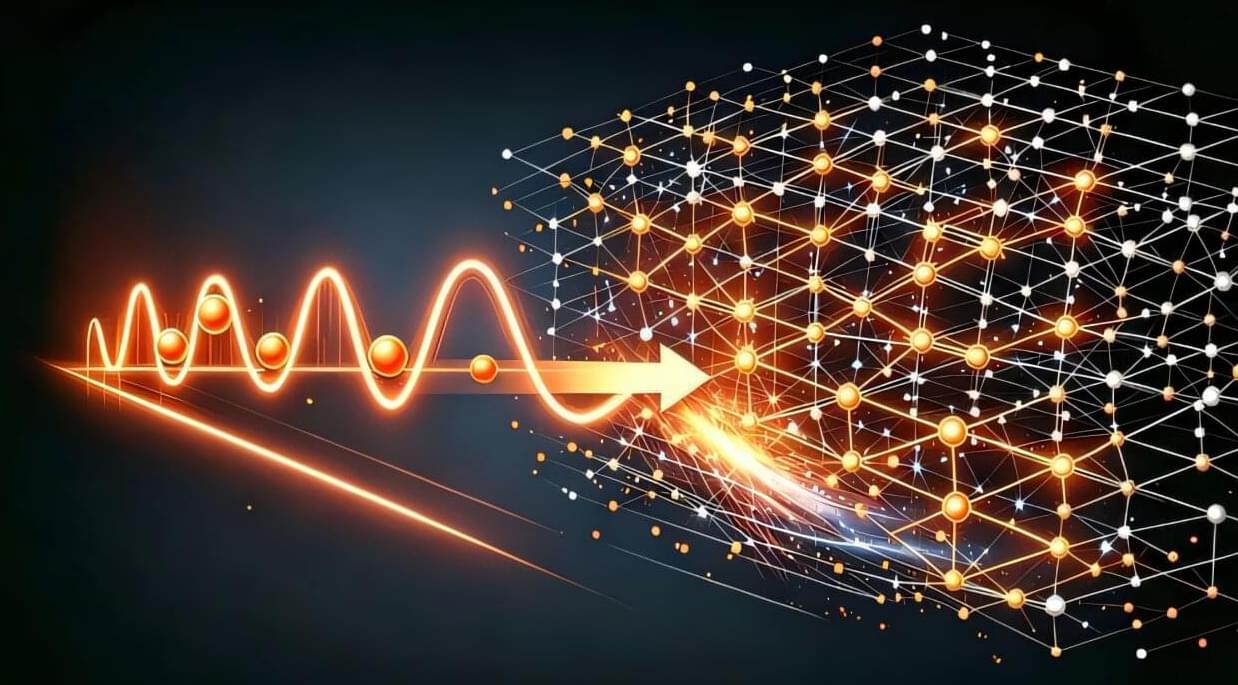
Researchers at Heidelberg University recently devised a new strategy to magnify atomic wave functions, offering a mathematical description of the system’s , which could help to overcome the limitations of conventional single-atom imaging techniques.

/* */