https://www.facebook.com//videos/496701823842355/
Say ‘Goodbye’ to Cracks, Self-Healing Concrete Has Arrived.
https://www.facebook.com//videos/496701823842355/
Say ‘Goodbye’ to Cracks, Self-Healing Concrete Has Arrived.
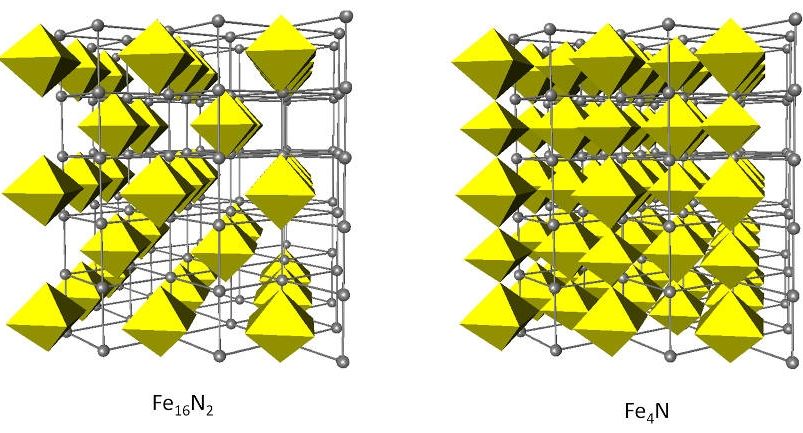
A new cheaper way in creating magnets.
US researchers have created a powerful permanent magnet out of iron and nitrogen, two plentiful cheap materials, as part of a programme to cut the need for ‘rare earth’ metals.
It is only a tiny sample, a film 500nm thick, but it is the real thing.
“To the best of our knowledge, this could be the first experimental evidence of the existence of a giant saturation magnetisation, an obviously large coercivity, with a magnetic energy product of up to 20 MGOe, in a bulk-type FeN sample.” said the team in ‘Synthesis of Fe16 N2 compound free-standing foils with 20MGOe magnetic energy product by nitrogen ion-implantation’, a Nature Scientic Reports paper written by a team from the University of Minnesota, Los Alamos National Laboratory and Oak Ridge National Laboratory.
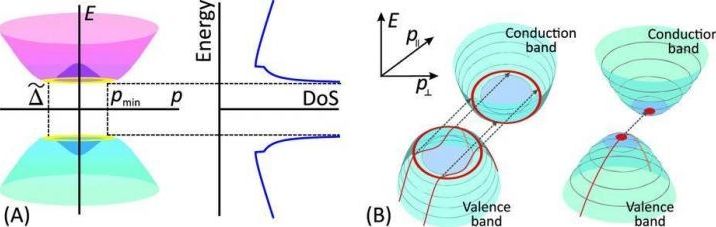
New graphene transistor makes for a faster processor.
Scientists have developed a new type of graphene-based transistor and using modelling they have demonstrated that it has ultralow power consumption compared with other similar transistor devices. The findings have been published in a paper in the journal Scientific Reports. The most important effect of reducing power consumption is that it enables the clock speed of processors to be increased. According to calculations, the increase could be as high as two orders of magnitude.
“The point is not so much about saving electricity — we have plenty of electrical energy. At a lower power, electronic components heat up less, and that means that they are able to operate at a higher clock speed — not one gigahertz, but ten for example, or even one hundred,” says the corresponding author of the study, the head of MIPT’s Laboratory of Optoelectronics and Two-Dimensional Materials, Dmitry Svintsov.
“We have developed a hydrogel based rapid E. coli detection system that will turn red when E. coli is present,” says Professor Sushanta Mitra, Lassonde School of Engineering. “It will detect the bacteria right at the water source before people start drinking contaminated water.”
The new technology has cut down the time taken to detect E. coli from a few days to just a couple of hours. It is also an inexpensive way to test drinking water (C$3 per test estimated), which is a boon for many developing countries, as much as it is for remote areas of Canada’s North.
“This is a significant improvement over the earlier version of the device, the Mobile Water Kit, that required more steps, handling of liquid chemicals and so on,” says Mitra, Associate Vice-President of Research at York U. “The entire system is developed using a readily available plunger-tube assembly. It’s so user-friendly that even an untrained person can do the test using this kit.”
One of the hurdles of realizing the promise of nanoparticles is that scientists can’t view where they go or how the nanoparticles interact with structures once they are inside of the body. A new technique that involves injecting an acrylamide hydrogel into organs and tissues removed from mice allows researchers to image nanoparticles more than 25 times deeper than is possible with current methods, to a depth of more than 1 millimeter. Lipids are what cause tissues to look opaque. By using the hydrogel to bind all of the molecules together except for lipids, which washed away easily, the team, led by Warren C. W. Chan, were able to make the tissues look transparent but remain intact. The work, published in ACS Nano, may help researchers be able to tell if therapy-loaded nanoparticles are delivering the cargo to the desired destination. Check out the video below.
ExclusiveTechnologies.
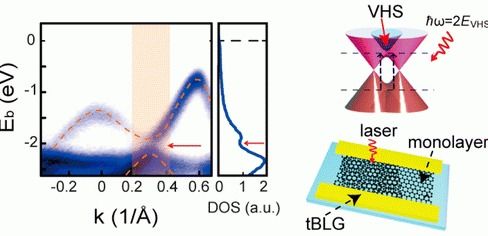
Twisted bilayer graphene (tBLG) with van Hove Singularity (VHS) has exhibited novel twist-angle-dependent chemical and physical phenomena. However, scalable production of high-quality tBLG is still in its infancy, especially lacking the angle controlled preparation methods. Here, we report a facile approach to prepare tBLG with large domain sizes (100 μm) and controlled twist angles by a clean layer-by-layer transfer of two constituent graphene monolayers. The whole process without interfacial polymer contamination in two monolayers guarantees the interlayer interaction of the π-bond electrons, which gives rise to the existence of minigaps in electronic structures and the consequent formation of VHSs in density of state. Such perturbation on band structure was directly observed by angle-resolved photoemission spectroscopy with submicrometer spatial resolution (micro-ARPES). The VHSs lead to a strong light–matter interaction and thus introduce ∼20-fold enhanced intensity of Raman G-band, which is a characteristic of high-quality tBLG. The as-prepared tBLG with strong light–matter interaction was further fabricated into high-performance photodetectors with selectively enhanced photocurrent generation (up to ∼6 times compared with monolayer in our device).

The world’s first graphene-based electronic paper for use in both hard and flexible displays for electronic devices has been developed in China.
Electronic paper display company Guangzhou OED Technologies announced it has developed the graphene-based e-paper, which it described as being more pliable and having higher light transmittance than existing types of e-paper.
As a result, graphene-based displays would be brighter but also cheaper, as graphene is based on the abundant element carbon, the firm said. Conventional e-paper is made of the rather costly rare metal indium.
Some researchers believe that machine-learning techniques can revolutionize how materials science is done.