If it floats, is it a ‘lifeboat’?
While the oceans fill up with plastic waste, a horrifying crisis unfolds on land.
If it floats, is it a ‘lifeboat’?
While the oceans fill up with plastic waste, a horrifying crisis unfolds on land.
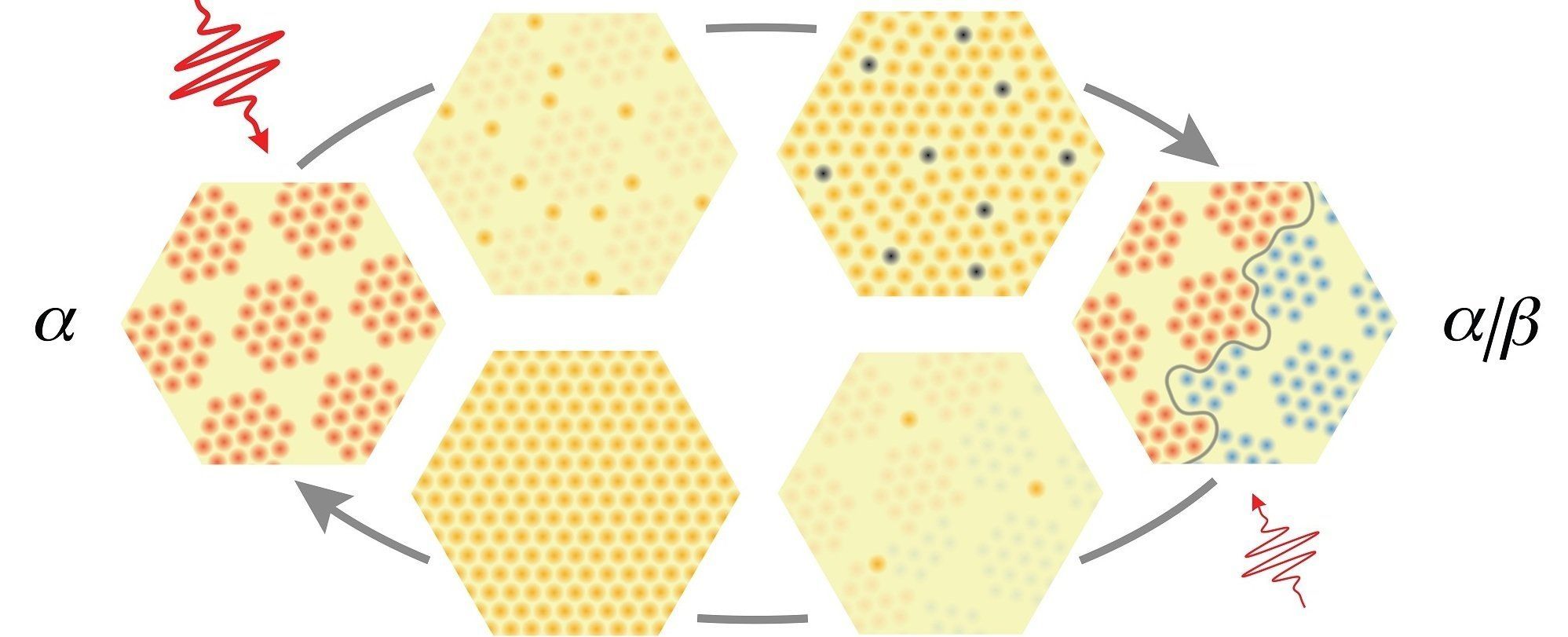
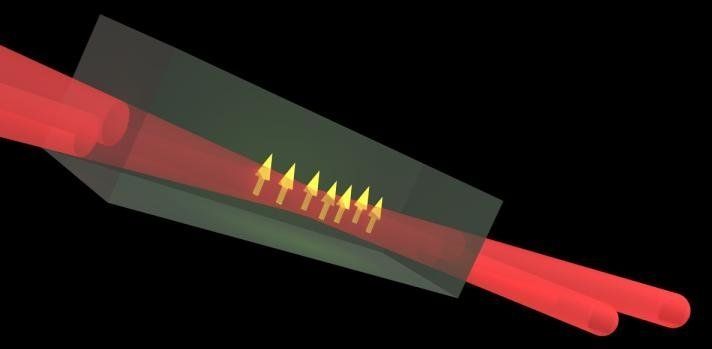
Scientists from the Department of Energy’s SLAC National Accelerator Laboratory and the Massachusetts Institute of Technology have demonstrated a surprisingly simple way of flipping a material from one state into another, and then back again, with single flashes of laser light.
The synthetic material is faster to make than natural wood.
Visions for what we can do with future electronics depend on finding ways to go beyond the capabilities of silicon conductors. The experimental field of molecular electronics is thought to represent a way forward, and recent work at KTH may enable scalable production of the nanoscale electrodes that are needed in order to explore molecules and exploit their behavior as potentially valuable electronic materials.
Since the 2003 discovery of the single-atom-thick carbon material known as graphene, there has been significant interest in other types of 2-D materials as well.
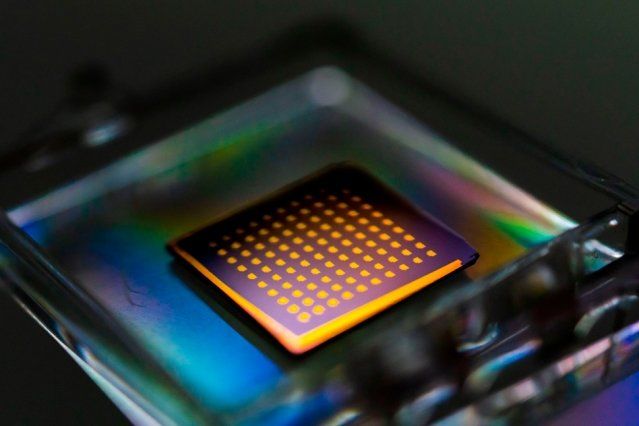
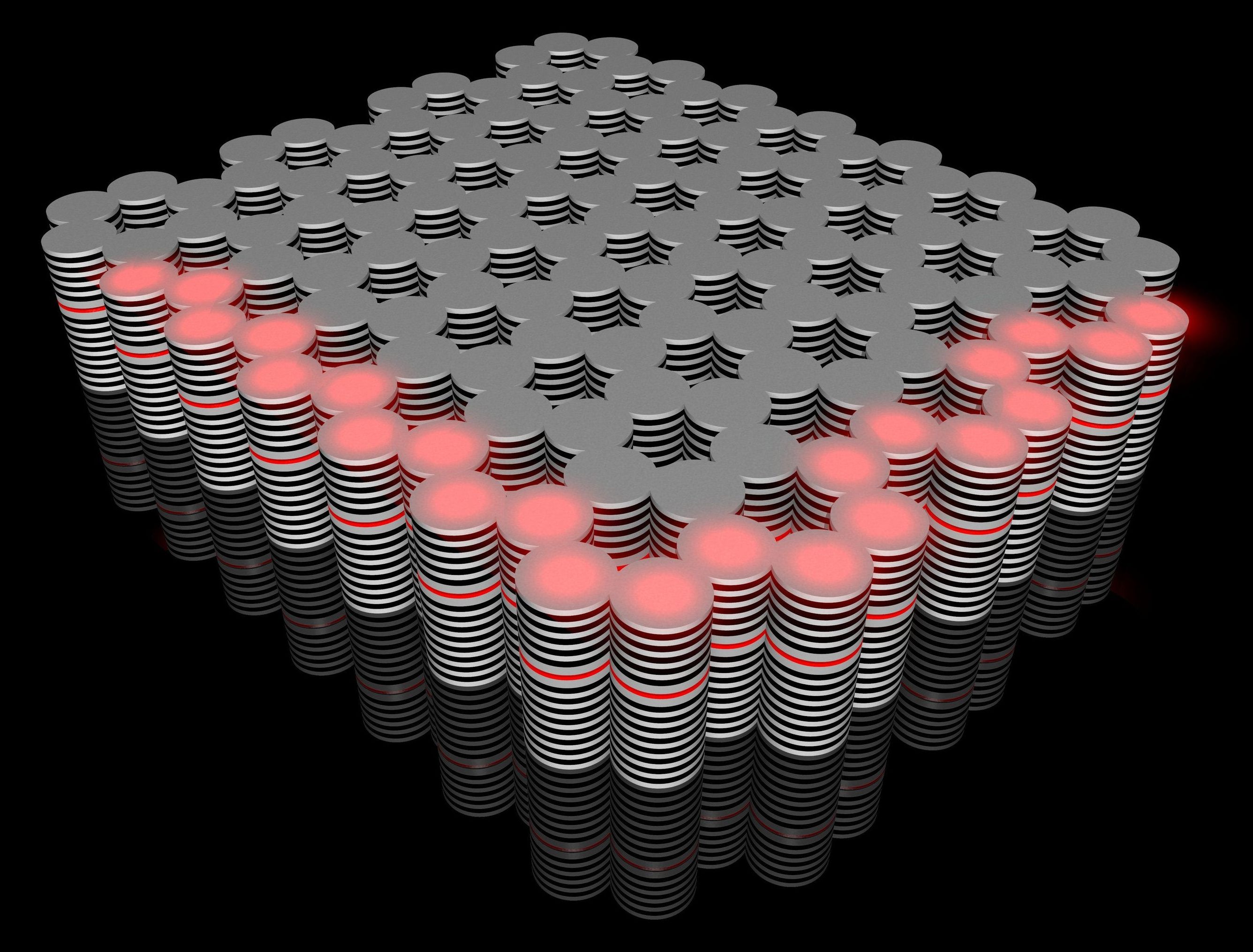
For the first time, physicists have built a unique topological insulator in which optical and electronic excitations hybridize and flow together. They report their discovery in Nature.
Topological insulators are materials with very special properties. They conduct electricity or light particles only on their surface or edges, not the interior. This unusual characteristic could provide technical innovations, and topological insulators have been the subject of intense global research for several years.
Physicists of Julius-Maximilians-Universität Würzburg (JMU) in Bavaria, Germany, with colleagues from the Technion in Haifa, Israel, and Nanyang Technological University in Singapore have reported their discovery in the journal Nature. The team has built the first “exciton-polariton topological insulator,” a topological insulator operating with both light and electronic excitations simultaneously.
Fuel cells have long been viewed as a promising power source. These devices, invented in the 1830s, generate electricity directly from chemicals, such as hydrogen and oxygen, and produce only water vapor as emissions. But most fuel cells are too expensive, inefficient, or both.
In a new approach, inspired by biology and published today (Oct. 3, 2018) in the journal Joule, a University of Wisconsin-Madison team has designed a fuel cell using cheaper materials and an organic compound that shuttles electrons and protons.
In a traditional fuel cell, the electrons and protons from hydrogen are transported from one electrode to another, where they combine with oxygen to produce water. This process converts chemical energy into electricity. To generate a meaningful amount of charge in a short enough amount of time, a catalyst is needed to accelerate the reactions.
Spotted on an official SpaceX T-shirt commemorating Starlink’s first two prototype satellites and corroborated through analysis of limited public photos of the spacecraft, SpaceX appears to be testing a relatively unique style of solar arrays on the first two satellites launched into orbit, known as Tintin A (Alice) and B (Bob).
It’s difficult to judge anything concrete from the nature of what may be immature prototypes, but SpaceX’s decision to take a major step away from its own style of solar expertise – Cargo Dragon’s traditional rigid panel arrays – is almost certainly motivated by a need to push beyond the current state of the art of satellite design and production.
An international team of scientists led by the University of Groningen’s Zernike Institute for Advanced Materials created quantum bits that emit photons that describe their state at wavelengths close to those used by telecom providers. These qubits are based on silicon carbide in which molybdenum impurities create color centers. The results were published in the journal npj Quantum Information on 1 October.
A new theory proposes that the quantum properties of an object extend into an “atmosphere” that surrounds the material.