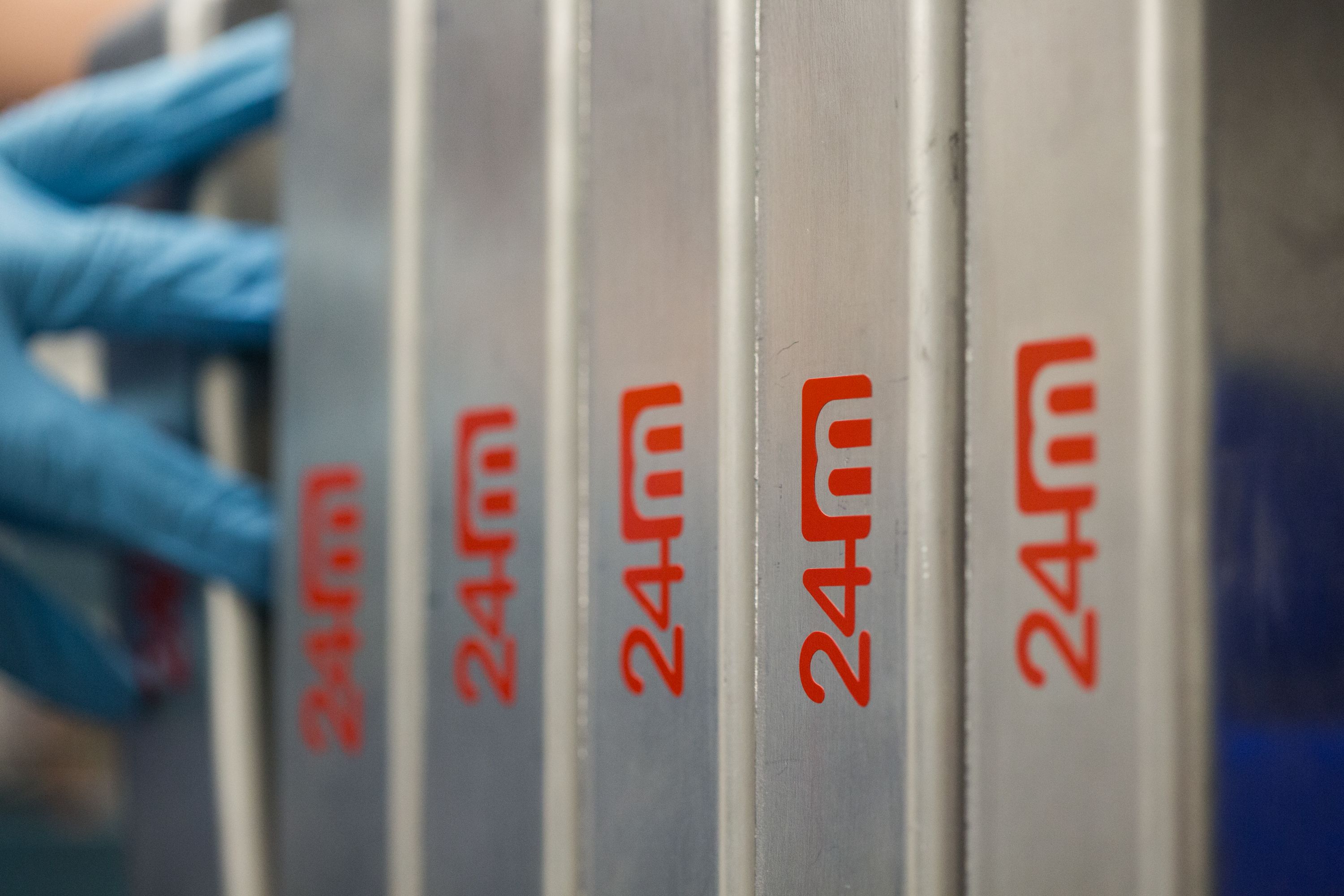
24M is reducing manufacturing costs by stripping out extraneous materials—and just got $22 million to begin building its first commercial factory.
Category: materials – Page 388
Ford applied noise-cancelling technology to a doghouse, and it’s awesome
Keeping passengers in a vehicle from hearing the noise of a busy road is a problem that many auto manufacturers have attempted to solve over the years. Noise dampening materials can only do so much, but Ford is now working with noise cancelling technologies that aim to actively combat road sounds by cancelling them out.
The company recently applied its new noise-cancelling know-how to a project that has nothing to do with vehicles, but instead focuses on man’s best friend. Ford Europe built a new kind of doghouse that allows canines to rest without worry of loud noises, like fireworks, disturbing them.

Scientists design new material to harness power of light
Scientists have long known that synthetic materials—called metamaterials—can manipulate electromagnetic waves such as visible light to make them behave in ways that cannot be found in nature. That has led to breakthroughs such as super-high resolution imaging. Now, UMass Lowell is part of a research team that is taking the technology of manipulating light in a new direction.

Computers could soon run cold, no heat generated
Transistors, superconductors, and chip design have all seen efficiency breakthroughs this year. So much so, that we may see the cold-running computer before too long.

The substance that ‘can withstand 75 nuclear blasts’
The curious tale of a ladies hairdresser who invented a potentially world-changing material. Part one of six. Reported by Lee Johnson, produced, filmed and directed by Adam Proctor.

New 2D sensors can cover any smooth surface
But researchers have a new way to keep the materials and their associated circuitry, including electrodes, intact as they’re moved to curved or other smooth surfaces.
The results of their work appear in the journal ACS Nano.

The massive ocean cleanup device invented by a 24-year-old is running into problems in the Great Pacific Garbage Patch
The Ocean Cleanup, which is trying to remove plastic from the Great Pacific Garbage Patch, ran into problems in its first month of deployment.

Scientists invented a new material that gets thicker as you stretch it
Most of us think we have a pretty solid grasp on basic physics, and one of the assumptions we’ve come to form is that any material gets thinner as it’s stretched. It makes sense, since the same amount of material spread over a larger area would have to mean that there’s less of it in any one spot, right?
Not so fast. Researchers led by Dr. Devesh Mistry of the University of Leeds invented a new synthetic material that gets thicker as it’s being stretched. The material, which is described in detail in a new paper published in Nature Communications, is one of few that exhibit “auxetic” properties, which means they expand instead of contracting when tugged on from different directions.
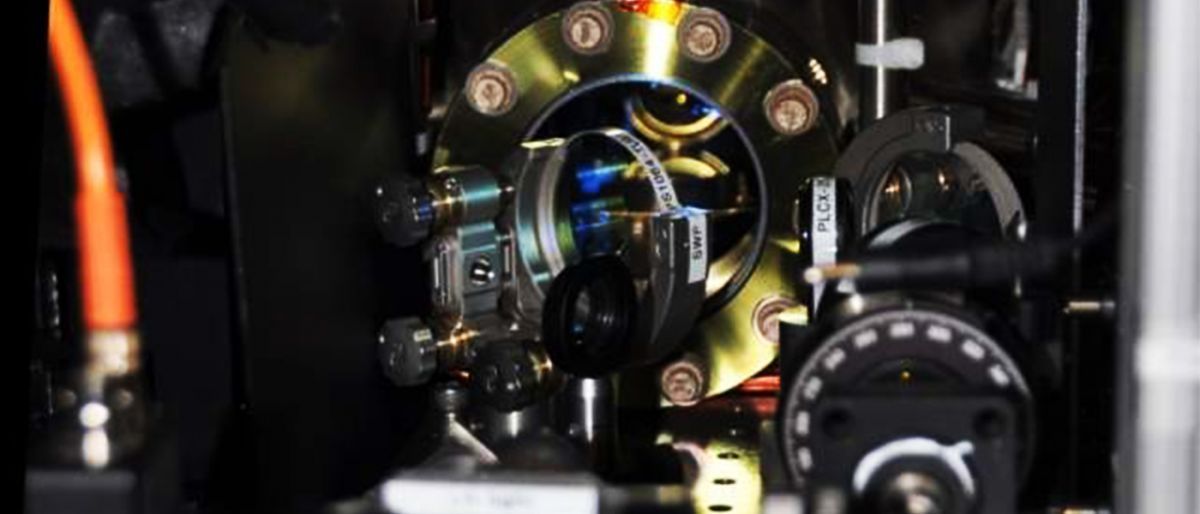
Researchers Just Created a New Form of Matter
There’s a new form of matter out there and it’s called a supersolid. Born in the labs of researchers from the Massachusetts Institute of Technology (MIT), this new matter is seemingly a contradiction. The supersolid combines properties of solids and superfluids — or fluids with zero viscosity, thereby flowing without losing kinetic energy. Supersolids have previously been predicted by physicists, but have not been observed in a lab until now.
“It is counterintuitive to have a material which combines superfluidity and solidity,” says team leader Wolfgang Ketterle, the John D. MacArthur Professor of Physics at MIT and 2001 Noble laureate. “If your coffee was superfluid and you stirred it, it would continue to spin around forever.” Their research was published in the journal Nature.
To develop this seemingly contradictory form of matter, Ketterle’s team manipulated the motion of atoms in a superfluid state of dilute gas, called a Bose-Einstein condensate, or BEC. Ketterle co-discovered BEC, which won him his Noble prize in physics. “The challenge was now to add something to the BEC to make sure it developed a shape or form beyond the shape of the ‘atom trap,’ which is the defining characteristic of a solid,” Ketterle explained.