Toggle light / dark theme

FlexEnable has created a screen you can wrap around your wrist

Sometimes, it seems like the tech world is inexorably bending towards a future full of curved devices. At MWC in Barcelona, we saw yet another prototype display, this time from English firm FlexEnable. Now, this isn’t a working device of any kind — it’s essentially just a screen running a demo — and neither is FlexEnable a consumer electronics company. But the firm says its technology is ready to go, and it’s apparently in talks with unnamed hardware partners who want to make this sort of device a reality. How long until we see fully-fledged wristbands like this on the market? Eighteen months is the optimistic guess from FlexEnable’s Paul Cain.

The prototype uses plastic transistors to achieve its flexibility, creating what the company calls OLCD (organic liquid crystal display) screens. FlexEnable says these can achieve the same resolutions as regular LCD using the same amount of power, but, of course, they have that added flexibility. These transistors can be wrapped around pretty much anything, and also have uses outside of display technology. FlexEnable was also showing off thin flexible fingerprint sensors, suggesting they could be wrapped around a door handle to add security without it being inconvenient to the user.

The prototype we saw at MWC was encased in a stiff metal frame, like a lot of flexible displays, and although OLCD can flex a little, it’s not the sort of material you can endlessly bend and crease. That, says, Cain, will have to wait for flexible OLED displays, a technology that is going to need more development. Still, we are seeing truly flexible OLED prototypes popping up here and there, such as this device from Queen’s University, which lets you flex a screen to flick through the pages of a digital book. The future bends ever closer.

Nanoscale system reaches perfect efficiency for solar fuel production step

A major goal in renewable energy research is to harvest the energy of the sun to convert water into hydrogen gas, a storable fuel. Now, with a nanoparticle-based system, researchers have set a record for one of the half-reactions in this process, reporting 100% efficiency for the reduction of water to hydrogen (Nano Lett. 2016, DOI: 10.1021/acs.nanolett.5b04813).

To make such water-splitting systems, researchers must find the right materials to absorb light and catalyze the splitting of water into hydrogen and oxygen. The two half-reactions in this process—the reduction of water to hydrogen gas, and the oxidation of water to oxygen gas—must be isolated from each other so their products don’t react and explode. “Completing the cycle in an efficient, stable, safe fashion with earth-abundant elements is an ongoing challenge,” says chemist Nathan S. Lewis of Caltech, who was not involved in this study.

Until recently, the efficiency of the reduction step had maxed out at 60%. One challenge is that electrons and positive charges formed in the light absorption process can rapidly recombine, preventing the electrons from reducing water molecules to form hydrogen. To overcome this problem, several years ago, Lilac Amirav of Technion–Israel Institute of Technology and her colleagues designed a nanoparticle-based system (J. Phys. Chem. Lett. 2010, DOI: 10.1021/jz100075c) that would physically separate the charges formed during photocatalysis.

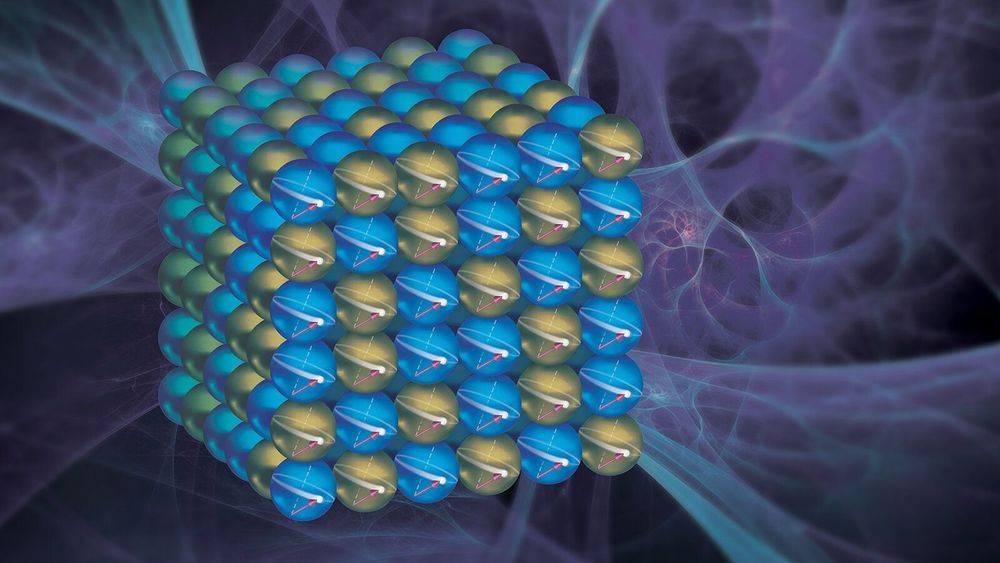
Quantum Phase Transition Underpins Superconductivity in Copper Oxides

Physicists have zoomed in on the transition that could explain why copper-oxides have such impressive superconducting powers.

Settling a 20-year debate in the field, they found that a mysterious quantum phase transition associated with the termination of a regime called the “pseudogap” causes a sharp drop in the number of conducting electrons available to pair up for superconductivity. The team hypothesizes that whatever is happening at this point is probably the reason that cuprates support superconductivity at much higher temperatures than other materials—about half way to .

“It’s very likely that the reason superconductivity grows in the first place, and the reason it grows so strongly, is because of that ,” CIFAR Senior Fellow Louis Taillefer (Université de Sherbrooke) says. The new findings are published in Nature.

The audacious plan to end hunger with 3D printed food

Anjan Contractor’s 3D food printer might evoke visions of the “replicator” popularized in Star Trek, from which Captain Picard was constantly interrupting himself to order tea. And indeed Contractor’s company, Systems & Materials Research Corporation, just got a six month, $125,000 grant from NASA to create a prototype of his universal food synthesizer.

But Contractor, a mechanical engineer with a background in 3D printing, envisions a much more mundane—and ultimately more important—use for the technology. He sees a day when every kitchen has a 3D printer, and the earth’s 12 billion people feed themselves customized, nutritionally-appropriate meals synthesized one layer at a time, from cartridges of powder and oils they buy at the corner grocery store. Contractor’s vision would mean the end of food waste, because the powder his system will use is shelf-stable for up to 30 years, so that each cartridge, whether it contains sugars, complex carbohydrates, protein or some other basic building block, would be fully exhausted before being returned to the store.

Ubiquitous food synthesizers would also create new ways of producing the basic calories on which we all rely. Since a powder is a powder, the inputs could be anything that contain the right organic molecules. We already know that eating meat is environmentally unsustainable, so why not get all our protein from insects?

Read more

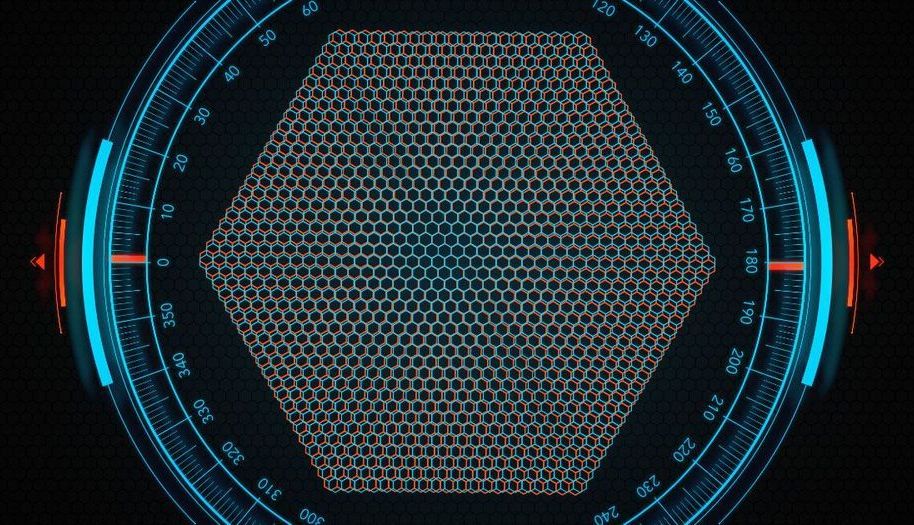
Scientists discover electrons moving like honey in graphene

#sweet!


Electrons which act like slow-pouring honey have been observed for the first time in graphene, prompting a new approach to fundamental physics.

Electrons are known to move through metals like bullets being reflected only by imperfections, but in graphene they move like in a very , University of Manchester researchers have found.

The possibility of a highly viscous flow of electrons in metals was predicted several decades ago but despite numerous efforts never observed, until now as reported in the journal Science.

Read more

Oxford Instruments and SPECS Surface Nano Analysis GmbH sign agreement for Nanonis Tramea quantum transport measurement system

This agreement places Oxford in a very nice position.


Quantum transport measurements are widely used in characterising new materials and devices for emerging quantum technology applications such as quantum information processing (QIP), quantum computing (QC) and quantum sensors. Such devices hold the potential to revolutionise future technology in high performance computing and sensing in the same way that semiconductors and the transistor did over half a century ago.

Physicists have long used standard electrical transport measurements such as resistivity, conductance and the Hall effect to gain information on the electronic properties and structure of materials. Now quantum transport measurements such as the quantum Hall effect (QHE) and fractional quantum Hall effect (FQHE) in two-dimensional electron gases (2DEG) and topological insulators – along with a range of other more complex measurements – inform researchers on material properties with quantum mechanical effects.

The ultra low temperatures and high magnetic fields provided by Oxford Instruments’ TritonTM dilution refrigerator make it a key research tool in revealing the quantum properties of many materials of interest. SPECS’ Nanonis Tramea QTMS is a natural complementary partner to the Triton, with its fast, multi-channel measurements.

Read more

/* */