Toggle light / dark theme

Graphene Patterned After Moth Eyes Could Give Us ‘Smart Wallpaper’

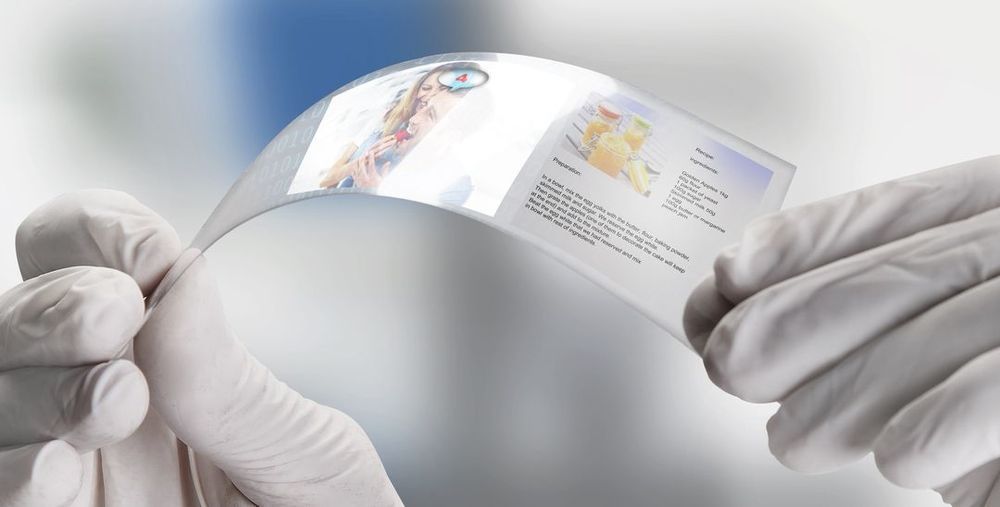
Tweaking the structure of graphene so that it matches patterns found in the eyes of moths could one day give us “smart wallpaper,” among a host of other useful technologies.

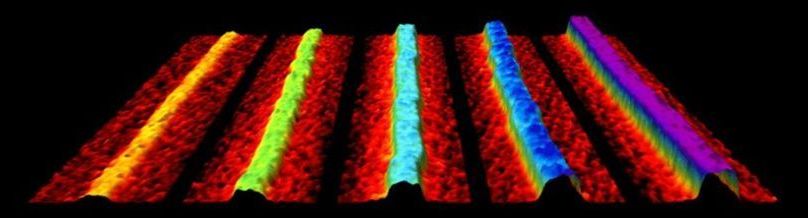
Using a novel technique called “nano texturing,” scientists at the University of Surrey in England have successfully modified ultra-thin graphene sheets to create the most efficient light-absorbent material to date, which is capable of generating electricity from both captured light and waste heat. They described their work in a new paper in Science Advances.

Graphene is often touted as a wonder material because of its many useful properties, most notably its excellent electrical conductivity and remarkable mechanical strength. This makes it promising for any number of practical applications (a big part of why it proved Nobel-worthy in 2010). Here, let the good folks at SciShow explain:

New Virtual Reality Suit Lets You Reach Out & Touch ‘Environment’

And, this will only be the beginning because with the lightering weight materials that have been develop we will see some amazing VR suits coming.


Virtual reality could one day incorporate all the senses, creating a rich and immersive experience, but existing virtual reality headsets only simulate things you can see and hear. But now, a group of engineers wants to help people “touch” virtual environments in a more natural way, and they built a wearable suit to do just that.

Designed by Lucian Copeland, Morgan Sinko and Jordan Brooks while they were students at the University of Rochester, in New York, the suit looks something like a bulletproof vest or light armor. Each section of the suit has a small motor in it, not unlike the one that makes a mobile phone vibrate to signal incoming messages. In addition, there are small accelerometers embedded in the suit’s arms.

The vibrations provide a sense of touch when a virtual object hits that part of the body, and the accelerometers help orient the suit’s limbs in space, the researchers said. [Photos: Virtual Reality Puts Adults in a Child’s World].

ATR 72 prototype tests all-electrical energy management system

European turboprop aircraft manufacturer ATR said a prototype ATR 72 conducted a demonstration flight to test an all-electrical energy management system that aims to optimize electrical power distribution.

The flight is the second the ATR 72 demonstration aircraft has flown as part of the European Union’s “Clean Sky Joint Undertaking” program. The first test flight by the ATR 72 prototype, conducted in July 2015, trialed “new and more effective composite insulation materials and new vibro-acoustic sensors integrated into a large panel of the ATR aircraft fuselage,” ATR said in a statement.

The manufacturer said the two demonstration flights “also tested new generation optical fibers for improved identification of micro-cracks and easier maintenance.”

NASA’s IBEX Observations Pin Down Interstellar Magnetic Field

The new paper is based on one particular theory of the origin of the IBEX ribbon, in which the particles streaming in from the ribbon are actually solar material reflected back at us after a long journey to the edges of the sun’s magnetic boundaries. (NASA Image)

BREVARD COUNTY, FLORIDA – The new paper is based on one particular theory of the origin of the IBEX ribbon, in which the particles streaming in from the ribbon are actually solar material reflected back at us after a long journey to the edges of the sun’s magnetic boundaries.

A giant bubble, known as the heliosphere, exists around the sun and is filled with what’s called solar wind, the sun’s constant outflow of ionized gas, known as plasma.

Artificial control of exciplexes opens possibilities for new electronics

Demonstrating a strategy that could form the basis for a new class of electronic devices with uniquely tunable properties, researchers at Kyushu University were able to widely vary the emission color and efficiency of organic light-emitting diodes based on exciplexes simply by changing the distance between key molecules in the devices by a few nanometers.

This new way to control electrical properties by slightly changing the device thickness instead of the materials could lead to new kinds of organic electronic devices with switching behavior or that reacts to external factors.

Organic such as OLEDs and organic solar cells use thin films of for the electrically active materials, making flexible and low-cost devices possible.

Microrobots learn from ciliates

Ciliates can do amazing things: Being so tiny, the water in which they live is like thick honey to these microorganisms. In spite of this, however, they are able to self-propel through water by the synchronized movement of thousands of extremely thin filaments on their outer skin, called cilia. Researchers from the Max Planck Institute for Intelligent Systems in Stuttgart are now moving robots that are barely perceptible to the human eye in a similar manner through liquids. For these microswimmers, the scientists are neither employing complex driving elements nor external forces such as magnetic fields. The team of scientists headed by Peer Fischer have built a ciliate-inspired model using a material that combines the properties of liquid crystals and elastic rubbers, rendering the body capable of self-propelling upon exposure to green light. Mini submarines navigating the human body and detecting and curing diseases may still be the stuff of science fiction, but applications for the new development in Stuttgart could see the light-powered materials take the form of tiny medical assistants at the end of an endoscope.

Their tiny size makes life extremely difficult for swimming microorganisms. As their movement has virtually no momentum, the friction between the water and their outer skin slows them down considerably — much like trying to swim through thick honey. The viscosity of the medium also prevents the formation of turbulences, something that could transfer the force to the water and thereby drive the swimmer. For this reason, the filaments beat in a coordinated wave-like movement that runs along the entire body of the single-celled organism, similar to the legs of a centipede. These waves move the liquid along with them so that the ciliate — measuring roughly 100 micrometres, i.e. a tenth of a millimetre, as thick as a human hair — moves through the liquid.

“Our aim was to imitate this type of movement with a microrobot,” says Stefano Palagi, first author of the study at the Max Planck Institute for Intelligent Systems in Stuttgart, which also included collaborating scientists from the Universities of Cambridge, Stuttgart and Florence. Fischer, who is also a Professor for Physical Chemistry at the University of Stuttgart, states that it would be virtually impossible to build a mechanical machine at the length scale of the ciliate that also replicates its movement, as it would need to have hundreds of individual actuators, not to mention their control and energy supply.

Quantum Algorithms and Their Discontents

Interesting read; however, the author has limited his view to Quantum being only a computing solution when in fact it is much more. Quantum technology does offer faster processing power & better security; but, Quantum offers us Q-Dots which enables us to enrich medicines & other treatments, improves raw materials including fuels, even vegetation.

For the first time we have a science that cuts across all areas of technology, medical & biology, chemistry, manufacturing, etc. No other science has been able to achieve this like Quantum.

Also, the author in statements around being years off has some truth if we’re suggesting 7 yrs then I agree. However, more than 7 years I don’t agree especially with the results we are seeing in Quantum Networking.

Not sure of the author’s own inclusion on some of the Quantum Technology or Q-Dot experiements; however, I do suggest that he should look at Quantum with a broader lens because there is a larger story around Quantum especially in the longer term as well look to improve things like BMI, AI, longevity, resistent materials for space, etc/.


I recently read Seth Lloyd’s A Turing Test for Free Will — conveniently related to the subject of the blog’s last piece, and absolutely engrossing. It’s short, yet it makes a wonderful nuance in the debate over determinism, arguing that predictable functions can still have unpredictable outcomes, known as “free will functions.”

I had thought that the world only needed more funding, organized effort, and goodwill to solve its biggest threats concerning all of humanity, from molecular interactions in fatal diseases to accessible, accurate weather prediction for farmers. But therein lies the rub: to be able to tackle large-scale problems, we must be able to analyze all the data points associated to find meaningful recourses in our efforts. Call it Silicon Valley marketing, but data analysis is important, and fast ways of understanding that data could be the key to faster solution implementation.

Can a tree grow in space?

Satellites and spacecraft are generally complex to build on the ground, expensive to launch and obsolete in a decade or less.

These objects end up floating in orbit around the planet contributing to the pollution surrounding the Earth. But what if there was an alternative?

That’s the question David Barnhart, director of USC’s Space Engineering Research Center and lead for the Space Systems and Technology group for the USC Information Sciences Institute, is contemplating. What if we could just “grow” spacecraft, repurpose a hybrid of inorganic and organic materials and even allow food to grow in space?

Graphene May Soon be Produced Commercially, Thanks to a Chance Discovery

Graphene is too delicate to be produced commercially, but it seem that scientists have now stumbled upon the correct method of tuning it.

Graphene has many extraordinary properties. It is carbon, but it comes in the form of a two-dimensional, atomic thick, honeycomb lattice.

Remarkably, it is 100 times stronger than the strongest steel known to man, and is a very efficient conductor of heat and electricity. The possible applications for graphene-based electronics are myriad: they include better solar cells, OLEDs, batteries and supercapacitors, and they can also be used to make faster microchips that run on very little power.

/* */