Toggle light / dark theme

This ‘Living Touch Screen’ Is Made out of Bacteria and Gold

A demonstration of the pressure sensor built by bacteria in action as a researcher taps out some Morse code.

As wonderfully bizarre as it sounds, growing touch screens from a bacterial soup isn’t the team’s ultimate goal.

Materials scientists have long sought to blur the line between the inorganic and organic, explain Neydis Morales and Dr. Megan McClean at the University of Wisconsin-Madison, who were not involved in the work.

Liquid metal brings soft robotics a step closer

Scientists have invented a way to morph liquid metal into physical shapes.

Researchers at the University of Sussex and Swansea University have applied electrical charges to manipulate liquid metal into 2D shapes such as letters and a heart.

The team says the findings represent an “extremely promising” new class of materials that can be programmed to seamlessly change shape. This open up new possibilities in ‘soft robotics’ and shape-changing displays, the researcher say.

Inspired by Octopus Skin, Engineers Develop a Programmable “Camouflaging” Material

WOODS HOLE, Mass.—For the octopus and cuttlefish, instantaneously changing their skin color and pattern to disappear into the environment is just part of their camouflage prowess. These animals can also swiftly and reversibly morph their skin into a textured, 3D surface, giving the animal a ragged outline that mimics seaweed, coral, or other objects it detects and uses for camouflage.

This week, engineers at Cornell University report on their invention of stretchable surfaces with programmable 3D texture morphing, a synthetic “camouflaging skin” inspired by studying and modeling the real thing in octopus and cuttlefish. The engineers, along with collaborator and cephalopod biologist Roger Hanlon of the Marine Biological Laboratory (MBL), Woods Hole, report on their controllable soft actuator in the October 13 issue of Science.

Led by James Pikul and Rob Shepherd, the team’s pneumatically activated material takes a cue from the 3D bumps, or papillae, that cephalopods can express in one-fifth of a second for camouflage, and then retract to swim away with minimal hydrodynamic drag. (See video below of live Octopus rebescens expressing its skin papillae.)

A novel textile material that keeps itself germ-free

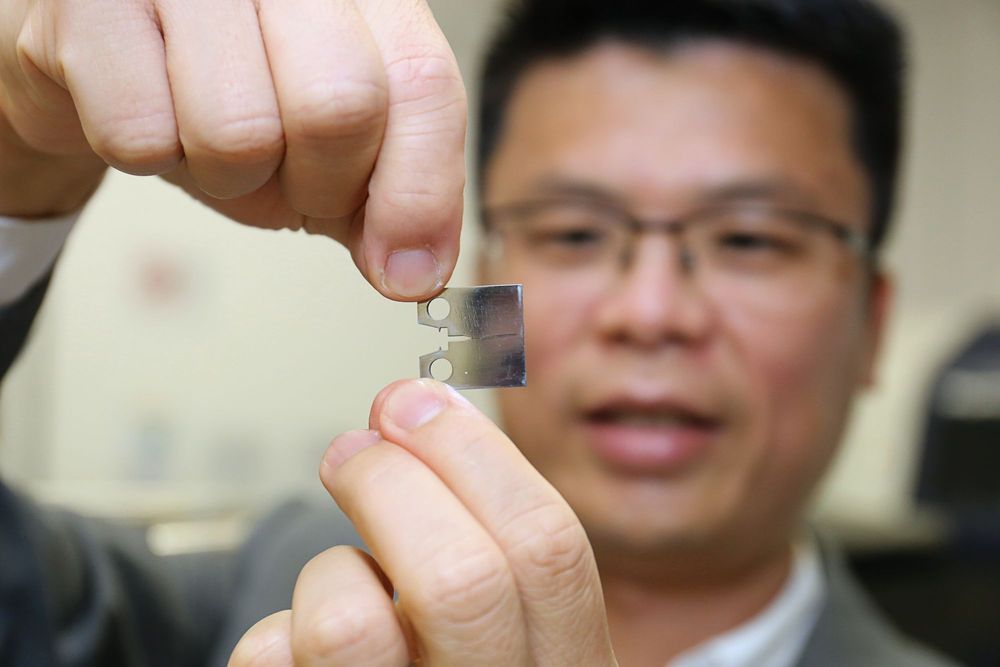
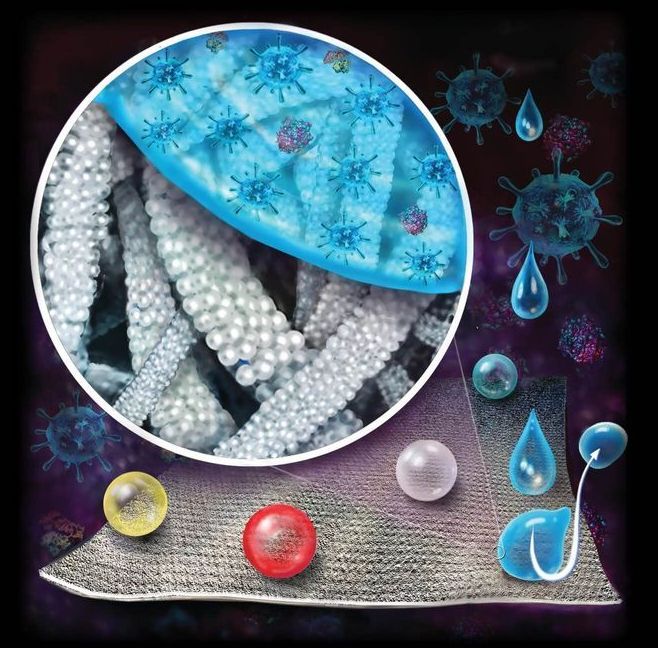
Scientists have developed a novel weapon in the battle against deadly hospital-acquired infections — a textile that disinfects itself.

And independent tests show it can reduce bacteria levels by more than 90 per cent.

By incorporating the specially-engineered textile in a device designed to be used on hospital doors instead of the traditional aluminium door plate, that part of the door that people push to open it — they aim to bolster hygiene.

Machs Effect interstellar propellentless propulsion mission proposal at NASA NIAC

Finally Mach Effect propulsion had gotten useful levels of funding and will get a validation test with NASA. They reported interim results and have made good progress. Nextbigfuture covered the announcement of funding by NASA NIAC for mach effect propulsion in April 2017. They now have presented the new experiments and path forward with the needed materials to clearly prove significant propulsion and unambiguous space experiments. They have advanced the experimental work and will get test state-of-the-art PIN-PMN-PT materials. They have demonstrated a Force versus Voltage scaling relationship that is consistent with the theory. They have a roadmap to continue.

Lunar Regolilth

The Global Space Organization plans to utilize lunar regolith as a construction material when we build our GSO Lunar Station One, but lunar regolith also contains many elements that can be utilized to sustain life and human habitation on the lunar surface.

Averages of these elements found:
• Oxygen % 60.9
• Silicon % 16.4
• Aluminum % 9.4
• Calcium % 5.8
• Magnesium % 4.2
• Iron % 2.3
• Sodium % 0.4
• Titanium % 0.3

There are many traces elements found as well that could be used to refine plastics, produce sugars, vitamins and harness gasses such as neon and helium.

/* */