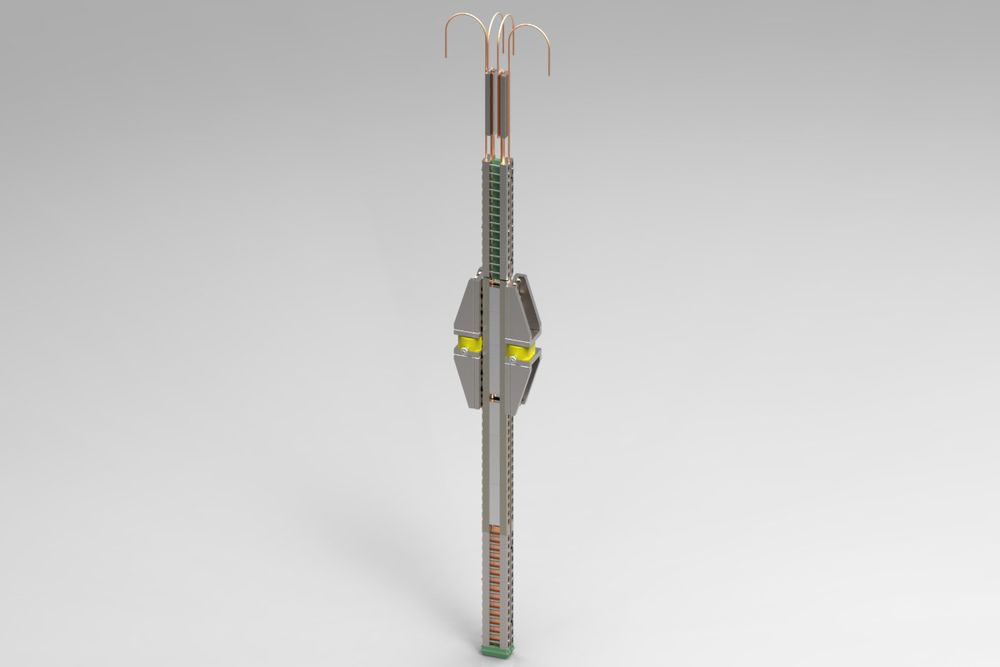
MIT and Commonwealth Fusion Systems developed and tested a high-temperature superconductor technology (HTS) cable that can be engineered into the high-performance magnets for tokamaks like SPARC.

Colder, Colder…
The process of sintering, or bonding the metals that make up the flexible circuits, usually happens at 572 degrees Fahrenheit.
“The skin surface cannot withstand such a high temperature, obviously,” Penn State engineer and lead author Hanyu “Larry” Cheng said in a press release. “To get around this limitation, we proposed a sintering aid layer — something that would not hurt the skin and could help the material sinter together at a lower temperature.”
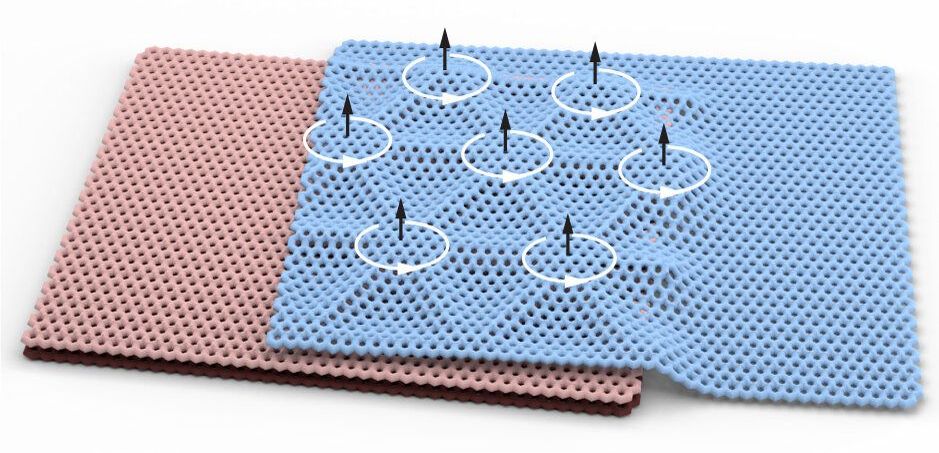
Since the discovery of graphene more than 15 years ago, researchers have been in a global race to unlock its unique properties. Not only is graphene—a one-atom-thick sheet of carbon arranged in a hexagonal lattice—the strongest, thinnest material known to man, it is also an excellent conductor of heat and electricity.
Now, a team of researchers at Columbia University and the University of Washington has discovered that a variety of exotic electronic states, including a rare form of magnetism, can arise in a three-layer graphene structure.
The findings appear in an article published Oct. 12 in Nature Physics.

NASA’s OSIRIS-REx Asteroid Sample Return Mission now knows much more about the material it will be collecting in just a few weeks.
Goddard’s Amy Simon found that carbon-bearing, organic material is widespread on the asteroid’s surface, including at the mission’s primary sample site, Nightingale, where OSIRIS-REx will make its first sample collection attempt on Oct.20.
These and other findings indicate that hydrated minerals and organic material will likely be present in the collected sample.
O,.o.
To solve a 100-year puzzle in metallurgy about why single crystals show staged hardening while others don’t, Lawrence Livermore National Laboratory (LLNL) scientists took it down to the atomistic level.
The research appears in the Oct. 5 edition of Nature Materials.
For millennia, humans have exploited the natural property of metals to become stronger or harden when mechanically deformed. Ultimately rooted in the motion of dislocations, mechanisms of metal hardening have remained in the crosshairs of physical metallurgists for more than a century.
Diamonds have a firm foothold in our lexicon. Their many properties often serve as superlatives for quality, clarity and hardiness. Aside from the popularity of this rare material in ornamental and decorative use, these precious stones are also highly valued in industry where they are used to cut and polish other hard materials and build radiation detectors.
More than a decade ago, a new property was uncovered in diamonds when high concentrations of boron are introduced to it: superconductivity. Superconductivity occurs when two electrons with opposite spin form a pair (called a Cooper pair), resulting in the electrical resistance of the material being zero. This means a large supercurrent can flow in the material, bringing with it the potential for advanced technological applications. Yet, little work has been done since to investigate and characterize the nature of a diamond’s superconductivity and therefore its potential applications.
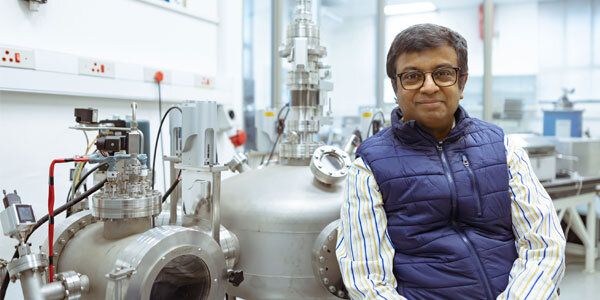
New research led by Professor Somnath Bhattacharyya in the Nano-Scale Transport Physics Laboratory (NSTPL) in the School of Physics at the University of the Witwatersrand in Johannesburg, South Africa, details the phenomenon of what is called “triplet superconductivity” in diamond. Triplet superconductivity occurs when electrons move in a composite spin state rather than as a single pair. This is an extremely rare, yet efficient form of superconductivity that until now has only been known to occur in one or two other materials, and only theoretically in diamonds.
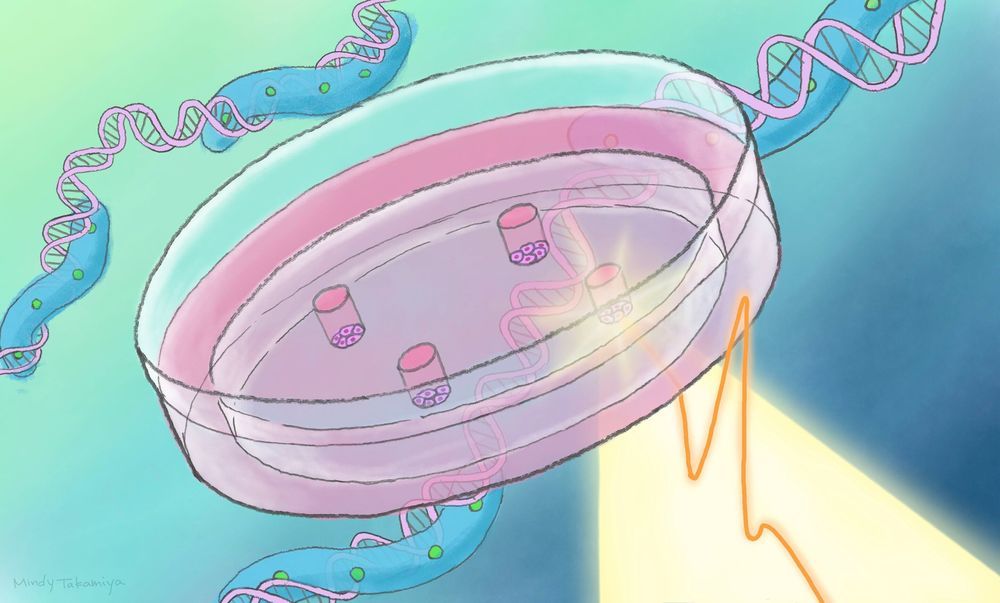
Terahertz light pulses change gene expression in stem cells, report researchers from Kyoto University’s Institute for Integrated Cell-Material Sciences (iCeMS) and Tokai University in Japan in the journal Optics Letters. The findings come thanks to a new tool, with implications for stem cell research and regenerative therapy development.
Terahertz waves fall in the far infrared/microwave part of the electromagnetic spectrum and can be produced by powerful lasers. Scientists have used terahertz pulses to control the properties of solid-state materials. They also have potential for manipulating living cells, as they don’t damage them the way that ultraviolet or infrared light does. Research so far has led to contradictory findings about their effects on cells, possibly because of the way the experiments have been conducted.
ICeMS microengineer Ken-ichiro Kamei and physicist Hideki Hirori worked with colleagues to develop a better tool for investigating what happens when terahertz pulses are shone on human cells. The apparatus overcomes issues with previous techniques by placing cells in tiny microwells that have the same area as the terahertz light.
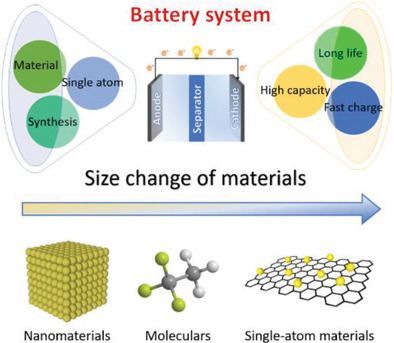
An international team of Johannes Kepler University researchers is developing robots made from soft materials. A new article in the journal Communications Materials demonstrates how these kinds of soft machines react using weak magnetic fields to move very quickly—even grabbing a quick-moving fly that has landed on it.
When we imagine a moving machine, such as a robot, we picture something largely made out of hard materials, says Martin Kaltenbrunner. He and his team of researchers at the JKU’s Department of Soft Matter Physics and the LIT Soft Materials Lab have been working to build a soft materials-based system. When creating these kinds of systems, there is a basic underlying idea to create conducive conditions that support close robot-human interaction in the future—without the solid machine physically harming humans.
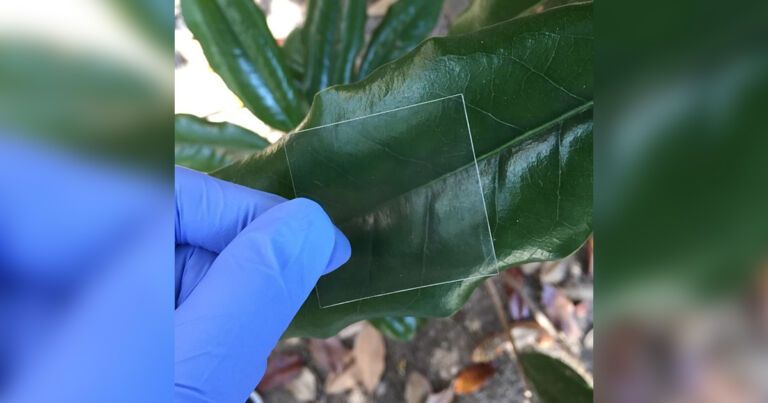
It’s a lucrative concept that has drawn the attention of researchers across the globe in recent years.
But thanks to a new generation of futuristic building materials, those materials could be poised for a significant upgrade. A team of researchers at the USDA and several research institutions say they’ve developed “transparent wood,” a glass-like material made almost entirely out of trees that they claim is stronger, safer, more cost efficient and more thermally efficient than glass.
Kicking Glass
It’s a lucrative concept that has drawn the attention of multiple research teams across the globe, all working on similar concepts.