ABSTRACT. We propose a deep-learning approach based on generative adversarial networks (GANs) to reduce noise in weak lensing mass maps under realistic conditio.


From above, the Antarctic Ice Sheet might look like a calm, perpetual ice blanket that has covered Antarctica for millions of years. But the ice sheet can be thousands of meters deep at its thickest, and it hides hundreds of meltwater lakes where its base meets the continent’s bedrock. Deep below the surface, some of these lakes fill and drain continuously through a system of waterways that eventually drain into the ocean.
Now, with the most advanced Earth-observing laser instrument NASA has ever flown in space, scientists have improved their maps of these hidden lake systems under the West Antarctic ice sheet—and discovered two more of these active subglacial lakes.
The new study provides critical insight for spotting new subglacial lakes from space, as well as for assessing how this hidden plumbing system influences the speed at which ice slips into the Southern Ocean, adding freshwater that may alter its circulation and ecosystems.

“Because nothing can protect hardware, software, applications or data from a quantum-enabled adversary, encryption keys and data will require re-encrypting with a quantum-resistant algorithm and deleting or physically securing copies and backups.” v/@preskil… See More.
To ease the disruption caused by moving away from quantum-vulnerable cryptographic code, NIST has released a draft document describing the first steps of that journey.
We know less about the planet’s seabed than we do about the surface of the Moon or Mars. By the end of the decade, scientists are hoping to create a detailed map of these unexplored, submerged territories. They’ve already uncovered some spectacular features.
#Oceans #Moonshot #BloombergQuicktake.
——-
Like this video? Subscribe: https://www.youtube.com/Bloomberg?sub_confirmation=1
Become a Quicktake Member for exclusive perks: https://www.youtube.com/bloomberg/join.
QuickTake Originals is Bloomberg’s official premium video channel. We bring you insights and analysis from business, science, and technology experts who are shaping our future. We’re home to Hello World, Giant Leap, Storylines, and the series powering CityLab, Bloomberg Businessweek, Bloomberg Green, and much more.
Subscribe for business news, but not as you’ve known it: exclusive interviews, fascinating profiles, data-driven analysis, and the latest in tech innovation from around the world.
Visit our partner channel QuickTake News for breaking global news and insight in an instant.
The artificial intelligence revolution is just getting started. But it is already transforming conflict. Militaries all the way from the superpowers to tiny states are seizing on autonomous weapons as essential to surviving the wars of the future. But this mounting arms-race dynamic could lead the world to dangerous places, with algorithms interacting so fast that they are beyond human control. Uncontrolled escalation, even wars that erupt without any human input at all.
DW maps out the future of autonomous warfare, based on conflicts we have already seen – and predictions from experts of what will come next.
For more on the role of technology in future wars, check out the extended version of this video – which includes a blow-by-blow scenario of a cyber attack against nuclear weapons command and control systems: https://youtu.be/TmlBkW6ANsQ
Subscribe: https://www.youtube.com/user/deutschewelleenglish?sub_confirmation=1
For more news go to: http://www.dw.com/en/
Follow DW on social media:
►Facebook: https://www.facebook.com/deutschewellenews/
►Twitter: https://twitter.com/dwnews.
►Instagram: https://www.instagram.com/dwnews.
Für Videos in deutscher Sprache besuchen Sie: https://www.youtube.com/dwdeutsch.
#AutonomousWeapons #ArtificialIntelligence #ModernWarfare
Researchers observed more than 500 of these mysterious cosmic explosions, unraveling the hidden nature of their sources.
The most popular theory suggests that FRBs come from neutron stars, the collapsed cores of massive stars. Scientists believe that the explosions could be a result of a specific type of neutron star known as a magnetar, named so for their powerful magnetic fields, thousands of trillions of times more powerful than Earth’s fields.
“The reason we think that’s true is because they are the only thing that we know of that could plausibly produce such energetic flashes in such a short duration of time,” Masui said. “Otherwise, we don’t really know how they’re created.”
Located at the Dominion Radio Astrophysical Observatory in British Columbia, Canada, the CHIME telescope began operating in 2018. The stationary telescope is made up of four giant cylindrical radio antennas.
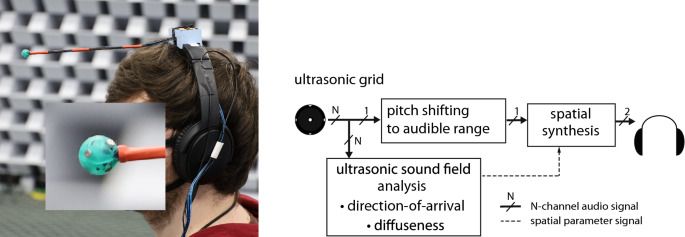
In principle, any pitch-shifting technique may be employed, provided that the frequency-dependent parameters analysed from the ultrasonic sound-field are mapped correctly to the frequency scale of the pitch-shifted signal. Since the spatial parameters are averaged over frequency in the currently employed configuration of the device, the frequency mapping is not required in this case. Instead, each time frame of the pitch shifted signal is spatialised according to a frequency-averaged direction. The pitch-shifting technique used for the application targeted in this article should be capable of large pitch-shifting ratios, while also operating within an acceptable latency. Based on these requirements, the phase-vocoder approach15,16 was selected for the real-time rendering in this study, due to its low processing latency and acceptable signal quality with large pitch-shifting ratios. However, the application of other pitch-shifting methods is also demonstrated with recordings processed off-line and described in the Results section.
In summary, the proposed processing approach permits frequency-modified signals to be synthesised with plausible binaural and monaural cues, which may subsequently be delivered to the listener to enable the localisation of ultrasonic sound sources. Furthermore, since the super-hearing device turns with the head of the listener, and the processing latency of the device was constrained to 44 ms, the dynamic cues should also be preserved. Note that the effect of processing latency has been previously studied in the context of head-tracked binaural reproduction systems, where it has been found that a system latency above 50–100 ms can impair the spatial perception17,18. Therefore, it should be noted that a trade-off must be made between: attaining high spatial image and timbral quality (which are improved through longer temporal windows and a higher level of overlapping) and having low processing latency (which relies on shorter windows and reduced overlapping). The current processing latency has been engineered so that both the spatial image and audio quality after pitch-shifting, as determined based on informal listening, remain reasonably high.
One additional advantage of the proposed approach is that only a single signal is pitch shifted, which is inherently more computationally efficient than pitch-shifting multiple signals; as would be required by the three alternative suggestions described in the Introduction section. Furthermore, the imprinting of the spatial information onto the signal only after pitch-shifting, ensures that the directional cues reproduced for the listener are not distorted by the pitch-shifting operation. The requirements for the size of microphone array are also less stringent compared to the requirements for an Ambisonics-based system. In this work, an array with a diameter of 11 mm was employed, which has a spatial aliasing frequency of approximately 17 kHz. This therefore prohibits the use of Ambisonics for the ultrasonic frequencies with the present array. By contrast, the employed spatial parameter analysis can be conducted above the spatial aliasing frequency; provided that the geometry of the array is known and that the sensors are arranged uniformly on the sphere.

Chipmaker Nvidia is acquiring DeepMap, the high-definition mapping startup announced. The company said its mapping IP will help Nvidia’s autonomous vehicle technology sector, Nvidia Drive.
“The acquisition is an endorsement of DeepMap’s unique vision, technology and people,” said Ali Kani, vice president and general manager of Automotive at Nvidia, in a statement. “DeepMap is expected to extend our mapping products, help us scale worldwide map operations and expand our full self-driving expertise.”
One of the biggest challenges to achieving full autonomy in a passenger vehicle is achieving proper localization and updated mapping information that reflects current road conditions. By integrating DeepMap’s tech, Nvidia’s autonomous stack should have greater precision, giving the vehicle enhanced abilities to locate itself on the road.
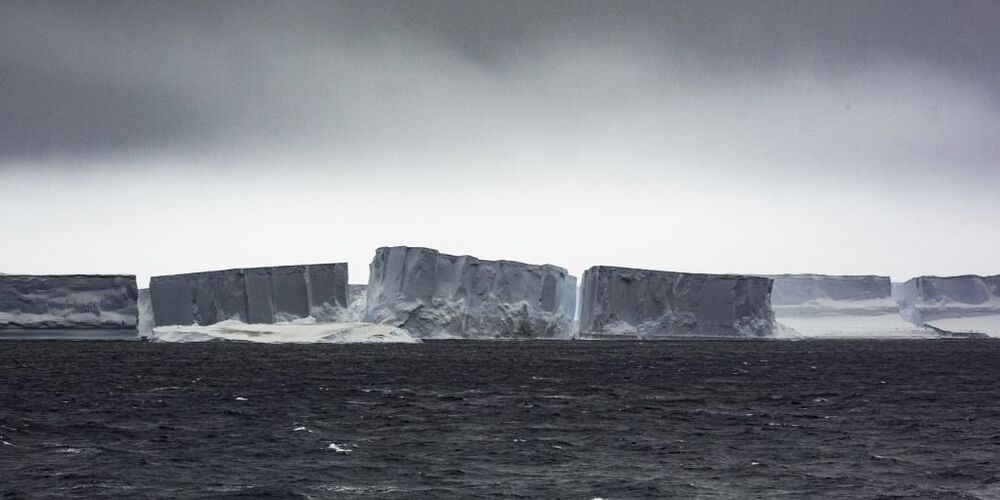
National Geographic announced Tuesday that it is officially recognizing the body of water surrounding the Antarctic as the Earth’s fifth ocean: the Southern Ocean.
The change marks the first time in over a century that the organization has redrawn the world’s oceanic maps, which have historically only included four: the Atlantic, Pacific, Indian and Arctic Oceans.
“The Southern Ocean has long been recognized by scientists, but because there was never agreement internationally, we never officially recognized it,” National Geographic Society geographer Alex Tait told the magazine.