New software applications are cleverly mapping audio to transport users to another space.


A new tool helps researchers explore the types of cells that make up brain organoids — clusters of cells that can mimic the basic structure, function and development of different parts of the brain.
The software, detailed in Cell Stem Cell, maps information about when and where genes are expressed in brain organoids onto a reference atlas of the developing mouse brain. Scientists can use the resulting overlay to develop organoids that better recapitulate the developing brain, the team says, or to uncover the effects of gene mutations and other experimental perturbations.
Brain organoids derived from the cells of people with conditions such as autism have proved useful in capturing neuronal abnormalities. But the findings are muddied by methodological differences in how researchers develop these lab-grown blobs. Advanced techniques to profile gene expression in single cells have made it easier to identify the cell types in any given organoid. But it’s remained difficult to map those cell types onto different brain regions.

Starting September 27th.
If you still have a device running Android 2.3.7 (the final version of Gingerbread) or older, Google won’t let you sign in to your Google account on that device starting September 27th, according to a support document (via Liliputing).
“As part of our ongoing efforts to keep our users safe, Google will no longer allow sign-in on Android devices that run Android 2.3.7 or lower starting September 27, 2021,” the company says. “If you sign into your device after September 27, you may get username or password errors when you try to use Google products and services like Gmail, YouTube, and Maps.”
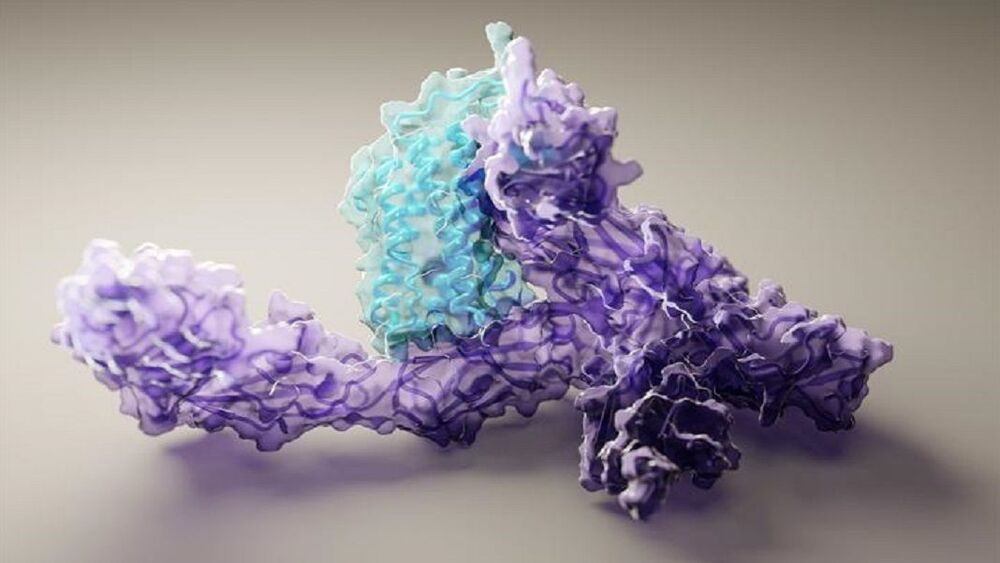
The tool next examines how one protein’s amino acids interact with another within the same protein, for example, by examining the distance between two distant building blocks. It’s like looking at your hands and feet fully stretched out, versus in a backbend measuring the distance between those extremities as you “fold” into a yoga pose.
Finally, the third track looks at 3D coordinates of each atom that makes up a protein building block—kind of like mapping the studs on a Lego block—to compile the final 3D structure. The network then bounces back and forth between these tracks, so that one output can update another track.
The end results came close to those of DeepMind’s tool, AlphaFold2, which matched the gold standard of structures obtained from experiments. Although RoseTTAFold wasn’t as accurate as AlphaFold2, it seemingly required much less time and energy. For a simple protein, the algorithm was able to solve the structure using a gaming computer in about 10 minutes.


From above, the Antarctic Ice Sheet might look like a calm, perpetual ice blanket that has covered Antarctica for millions of years. But the ice sheet can be thousands of meters deep at its thickest, and it hides hundreds of meltwater lakes where its base meets the continent’s bedrock. Deep below the surface, some of these lakes fill and drain continuously through a system of waterways that eventually drain into the ocean.
Now, with the most advanced Earth-observing laser instrument NASA has ever flown in space, scientists have improved their maps of these hidden lake systems under the West Antarctic ice sheet—and discovered two more of these active subglacial lakes.
The new study provides critical insight for spotting new subglacial lakes from space, as well as for assessing how this hidden plumbing system influences the speed at which ice slips into the Southern Ocean, adding freshwater that may alter its circulation and ecosystems.

“Because nothing can protect hardware, software, applications or data from a quantum-enabled adversary, encryption keys and data will require re-encrypting with a quantum-resistant algorithm and deleting or physically securing copies and backups.” v/@preskil… See More.
To ease the disruption caused by moving away from quantum-vulnerable cryptographic code, NIST has released a draft document describing the first steps of that journey.
We know less about the planet’s seabed than we do about the surface of the Moon or Mars. By the end of the decade, scientists are hoping to create a detailed map of these unexplored, submerged territories. They’ve already uncovered some spectacular features.
#Oceans #Moonshot #BloombergQuicktake.
——-
Like this video? Subscribe: https://www.youtube.com/Bloomberg?sub_confirmation=1
Become a Quicktake Member for exclusive perks: https://www.youtube.com/bloomberg/join.
QuickTake Originals is Bloomberg’s official premium video channel. We bring you insights and analysis from business, science, and technology experts who are shaping our future. We’re home to Hello World, Giant Leap, Storylines, and the series powering CityLab, Bloomberg Businessweek, Bloomberg Green, and much more.
Subscribe for business news, but not as you’ve known it: exclusive interviews, fascinating profiles, data-driven analysis, and the latest in tech innovation from around the world.
Visit our partner channel QuickTake News for breaking global news and insight in an instant.
The artificial intelligence revolution is just getting started. But it is already transforming conflict. Militaries all the way from the superpowers to tiny states are seizing on autonomous weapons as essential to surviving the wars of the future. But this mounting arms-race dynamic could lead the world to dangerous places, with algorithms interacting so fast that they are beyond human control. Uncontrolled escalation, even wars that erupt without any human input at all.
DW maps out the future of autonomous warfare, based on conflicts we have already seen – and predictions from experts of what will come next.
For more on the role of technology in future wars, check out the extended version of this video – which includes a blow-by-blow scenario of a cyber attack against nuclear weapons command and control systems: https://youtu.be/TmlBkW6ANsQ
Subscribe: https://www.youtube.com/user/deutschewelleenglish?sub_confirmation=1
For more news go to: http://www.dw.com/en/
Follow DW on social media:
►Facebook: https://www.facebook.com/deutschewellenews/
►Twitter: https://twitter.com/dwnews.
►Instagram: https://www.instagram.com/dwnews.
Für Videos in deutscher Sprache besuchen Sie: https://www.youtube.com/dwdeutsch.
#AutonomousWeapons #ArtificialIntelligence #ModernWarfare