Toggle light / dark theme

A Multidimensional Systems Biology Analysis of Cellular Senescence in Ageing and Disease

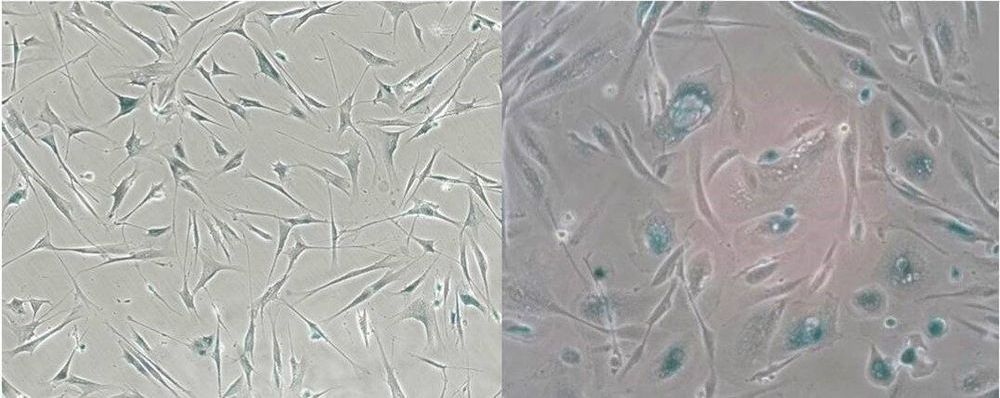
Cellular senescence, a permanent state of replicative arrest in otherwise proliferating cells, is a hallmark of ageing and has been linked to ageing-related diseases like cancer. Senescent cells have been shown to accumulate in tissues of aged organisms which in turn can lead to chronic inflammation. Many genes have been associated with cell senescence, yet a comprehensive understanding of cell senescence pathways is still lacking. To this end, we created CellAge (http://genomics.senescence.info/cells), a manually curated database of 279 human genes associated with cellular senescence, and performed various integrative and functional analyses. We observed that genes promoting cell senescence tend to be overexpressed with age in human tissues and are also significantly overrepresented in anti-longevity and tumour-suppressor gene databases. By contrast, genes inhibiting cell senescence overlapped with pro-longevity genes and oncogenes. Furthermore, an evolutionary analysis revealed a strong conservation of senescence-associated genes in mammals, but not in invertebrates. Using the CellAge genes as seed nodes, we also built protein-protein interaction and co-expression networks. Clusters in the networks were enriched for cell cycle and immunological processes. Network topological parameters also revealed novel potential senescence-associated regulators. We then used siRNAs and observed that of 26 candidates tested, 19 induced markers of senescence. Overall, our work provides a new resource for researchers to study cell senescence and our systems biology analyses provide new insights and novel genes regarding cell senescence.

Scientists find longevity biomarkers

An international group of scientists studied the effects of 17 lifespan-extending interventions on gene activity in mice and discovered genetic biomarkers of longevity. The results of their study were published in the journal Cell Metabolism.

Nowadays, dozens of interventions are known that extend the lifespan of various living organisms ranging from yeast to mammals. They include chemical compounds (e.g. rapamycin), genetic interventions (e.g. mutations associated with disruption of growth hormone synthesis), and diets (e.g. caloric restriction). Some targets of these interventions have been discovered. However, there is still no clear understanding of the systemic molecular mechanisms leading to lifespan extension.

A group of scientists from Skoltech, Moscow State University and Harvard University decided to fill this gap and identify crucial molecular processes associated with longevity. To do so, they looked at the effects of various lifespan-extending interventions on the activity of in a mouse, a commonly used model organism closely related to humans.

Rejuvenation Research Is Now a Mainstream Topic

It is a sure sign that the tide has turned when mainstream news outlets and magazines start publishing positive articles about aging research and the prospects of rejuvenation.

A refreshing change

Today, I want to highlight an article in MIT Technology Review in which the author, David Adam, gives a sensible and measured overview of what is happening in the field and manages to sidestep the usual negativity and misconceptions that often plague popular science pieces.

New Book Explores Future Scenarios of The Intelligence Supernova: What Will That Mean for Humanity? Immortality or Oblivion?

We are now on a collision course with the most significant event in the entire history of our planet comparable in criticality only to the emergence of life itself. This “Novacene” event would mark the technological maturity of human-machine civilization, as we are to inevitably transcend our biology, and even more importantly, we are to transcend our dimensionality by achieving the so-called Simulation Singularity.

Most of us are familiar with the concept of the Technological Singularity. While those terms can be often used interchangeably, the ’Intelligence Supernova’ adds a slightly different connotation — it means the Omega Point of Homo sapiens — the convergent point of exponential technologies and on a civilizational scale, progressively morphing into one Global Mind and a phase transition of humanity termed in the book ’The Syntellect Emergence’. This convergent point would signify no less than Self-Transcendence, in other words, engineered godhood.

Within the next few decades, we’ll witness accelerating changes so profound and swift that the linear progression of human history would eventuate as the Intelligence Supernova of astronomical significance, the “implosion” of all knowledge of man and “transcension” outside the dimensionality of “human” universe.

A novel technology for genome-editing a broad range of mutations in live organisms

The ability to edit genes in living organisms offers the opportunity to treat a plethora of inherited diseases. However, many types of gene-editing tools are unable to target critical areas of DNA, and creating such a technology has been difficult as living tissue contains diverse types of cells.

Now, Salk Institute researchers have developed a new tool—dubbed SATI—to edit the , enabling the team to target a broad range of mutations and cell types. The new genome-editing technology, described in Cell Research on August 23, 2019, could be expanded for use in a broad range of gene mutation conditions such as Huntington’s disease and the rare premature aging syndrome, progeria.

“This study has shown that SATI is a powerful tool for genome editing,” says Juan Carlos Izpisua Belmonte, a professor in Salk’s Gene Expression Laboratory and senior author of the paper. “It could prove instrumental in developing effective strategies for target-gene replacement of many different types of mutations, and opens the door for using genome-editing tools to possibly cure a broad range of genetic diseases.”

Study provides evidence that loving-kindness meditation slows cellular aging

In new research published in Psychoneuroendocrinology, scientists have shown that loving-kindness meditation has a positive impact at the cellular level. The study examined how different types of meditation influenced telomere length, an indicator of physiological aging.

Telomeres are the end caps of DNA on our chromosomes, which help in DNA replication and get shorter over time.

“Chronological age and biological age are not identical. The former is measured in years, whereas the latter is often indexed by telomere length,” the authors of the new study explained. “Telomeres progressively shorten with cell division (i.e., aging) in general, but may also be replenished, or lengthened, by the enzyme telomerase.”

Michael Greve at Ending Age-Related Diseases 2019

At Ending Age-Related Diseases, Michael Greve discussed the Forever Healthy Foundation and its Rejuvenation Now initiative along with the current state of rejuvenation biotechnology, including companies and therapies, and a direction for the future of this emerging industry.

See Forever Healthy’s Rejuvenation Now initiative at https://forever-healthy.org/en/initiatives/rejuvenation-now/

►Subscribe for more: https://www.youtube.com/user/LifespanIO?sub_confirmation=1
►This video is presented by LEAF. Please support our work by becoming a Lifespan Hero: http://lifespan.io/hero
#Rejuvenation #Biotechnology #EARD2019

Robotic Neck Brace Dramatically Improves Functions of ALS Patients

New York, NY—August 12, 2019—A novel neck brace, which supports the neck during its natural motion, was designed by Columbia engineers. This is the first device shown to dramatically assist patients suffering from Amyotrophic Lateral Sclerosis (ALS) in holding their heads and actively supporting them during range of motion. This advance would result in improved quality of life for patients, not only in improving eye contact during conversation, but also in facilitating the use of eyes as a joystick to control movements on a computer, much as scientist Stephen Hawkins famously did.


A team of engineers and neurologists led by Sunil Agrawal, professor of mechanical engineering and of rehabilitation and regenerative medicine, designed a comfortable and wearable robotic neck brace that incorporates both sensors and actuators to adjust the head posture, restoring roughly 70% of the active range of motion of the human head. Using simultaneous measurement of the motion with sensors on the neck brace and surface electromyography (EMG) of the neck muscles, it also becomes a new diagnostic tool for impaired motion of the head-neck. Their pilot study was published August 7 in the Annals of Clinical and Translational Neurology.

The brace also shows promise for clinical use beyond ALS, according to Agrawal, who directs the Robotics and Rehabilitation (ROAR) Laborator y. “The brace would also be useful to modulate rehabilitation for those who have suffered whiplash neck injuries from car accidents or have from poor neck control because of neurological diseases such as cerebral palsy,” he said.

/* */