PRRDetect is a new algorithm that identifies tumors with faulty DNA repair, helping doctors tailor cancer treatments more effectively. It marks a major step in using genomics for personalized cancer therapy. Researchers have developed a highly accurate algorithm, named PRRDetect, designed to iden
Category: information science – Page 70
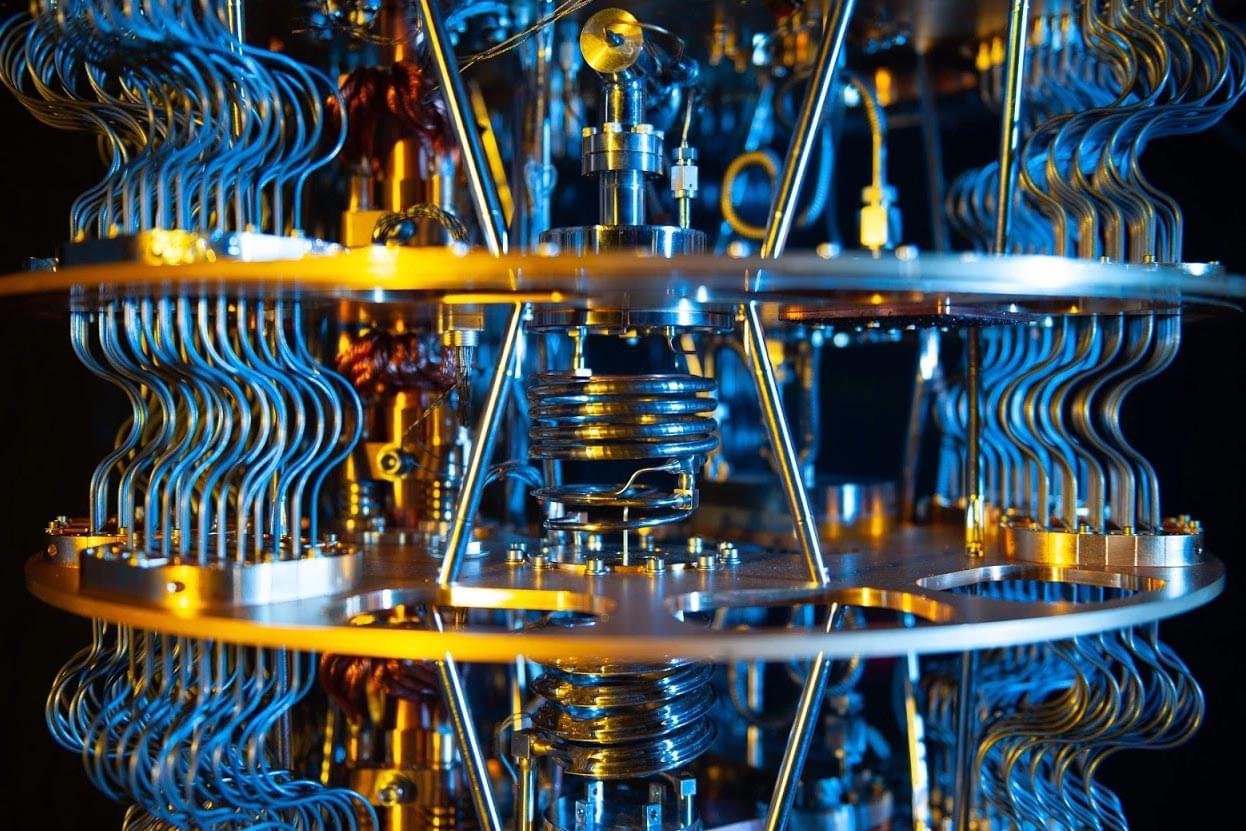
How 1,432 GPUs Cracked Google’s 53-Qubit Quantum Computer
Researchers have achieved a major leap in quantum computing by simulating Google’s 53-qubit Sycamore circuit using over 1,400 GPUs and groundbreaking algorithmic techniques. Their efficient tensor network methods and clever “top-k” sampling approach drastically reduce the memory and computational

Rethinking neutron star mergers: Study explores the effects of magnetic fields on their oscillating frequencies
Neutron star mergers are collisions between neutron stars, the collapsed cores of what were once massive supergiant stars. These mergers are known to generate gravitational waves, energy-carrying waves propagating through a gravitational field, which emerge from the acceleration or disturbance of a massive body.
Collisions between neutron stars have been the topic of many theoretical physics studies, as a deeper understanding of these events could yield interesting insights into how matter behaves at extreme densities. The behavior of matter at extremely high densities is currently described by a theoretical framework known as the equation of state (EoS).
Recent astrophysics research has explored the possibility that EoS features, such as phase transitions or a quark-hadron crossover, could be inferred from the gravitational wave spectrum observed after neuron stars have merged. However, most of these theoretical works did not consider the effects of magnetic fields on this spectrum.

Feigenbaum Constant
is a universal constant for functions approaching chaos via period doubling. It was discovered by Feigenbaum in 1975 (Feigenbaum 1979) while studying the fixed points of the iterated function.

Thermoelectric performance of quantum dots embedded in an Aharonov-Bohm ring: a Pauli master equation approach
Senapati, P., Parida, P. Sci Rep 15, 13,232 (2025). https://doi.org/10.1038/s41598-025-97337-0
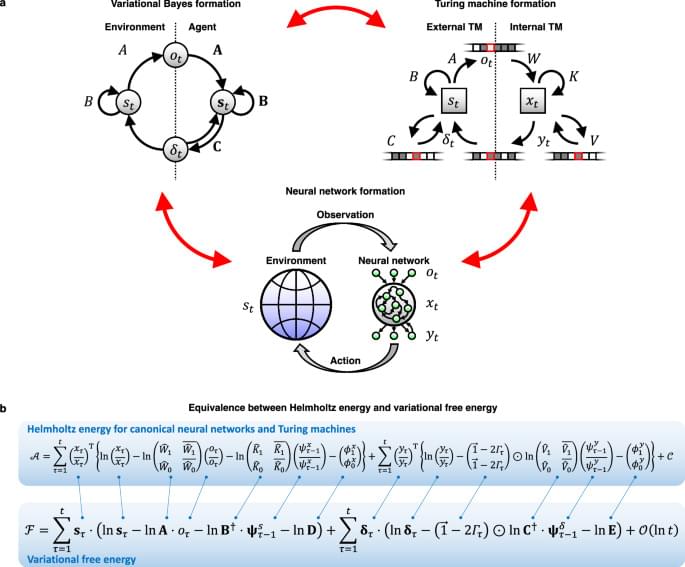
Triple equivalence for the emergence of biological intelligence
Characterizing the intelligence of biological organisms is challenging yet crucial. This paper demonstrates the capacity of canonical neural networks to autonomously generate diverse intelligent algorithms by leveraging an equivalence between concepts from three areas of cognitive computation: neural network-based dynamical systems, statistical inference, and Turing machines.
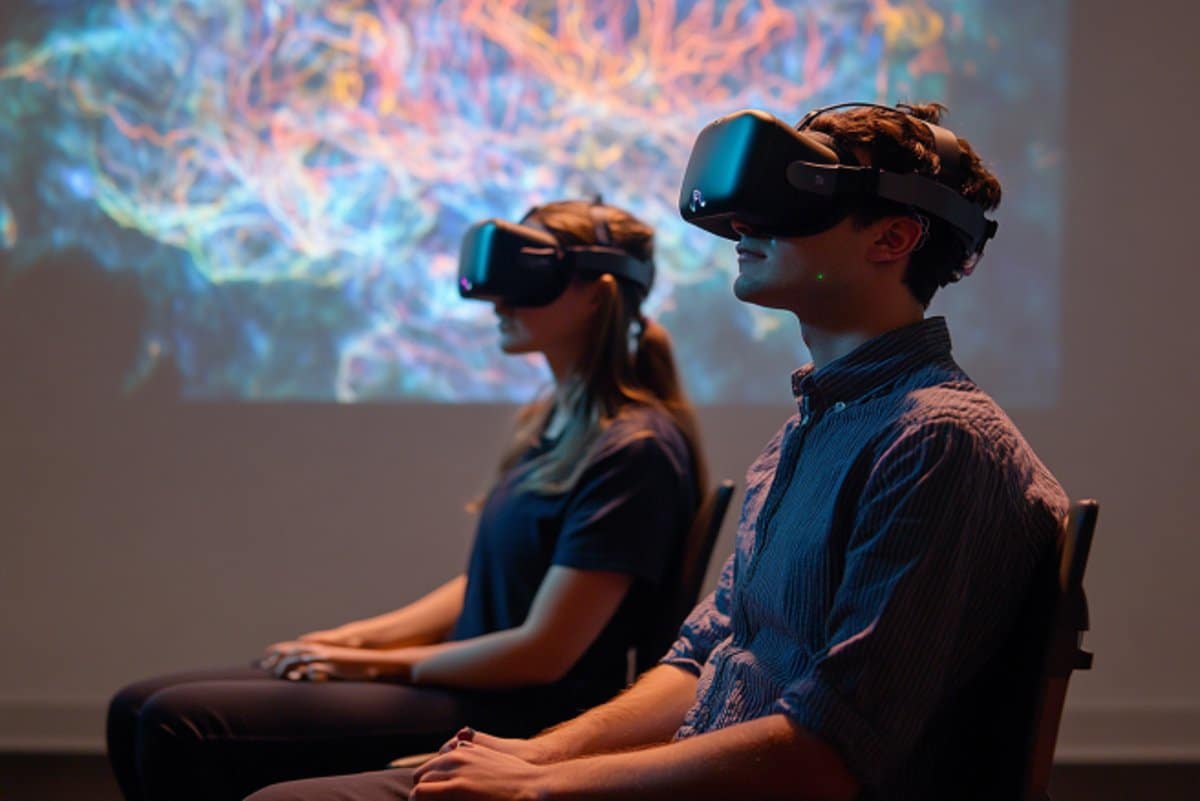
Neural Fingerprints Predict Team Flow in Social Interactions
Researchers have developed a novel algorithm that maps each person’s brain activity into a unique “neural fingerprint,” revealing stable, long-term neural traits.
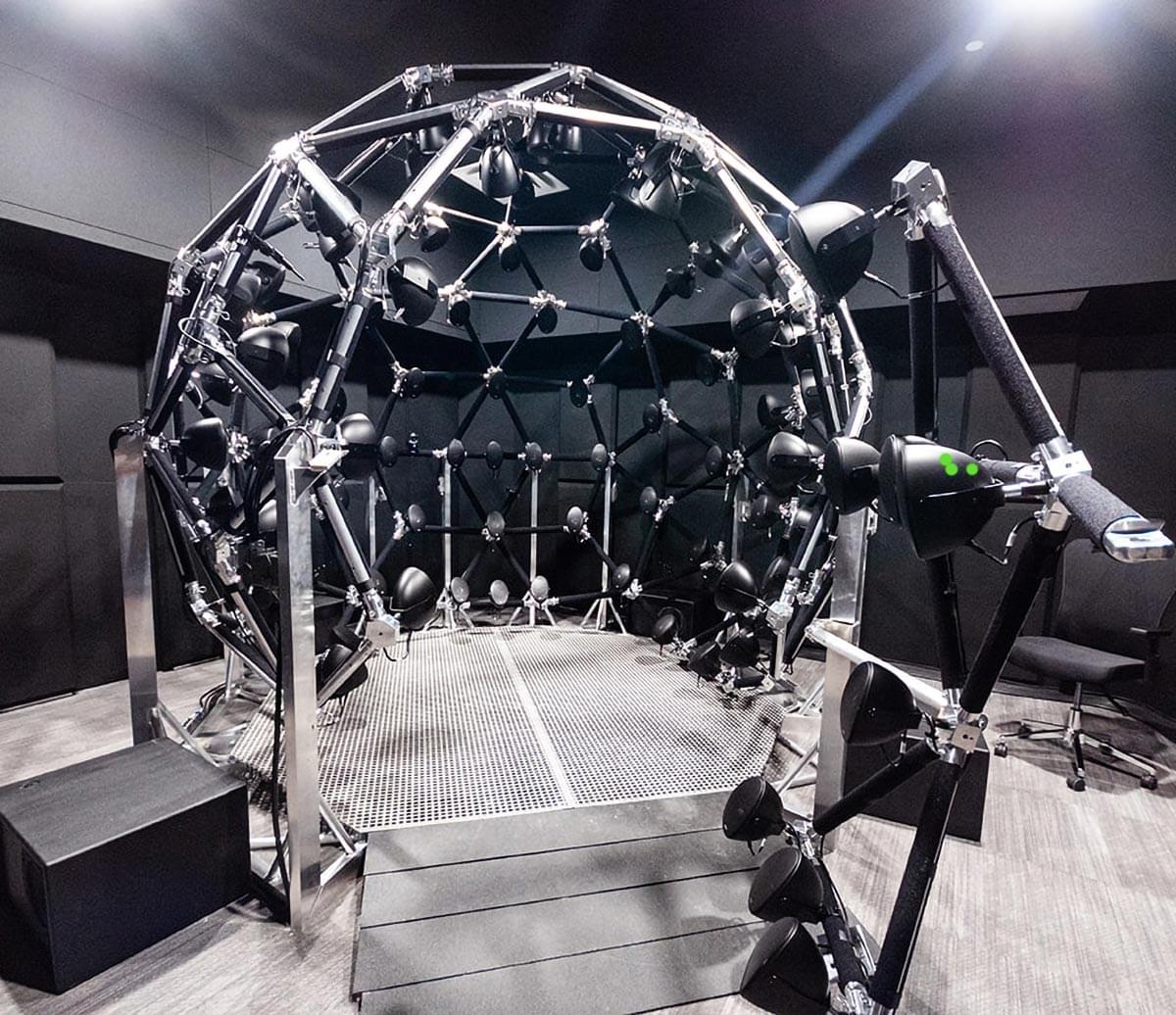
Beyond Surround Sound: Meet the Audio System That Recreates Reality
The Ambisonics algorithm generates immersive virtual soundscapes by utilizing a dome-shaped array of loudspeakers. Surround-sound systems can enhance a multimedia experience, but imagine a speaker setup capable of fully recreating a three-dimensional sound environment. Enter the AudioDome — no

[Literature Review] Two Heads are Better Than One: Test-time Scaling of Multi-agent Collaborative Reasoning
This paper introduces an adaptive multi-agent framework to enhance collaborative reasoning in large language models (LLMs). The authors address the challenge of effectively scaling collaboration and reasoning in multi-agent systems (MAS), which is an open question despite recent advances in test-time scaling (TTS) for single-agent performance.
The core methodology revolves around three key contributions:
1. **Dataset Construction:** The authors create a high-quality dataset, M500, comprising 500 multi-agent collaborative reasoning traces. This dataset is generated automatically using an open-source MAS framework (AgentVerse) and a strong reasoning model (DeepSeek-R1). To ensure quality, questions are selected based on difficulty, diversity, and interdisciplinarity. The generation process involves multiple agents with different roles collaborating to solve challenging problems. Data filtering steps are applied to ensure consensus among agents, adherence to specified formats (e.g., using tags like “ and ‘boxed{}‘), and correctness of the final answer. The filtering criteria are based on Consensus Reached, Format Compliance, and Correctness. The data generation is described in Algorithm 1 in the Appendix.

An evolutionary algorithmic phase transition 2.6 billion years ago may have sparked the emergence of eukaryotic cells
An international collaboration between four scientists from Mainz, Valencia, Madrid, and Zurich has published new research in the Proceedings of the National Academy of Sciences, shedding light on the most significant increase in complexity in the history of life’s evolution on Earth: the origin of the eukaryotic cell.
While the endosymbiotic theory is widely accepted, the billions of years that have passed since the fusion of an archaea and a bacteria have resulted in a lack of evolutionary intermediates in the phylogenetic tree until the emergence of the eukaryotic cell. It is a gap in our knowledge, referred to as the black hole at the heart of biology.
“The new study is a blend of theoretical and observational approaches that quantitatively understands how the genetic architecture of life was transformed to allow such an increase in complexity,” stated Dr. Enrique M. Muro, representative of Johannes Gutenberg University Mainz (JGU) in this project.