Toggle light / dark theme

Quantum computing breakthrough paves way for ultra-powerful machines

A crucial hurdle in the development of ultra-powerful quantum computers has been overcome through the development of the world’s first programmable system that can be scaled.

Researchers at the University of Maryland College Park built a quantum computer module that can be linked to other modules to perform simultaneous quantum algorithms.

“Quantum computers can solve certain problems more efficiently than any possible conventional computer,” states a paper published this week that details the researchers’ findings. “Small quantum algorithms have been demonstrated in multiple quantum computing platforms, many specifically tailored to hardware to implement a particular algorithm or execute a limited number of computational paths.

Treating disease at stage zero

It sounds really obvious, but hospitals aren’t for healthy people. The world’s entire health system is really there to react once people get ill. If doctors are able to catch an illness at stage one that’s great, but if it reaches stage three or four there’s often not that much that can be done. So what if we could treat patients at stage zero and predict the likelihood of contracting diseases? We could then get treatment to people who need it much earlier and take preventative steps to avoid illness altogether.

Currently, when we think of monitoring in healthcare we’re usually referring to monitoring patients’ reactions to drugs or treatments, but this is changing. No amateur runner’s uniform is complete these days without a Fitbit or some kind of analytics tool to monitor progress, so the idea of monitoring the healthy is becoming ingrained in the public’s consciousness. But Fitbits only scrape the surface of what we can do. What if the data from fitness trackers could be combined with medical records, census data and the details of supermarket loyalty cards to predict the likelihood of contracting a particular disease?

With big data we can move from reacting to predicting, but how do we move beyond just making predictions; how do we prevent disease from occurring altogether? Up until now all of our monitoring technology has been located outside of the body, but nano-sized entities made of DNA could one day patrol the body, only acting when they come into contact with specific cells – cancer cells, for example. The technology that would turn tiny machines – roughly the size of a virus – into molecular delivery trucks that transport medication is already being worked on by bioengineers. If this kind of technology can be used to treat cancer, without needing to release toxic agents into the body, can the same technology be inserted into a healthy person and lie in wait for the opportunity to fight disease on its host’s behalf?

New quantum computer device takes advantage of a loophole in causality

Researchers in Finland have figured out a way to reliably make quantum computers — technology that’s tipped to revolutionise computing in the coming years — even more powerful. And all they had to do was throw common sense out the window.

You’re almost certainly reading this article on a classical computer — which includes all phones, laptops, and tablets — meaning that your computer can only ever do one thing at a time. It reads one bit, then the next bit, then the next bit, and so on. The reading is lightning fast and combines millions or billions or trillions of bits to give you what you want, but the bits are always read and used in order.

So if your computer searches for the solution to a problem, it tries one answer (a particular batch of ones and zeros), checks how far the result is from the goal, tries another answer (a different batch), and repeats. For complicated problems, that process can take an incredibly long time. Sometimes, that’s good. Very clever multiplication secures your bank account, and faster or more efficient equation-solvers put that in jeopardy.

Rapid Superconducting Memory Cell Control System Developed

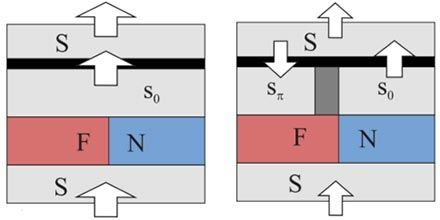
“With the operational function that we have proposed in these memory cells, there will be no need for time-consuming magnetization and demagnetization processes. This means that read and write operations will take only a few hundred picoseconds, depending on the materials and the geometry of the particular system, while conventional methods take hundreds or thousands of times longer than this,” said the study author Alexander Golubov, the head of Moscow Institute of Physics and Technology (MIPT)’s Laboratory of Quantum Topological Phenomena in Superconducting Systems.

Golubov and colleagues at Moscow State University have proposed creating basic memory cells based on quantum effects in superconductor “sandwiches.” Superconductors were predicted in the 1960s by the British physicist Brian Josephson. The electrons in these “sandwiches,” called “Josephson junctions,” are able to tunnel from one layer of a superconductor to another, passing through the dielectric like balls passing through a perforated wall.

Today, Josephson junctions are used both in quantum devices and conventional devices. For example, superconducting qubits are used to build the D-wave quantum system, which is capable of finding the minima of complex functions using the quantum annealing algorithm. There are also ultra-fast analogue-to-digital converters, devices to detect consecutive events, and other systems that do not require fast access to large amounts of memory. There have also been attempts to use the Josephson Effect to create ordinary processors. An experimental processor of this type was created in Japan in the late 1980s. In 2014, the research agency IAPRA resumed its attempts to create a prototype of a superconducting computer.

We should be more afraid of computers than we are – video

Specifically, artificially intelligent computers…


As sophisticated algorithms can complete tasks we once thought impossible, computers are seeming to become a real threat to humanity. Whether they decide to pulp us into human meat paste, or simply make our work completely unnecessary, argues technology reporter Alex Hern, we should be afraid of computers.

Using machine learning to rationally design future electronics materials

Even if we don’t create a true AI for a thousand years, these algorithms, pared with our exponentially increasing computing power, could have much of the same effect on our civilization as the more traditional, AI-centric type Singularity. Very, very soon.


A schematic diagram of machine learning for materials discovery (credit: Chiho Kim, Ramprasad Lab, UConn)

Replacing inefficient experimentation, UConn researchers have used machine learning to systematically scan millions of theoretical compounds for qualities that would make better materials for solar cells, fibers, and computer chips.

Led by UConn materials scientist Ramamurthy ‘Rampi’ Ramprasad, the researchers set out to determine which polymer atomic configurations make a given polymer a good electrical conductor or insulator, for example.

A polymer is a large molecule made of many repeating building blocks. The most familiar example is plastics. What controls a polymer’s properties is mainly how the atoms in the polymer connect to each other. Polymers can also have diverse electronic properties. For example, they can be very good insulators or good conductors. And what controls all these properties is mainly how the atoms in the polymer connect to each other.

AI is not as remarkable as it sounds

Let’s step back and consider the broader digital technology landscape for one moment. We have built our past, current, and new technology off of a digital foundation with machine language of standard not very complex algorithms that processes 0s & 1s which has been around since the 50’s. So, not too shock by this article; in fact we may not see a major leap in Humanoid Robots possibly until Quantum hits the mainstream. Quantum holds a lot of promise; however, it’s still too early to know for sure.


Artificial intelligence may be coming to your IT department sooner than you think, but not the way you might imagine.

DOE’s ARPA-E TERRA projects seek to accelerate sustainable energy crop development

ARPA-E creating sustainable energy crops for the production of renewable transportation fuels from biomass.


In Washington, the DOE’s ARPA-E TERRA projects seek to accelerate the development of sustainable energy crops for the production of renewable transportation fuels from biomass. To accomplish this, the projects uniquely integrate agriculture, information technology, and engineering communities to design and apply new tools for the development of improved varieties of energy sorghum. The TERRA project teams will create novel platforms to enhance methods for crop phenotyping (identifying and measuring the physical characteristics of plants) which are currently time-intensive and imprecise.

The new approaches will include automated methods for observing and recording characteristics of plants and advanced algorithms for analyzing data and predicting plant growth potential. The projects will also produce a large public database of sorghum genotypes, enabling the greater community of plant physiologists,

Bioinformaticians and geneticists to generate breakthroughs beyond TERRA. These innovations will accelerate the annual yield gains of traditional plant breeding and support the discovery of new crop traits that improve water productivity and nutrient use efficiency needed to improve the sustainability of bioenergy crops.

Turns Out Robots Don’t Offer Conflict-Free Advice Either

Automated online advice platforms, the so-called robo advisors, have long implied the use of algorithms eliminates conflicts of interest. It’s a premise that’s gained traction with both consumers and regulators. But a new report by the Financial Industry Regulatory Authority casts doubt on their ability to do just that.

With robo advisors like Schwab Intelligent Portfolios, Betterment and Wealthfront now managing billions of dollars worth of client assets, FINRA investigated these online advice providers. The regulator released a report Tuesday that evaluated several key service areas including governance and supervision, the suitability of recommendations, conflicts of interest, customer risk profiles and portfolio rebalancing.

FINRA found that while digital advice will likely play an increasingly important role in wealth management, investors should be aware that conflicts of interest can exist even in providers powered by algorithms. Specifically, the advice consumers receive depends largely on the digital advice provider’s investment approach and the underlying assumptions used.

72% Indian companies faced cyber attacks in 2015, yet most do not have a threat response strategy

Very concerning: 72% of all India companies were hacked in 2015. How many were hosting consumer and business data for non-Indian companies say US or European companies?


According to KPMG’s, Cyber Crime Survey Report 2015, around 72 per cent of the companies in India have faced cyber-attacks in the year 2015. In India a spate of cyber security issues have been witnessed like the Gaana.com or Ola Cabs apps being hacked. Such issues have raised the alarm for the whole enterprise community. And it doesn’t seem to be stopping here. According to a report from McAfee Labs, the number of cyber attacks where malware holds user data hostage is expected to grow in 2016 as hackers target more companies and advanced software is able to compromise more types of data. In many cases the objective would be financial gain or corporate espionage, either ways, resulting in heavy losses for the enterprise.

Today, no single new age enterprise is immune to cyber threats. The humongous amount of information popping out of various social and mobile platforms continues to add to organizations’ vulnerabilities, making them attractive targets for complex cyber crimes.

For today’s digital businesses, a lot of value is tied to data and any loss to it can put their whole reputation at stake. Hence more and more companies are finding themselves terrorized by cyber threat agents who are looking for new, sophisticated routes to gain access to confidential business data. Burgess Cooper, Partner, Information & Cyber Security Advisory Services, EY, points out, “Technology is increasing a company’s vulnerability to be attacked through increased online presence, broader use of social media, mass adoption of mobile devices, increased usage of cloud services and the collection/analysis of big data.”