Toggle light / dark theme

Bohr’s quantum theory revised

Bohr’s atomic model was utterly revolutionary when it was presented in 1913 but, although it is still taught in schools, it became obsolete decades ago. However, its creator also developed a much wider-ranging and less known quantum theory, the principles of which changed over time. Researchers at the University of Barcelona have now analysed the development in the Danish physicist’s thought — a real example of how scientific theories are shaped.

Most schools still teach the atomic model, in which electrons orbit around the nucleus like the planets do around the sun. The model was proposed more than a century ago by Danish physicist Niels Bohr based on Rutherford’s first model, the principles of classical mechanics and emerging ideas about ‘quantisation’ (equations to apply initial quantum hypotheses to classical physical systems) advanced by Max Planck and Albert Einstein.

As Blai Pié i Valls, a physicist at the University of Barcelona, explains: “Bohr published his model in 1913 and, although it was revolutionary, it was a proposal that did little to explain highly varied experimental results, so between 1918 and 1923 he established a much more wide-ranging, well-informed theory which incorporated his previous model.”

MIT Researchers Created An Algorithm That Can Detect Emotion During The conversation

Nice new algorithm for humanoid systems.


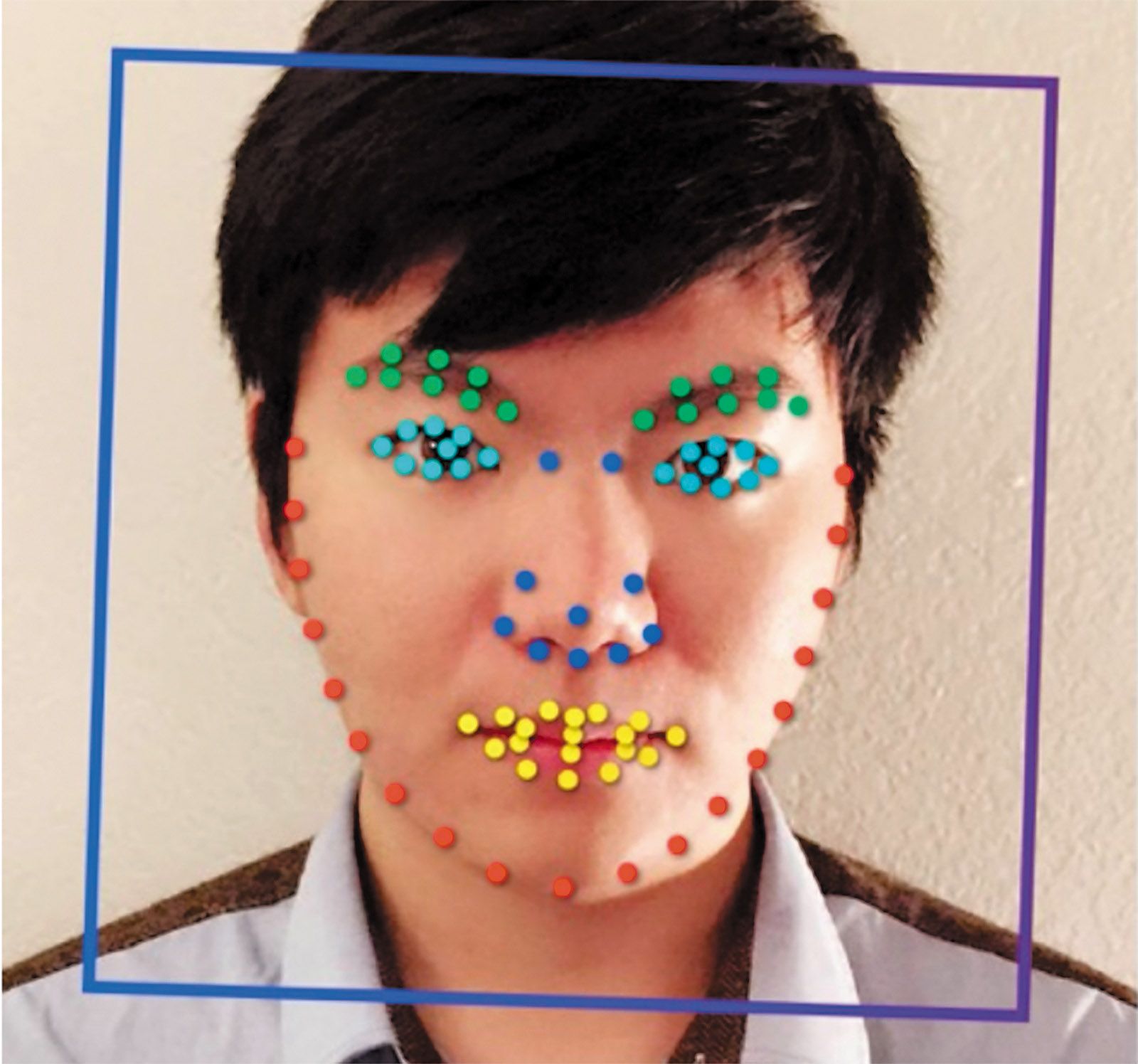
A person dissipates various kind of emotion during the daily conversation. The expression actually depends on the statement of the narrator but, sometimes it is very difficult to perceive someone’s sentiment behind the speech. To unveil the emotion behind someone’s speech, scientists created an artificial intelligence algorithm.

A research team from Massachusetts Institute of Technology’s(MIT) from Computer Science and Artificial Intelligence Laboratory (CSAIL) and Institute for Medical Engineering and Science (IMES) built a wearable app that is programmed with the algorithm. It could be a perfect alternative of polygraph because polygraphs are not really reliable because it has a lot of errors. Their invention was first officially introduced in the official press release of MIT News.

Ph.D. candidate Mohammad Ghassemi, lead researcher of this program said in a statement, “Our work is a step in this direction, suggesting that we may not be that far away from the world where people can have an AI social coach right in their pocket”. Ghassemi and his team equipped a fitness tracker with the app that collects physical and speech data to examine the tonal characteristics.

Cognitive electronic warfare: Countering threats posed by adaptive radars

A little delayed in sharing this.


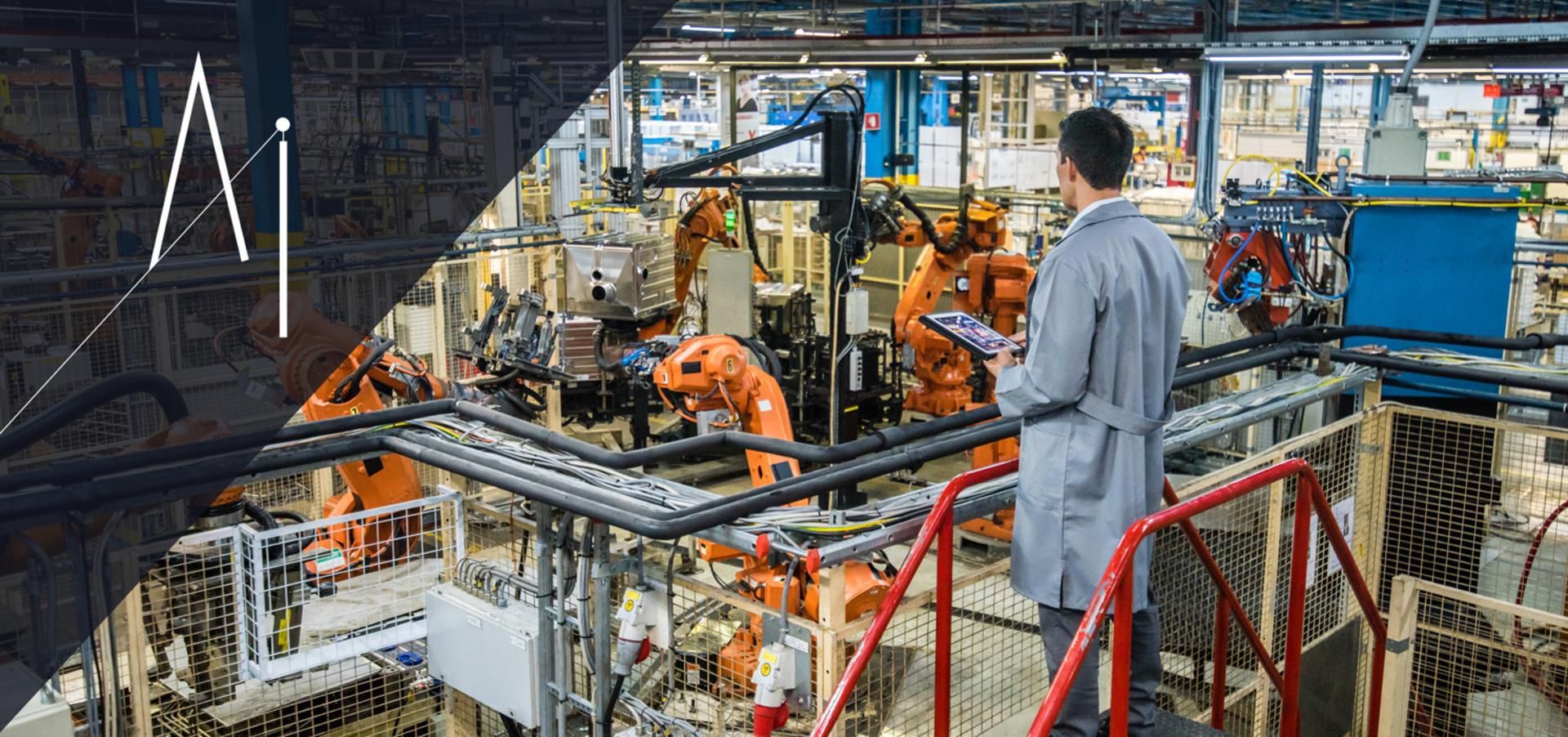
Threats posed by to systems are a colossal challenge for the U.S. Navy, but a combo of advanced , intelligent algorithms, and are being developed to help warfighters detect and counter them.

Electronic warfare (EW) systems – whether on land or aboard U.S. military ships and aircraft – tap the to sense, protect, and communicate. But, when necessary, these same systems can be turned against adversaries to deny their ability to disrupt or use radio, infrared, or signals.

Today’s EW systems tend to rely on databases of known threats with predefined countermeasures, which can limit their ability to quickly adapt and respond to new advanced threats. Soon, these systems may increasingly be tasked with isolating unknown hostile radar signals within dense electromagnetic environments and responding quickly with effective electronic countermeasures.

The Data That Turned the World Upside Down

Influencing elections? Perturbed, Kosinski clicked through the pages. What kind of company was this? And what were these people planning?


Psychologist Michal Kosinski developed a method to analyze people in minute detail based on their Facebook activity. Did a similar tool help propel Donald Trump to victory? Two reporters from Zurich-based Das Magazin (where an earlier version of this story appeared in December in German) went data-gathering.

On November 9 at around 8.30 AM., Michal Kosinski woke up in the Hotel Sunnehus in Zurich. The 34-year-old researcher had come to give a lecture at the Swiss Federal Institute of Technology (ETH) about the dangers of Big Data and the digital revolution. Kosinski gives regular lectures on this topic all over the world. He is a leading expert in psychometrics, a data-driven sub-branch of psychology. When he turned on the TV that morning, he saw that the bombshell had exploded: contrary to forecasts by all leading statisticians, Donald J. Trump had been elected president of the United States.

For a long time, Kosinski watched the Trump victory celebrations and the results coming in from each state. He had a hunch that the outcome of the election might have something to do with his research. Finally, he took a deep breath and turned off the TV.

A Quick Rundown of the Alcubierre “Warp Drive”

In Brief Science fiction often serves as a curiosity catalyst for a lot of technological innovation. One such example is this Alcubierre Warp Drive, that would absolutely revolutionize the capability of humans to traverse the stars.

It’s always a welcome thing to learn that ideas that are commonplace in science fiction have a basis in science fact. Cryogenic freezers, laser guns, robots, silicate implants… and let’s not forget the warp drive! Believe it or not, this concept – alternately known as FTL (Faster-Than-Light) travel, Hyperspace, Lightspeed, etc. – actually has one foot in the world of real science.

In physics, it is what is known as the Alcubierre Warp Drive. On paper, it is a highly speculative, but possibly valid, solution of the Einstein field equations, specifically how space, time and energy interact. In this particular mathematical model of spacetime, there are features that are apparently reminiscent of the fictional “warp drive” or “hyperspace” from notable science fiction franchises, hence the association.

Route Monkey working with NQIT to develop transport & mobility algorithms for quantum computers

Nice and will be very useful for many in QC.


Scotland-based route optimization specialist Route Monkey, a unit of telematics and big data company Trakm8, is working on a new generation of transport and mobility algorithms for quantum computers.

Route Monkey already works with Heriot-Watt University in Edinburgh on creating and enhancing innovative algorithms for transport and travel (earlier post). The two are now joining forces with the Networked Quantum Information Technologies Hub (NQIT), led by the University of Oxford. Together, the three organizations will develop, test and commercialize quantum algorithms.

The leap forward in the capabilities offered by quantum computing opens up a whole new field. We can create algorithms that deliver even faster and more accurate answers, to ever more complex transport and mobility challenges.

—Colin Ferguson, Trakm8 Group’s Managing Director of Fleet and Optimization.

Insecticides mimic melatonin, creating higher risk for diabetes

Synthetic chemicals commonly found in insecticides and garden products bind to the receptors that govern our biological clocks, University at Buffalo researchers have found. The research suggests that exposure to these insecticides adversely affects melatonin receptor signaling, creating a higher risk for metabolic diseases such as diabetes.

Published online on Dec. 27 in Chemical Research in Toxicology, the research combined a big data approach, using computer modeling on millions of chemicals, with standard wet-laboratory experiments. It was funded by a grant from the National Institute of Environmental Health Sciences, part of the National Institutes of Health.

Disruptions in human circadian rhythms are known to put people at higher risk for diabetes and other metabolic diseases but the mechanism involved is not well-understood.

China, already dominant in supercomputers, shoots for an exascale prototype in 2017

Back in June, China debuted the world’s fastest supercomputer, the Sunway TaihuLight (pictured), with a Linpack benchmark result of 93 petaflop/s. That machine contains 40,960 locally developed ShenWei processors, each with 260 cores and roughly comparable with Intel’s Knight’s Landing Xeon Phi CPU. China also developed a 136GB/sec memory controller and custom interconnect that delivers 16GB/sec of peak bandwidth between nodes.

Now China is working on a prototype exascale (1,000-petaflop) system that it aims to complete by the end of this year, according to state media. An exascale computer is capable of a quintillion calculations per second, and could deliver vast dividends in deep learning and big data across a variety of disciplines as varied as nuclear test research, code breaking, and weather forecasting.

“A complete computing system of the exascale supercomputer and its applications can only be expected in 2020, and will be 200 times more powerful than the country’s first petaflop computer Tianhe-1, recognized as the world’s fastest in 2010,” said Zhang Ting, an application engineer at Tianjin’s National Super Computer Center, to Xinhua news agency (via AFP).

/* */