Toggle light / dark theme

Blood-brain barrier opened non-invasively for the first time in humans, using focused ultrasound

Opening up the blood-brain barrier to deliver drugs (credit: Focused Ultrasound Foundation)

The blood-brain barrier has been non-invasively opened in a human patient for the first time. A team at Sunnybrook Health Sciences Centre in Toronto used focused ultrasound to temporarily open the blood-brain barrier (BBB), allowing for effective delivery of chemotherapy into a patient’s malignant brain tumor.

The team infused the chemotherapy agent doxorubicin, along with tiny gas-filled bubbles, into the bloodstream of a patient with a brain tumor. They then applied focused ultrasound to areas in the tumor and surrounding brain, causing the bubbles to vibrate, loosening the tight junctions of the cells comprising the BBB, and allowing high concentrations of the chemotherapy to enter targeted tissues.

Read more

Your Gut May Be Home to an Entirely New Form of Life

Might be a good start point for some new longevity research.


A new genetic analysis of human gut bacteria is turning up some really weird critters—so weird, in fact, that some biologists are speculating we’ve found an entirely new domain of life. We should take that possibility with a healthy dose of skepticism. But here’s why it’s even being discussed.

In the past ten years, new genomic technologies have, for the first time, enabled scientists to explore our microbiome—that trove of invisible critters that live on us and in us. Microbiome research is quite literally rewriting the textbooks on human biology, as we learn that everything from our mouths to our intestines to our skin is, in fact a complex and diverse ecosystem. Hell, we’re even surrounded in a personal cloud of bacteria. By some estimates, the human cells in your body are vastly outnumbered by microbes.

Now that we’ve come to appreciate just how ubiquitous our microbial tenants are, we’re starting to drill deeper and learn their identities. And that’s led to some surprises. For one, a lot of the bugs living in our gut are totally distinct from anything we’ve encountered before.

Read more

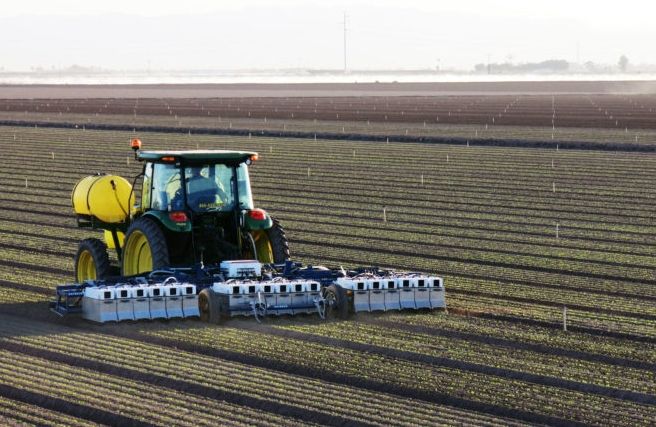
Robots, Bioprinting, and the Future of Food [Video]

Emerging technologies are shaking up how we grow food, distribute it, and even what we’re eating. We are seemingly on the cusp of a food revolution and undoubtedly, technologies including artificial intelligence will play a huge role in helping people grow healthier, more resilient food faster and with less energy than ever before.

Rob Nail, Singularity University’s CEO and Associate Founder, provides a few examples of how robotics, automation, and drones are transforming agriculture in this short video:

Read more

Why Focusing On The Obesity Epidemic Distracts Us From The Aging Epidemic

Large amounts of precious resources are being spent on encouraging weight loss and healthy living. While the intention of trying to reinforce healthy living is laudable, the evidence is that our resources are being wasted on minimal benefits.

Society considers obesity a big threat that needs to be overcome, but being thin is seen as a panacea

The diseases caused by biological aging carry on incessantly taking the lives of 100 000 people every day. While age 87 is the most common age of death for people in the western world, little progress has occurred during the past decades.

Read more

Edouard: Please take the time to send this to the World Health Organisation tonight if possible or tomorrow

This is our chance to make a real difference to how ageing research progresses and how people view ageing.

We need fifty people to make a real change in funding policy so we can work towards healthy longevity.

https://www.facebook.com/…/draft-zero-gsap-ageing-and-healt… (please make sure to complete the 6 first lines at least before sending to the email indicated there).


WHO GSAP draft, healthy longevity and biomedical aging research.

Read more

/* */