Toggle light / dark theme

Scientists show that gene editing can ‘turn off’ human diseases

Gene editing has already been used to fight diseases, but there’s now hope that it might eliminate the diseases altgether. Researchers have shown that it’s possible to eliminate facial muscular dystrophy using a newer editing technique, CRISPR (Clusters of Regularly Interspaced Short Palindromic Repeats) to replace the offending gene and ‘turn off’ the condition. The approach sends a mix of protein and RNA to bind to a gene and give it an overhaul.

This doesn’t mean that doctors suddenly have a cure-all on their hands. They haven’t tried CRISPR on real live people, and there’s no guarantee that it’d work with every genetic condition under the Sun. The initial test was only 50 percent effective, too. If this gene mending is useful in the field, though, it could do a lot to transform medicine. Doctors could treat the root cause of a genetic disease rather than deal with the symptoms, and possibly wipe it out entirely — or at least, make it more bearable.

[Image credit: Getty Images].

Read more

Hacking the Brain — Restoring Lost Abilities With the Latest Neurotechnologies

A few weeks ago, I wrote about Ray Kurzweil’s wild prediction that in the 2030s, nanobots will connect our brains to the cloud, merging biology with the digital world.

Let’s talk about what’s happening today.

Over the past few decades, billions of dollars have been poured into three areas of research: neuroprosthetics, brain-computer interfaces and optogenetics.

Read more

Lost And Found: Can We Restore Forgotten Memories?

Memories are priceless, and the plight of dementia patients highlights how important they are to forming what makes us, well us. Now a new study has provided hope we may one day be able to restore lost memories.

Clearing the mist

A paper from researchers at MIT has demonstrated the reactivation of memories in amnesia patients with optogenetics — in which cell activity is controlled by bursts of light.

Read more

Uncovering the secret of turning back time

I had read about Singapore in genetic engineering way back in the 90’s. I think they were 1st or 2nd in making immortal skin cells at the time.


Singapore scientists have unravelled a mystery that could pave the way for turning back the clock on ageing.

A recent study led by Dr Ng Shyh Chang of the Genome Institute of Singapore at the Agency for Science, Technology and Research (A*Star) has found a gene in human egg cells that suppresses an enzyme causing cells to age.

This is the Tcl1 gene, and by increasing the protein it produces, the researchers found they could suppress the enzyme that causes mitochondria — the cells’ batteries — to age over time.

Read more

Genome Editing with CRISPR-Cas9

This animation depicts the CRISPR-Cas9 method for genome editing – a powerful new technology with many applications in biomedical research, including the potential to treat human genetic disease. Feng Zhang, a leader in the development of this technology, is a faculty member at MIT, an investigator at the McGovern Institute for Brain Research, and a core member of the Broad Institute. Further information can be found on Prof. Zhang’s website at http://zlab.mit.edu.

Images and footage courtesy of Sputnik Animation, the Broad Institute of MIT and Harvard, Justin Knight and pond5.

Read more

Your Gut May Be Home to an Entirely New Form of Life

Might be a good start point for some new longevity research.


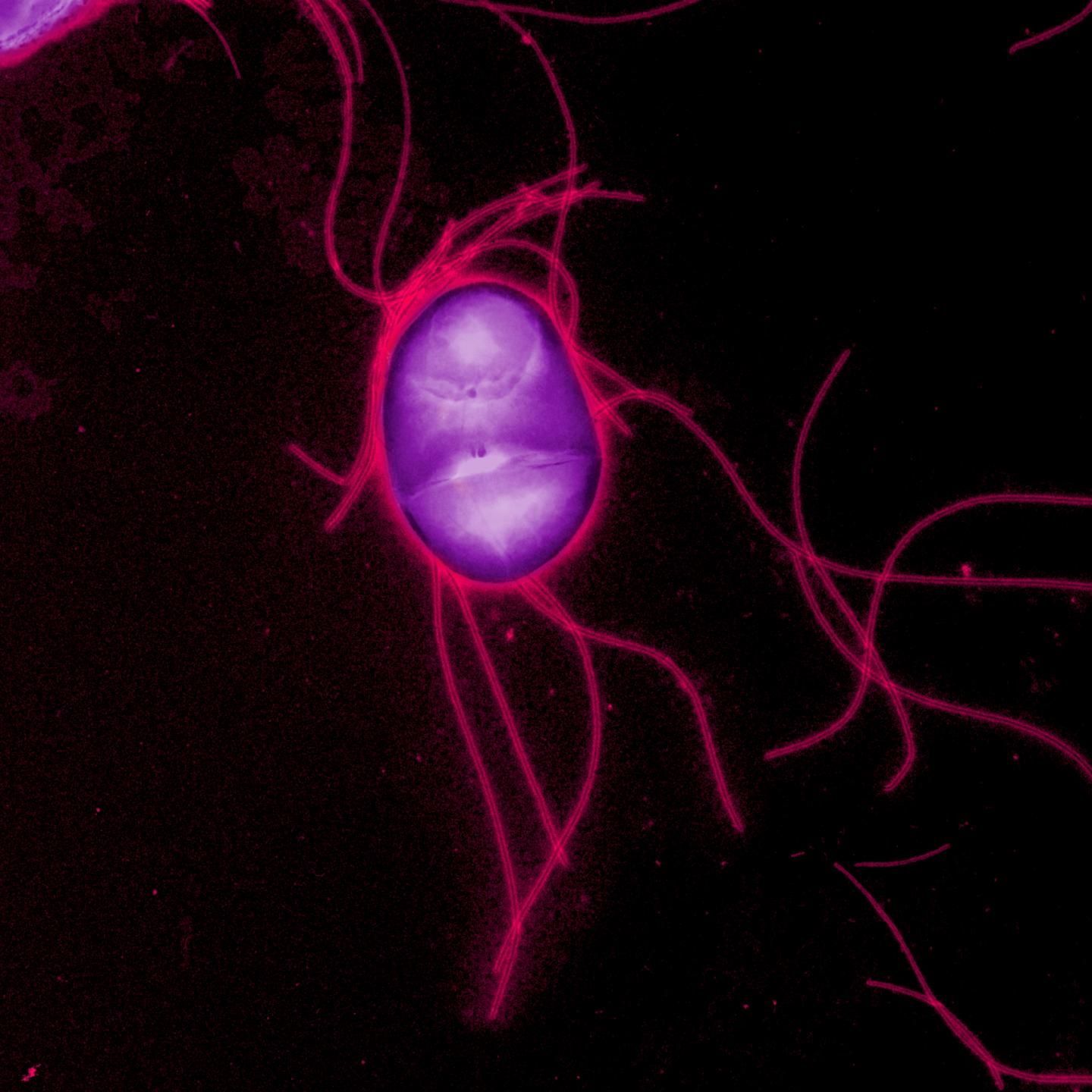
A new genetic analysis of human gut bacteria is turning up some really weird critters—so weird, in fact, that some biologists are speculating we’ve found an entirely new domain of life. We should take that possibility with a healthy dose of skepticism. But here’s why it’s even being discussed.

In the past ten years, new genomic technologies have, for the first time, enabled scientists to explore our microbiome—that trove of invisible critters that live on us and in us. Microbiome research is quite literally rewriting the textbooks on human biology, as we learn that everything from our mouths to our intestines to our skin is, in fact a complex and diverse ecosystem. Hell, we’re even surrounded in a personal cloud of bacteria. By some estimates, the human cells in your body are vastly outnumbered by microbes.

Now that we’ve come to appreciate just how ubiquitous our microbial tenants are, we’re starting to drill deeper and learn their identities. And that’s led to some surprises. For one, a lot of the bugs living in our gut are totally distinct from anything we’ve encountered before.

Read more

Genes Responsible for Limb Regeneration in Crickets Identified

Researchers just identified part of the epigenetic pathways responsible for limb regeneration in the two-spotted cricket Gryllus bimaculatus.

Cut off the leg of an insect, and not only will the insect survive, but the leg will also grow back after some time. Cut off the leg of a human, and they’ll bleed out without proper medical attention (alas for us). Ultimately, insects are able to accomplish this amazing feat because they retain the biological pathways required for cells to differentiate and reorganize at a wound site, which is required in order to regenerate entire limbs.

The processes involve the dedifferentiation and redifferentiation of cells; however, the exact nature of the process is largely a mystery. Fortunately, some light has recently been shed on the matter, as researchers at Okayama University identified key genes involved in the regenerative process of the two-spotted cricket, Gryllus bimaculatus.

Read more

/* */