Toggle light / dark theme

Scientists Evidence: Negativity Literally Makes Cancer Grow Inside the Body

We already know that excessive amounts of stress long term can cause certain individuals with certain predisposition cancer genetic mutations can cause cancer such as breast cancer. So, not surprise to see this.


In some situations, people who got hurt, replay the disturbing moment in their heads for many times and for many days. Every repetition you make usually causes more intense feelings making the situation worse.

Thanks to modern medicine, there is now proof that keeping these emotions inside you can have negative effects on your overall health. That’s why we would like to discuss forgiveness.

When it comes to clinical view, forgiveness is a process where a person gives up from the feeling of bitterness and thoughts associated with retribution.

Gene editing takes on new roles

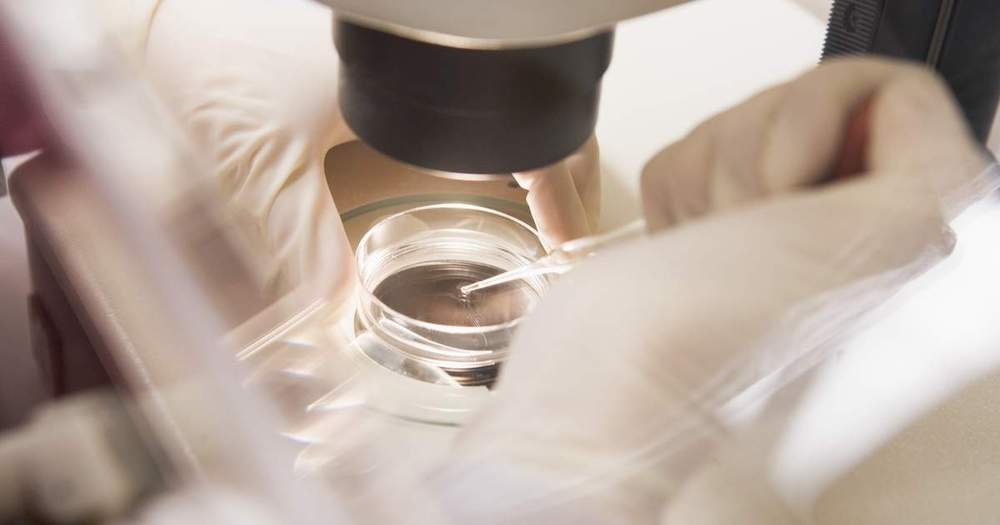
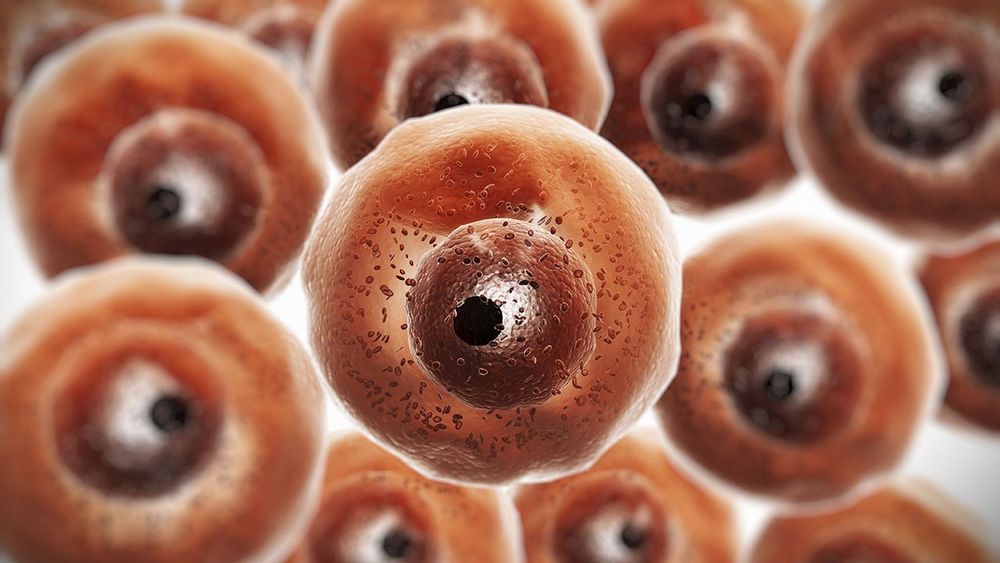
What combinations of mutations help cancer cells survive? Which cells in the brain are involved in the onset of Alzheimer’s? How do immune cells conduct their convoluted decision-making processes? Researchers at the Weizmann Institute of Science have now combined two powerful research tools — CRISPR gene editing and single cell genomic profiling — in a method that may finally help us get answers to these questions and many more.

The new technology enables researchers to manipulate gene functions within single cells, and understand the results of each change in extremely high resolution. A single experiment with this method, say the scientists, may be equal to thousands of experiments conducted using previous approaches, and it may advance the field of genetic engineering for medical applications.

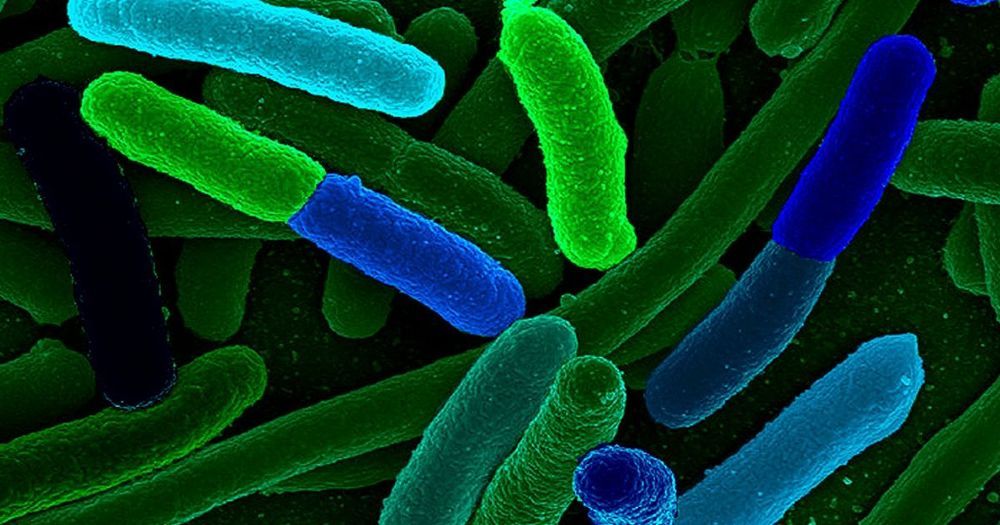
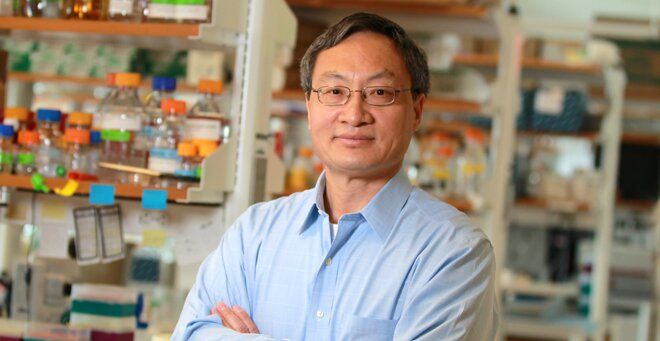
The gene-editing technique CRISPR is already transforming biology research around the world, and its clinical use in humans is just around the corner. CRISPR was first discovered in bacteria as a primitive acquired immune system, which cuts and pastes viral DNA into their own genomes to fight viruses. In recent years, this bacterial system has been adopted by researchers to snip out or insert nearly any gene in any organism or cell, quickly and efficiently. “But CRISPR, on its own, is a blunt research tool, since we often have trouble observing or understanding the outcome of this genomic editing,” says Prof. Ido Amit of the Weizmann Institute of Science’s Immunology Department, who led the study. “Most studies so far have looked for black-or-white types of effects,” adds Dr. Diego Jaitin, of Amit’s lab group, “but the majority of processes in the body are complex and even chaotic.”

Ageing process may be reversible, scientists claim

The team showed that a new form of gene therapy produced a remarkable rejuvenating effect in mice. After six weeks of treatment, the animals looked younger, had straighter spines and better cardiovascular health, healed quicker when injured, and lived 30% longer.

Juan Carlos Izpisua Belmonte, who led the work at the Salk Institute in La Jolla, California, said: “Our study shows that ageing may not have to proceed in one single direction. With careful modulation, ageing might be reversed.”

The genetic techniques used do not lend themselves to immediate use in humans, and the team predict that clinical applications are a decade away. However, the discovery raises the prospect of a new approach to healthcare in which ageing itself is treated, rather than the various diseases associated with it.

Will Gene-Editing Technologies Spark the Next Cold War? They Already Have

Excellent article by Nick Gillespie, Editor-in Chief of Reason. Genetic editing is so far the 21st Century’s most important science—and it’s already being challenged by many as too radical: http://reason.com/blog/2016/12/15/will-gene-editing-technologies-spark-the #transhumanism #CRISPR #Future


The folks behind CRISPR gene editing were runners-up for Time’s Person of the Year. Their creation may win the future for secular China.

Can naked mole rats teach us the secrets to living far longer? Google thinks so

It is looking increasingly likely the mysterious Google Calico have very modest ambitions regarding increased lifespans for humans given the comments made by Dr. Aubrey de Grey and others and the direction they are taking with their research. Modest increases of lifespan over the kind of robust therapies of SENS seems pretty dissapointing.


More about Google Calico and their aim to modestly increase lifespan. People like Dr. Aubrey de Grey and Nathaniel David from rising biotech star Unity.

“To some, Calico’s heavy bet on basic biology is a wrong turn. The company is “my biggest disappointment right now,” says Aubrey de Grey, an influential proponent of attempts to intervene in the aging process and chief science officer of the SENS Research Foundation, a charity an hour’s drive from Calico that promotes rejuvenation technology. It is being driven, he complains, “by the assumption that we still do not understand aging well enough to have a chance to develop therapies.” Indeed, some competitors are far more aggressive in pursuing interventions than Calico is.

They are very committed to these fundamental mechanisms, and bless them for doing that. But we are committed to putting drugs into the clinic and we might do it first,” says Nathaniel David, president and cofounder of Unity Biotechnology. This year, investors put $127 million behind Unity, a startup in San Francisco that’s developing drugs to zap older, “senescent” cells that have stopped dividing. These cells are suspected of releasing cocktails of unhelpful old-age signals, and by killing them, Unity’s drugs could act to rejuvenate tissues. The company plans to start with a modestly ambitious test in arthritic knees. De Grey’s SENS Foundation, for its part, has funded Oisin Biotechnologies, a startup aiming to rid bodies of senescent cells using gene therapy.”

Monster-wheat grown by Oxford could revolutionise farming

A crop spray which can boost farmer’s wheat yields by one fifth, without the need for genetic modification, has been developed by scientists at Oxford University.

Researchers have found a molecule which helps plants make the best use of the sugary fuel that they generate during photosynthesis. And with more fuel, the plants can produce bigger grains.

Other scientists in Britain have developed ways to genetically modify crops to increase yields, and the Department of Environment is currently deciding whether to allow a field trial for GM wheat in Hertfordshire.

CellAge: Senescent Cell Targeting Technology Video

Synthetic biology meets senolytics at Lifespan.io

We are developing tools to help researchers accurately target and remove dysfunctional cells in the body that have entered a state called “senescence”, and thereby assist in restoring it to youthful functionality. Please subscribe, share, and fund our campaign today! ►Campaign Link: https://www.lifespan.io/campaigns/cellage-targeting-senescen…c-biology/ ►Subscribe: https://www.youtube.com/user/LifespanIO?sub_confirmation=1


Our society has never aged more rapidly – one of the most visible symptoms of the changing demographics is the exponential increase in the incidence of age-related diseases, including cancer, cardiovascular diseases and osteoarthritis. Not only does aging have a negative effect on the quality of life among the elderly but it also causes a significant financial strain on both private and public sectors. As the proportion of older people is increasing so is health care spending. According to a WHO analysis, the annual number of new cancer cases is projected to rise to 17 million by 2020, and reach 27 million by 2030. Similar trends are clearly visible in other age-related diseases such as cardiovascular disease. Few effective treatments addressing these challenges are currently available and most of them focus on a single disease rather than adopting a more holistic approach to aging.

Recently a new approach which has the potential of significantly alleviating these problems has been validated by a number of in vivo and in vitro studies. It has been demonstrated that senescent cells (cells which have ceased to replicate due to stress or replicative capacity exhaustion) are linked to many age-related diseases. Furthermore, removing senescent cells from mice has been recently shown to drastically increase mouse healthspan (a period of life free of serious diseases).

Here at CellAge we are working hard to help translate these findings into humans!

CellAge: Dr. Aubrey de Grey Endorsement Video

Dr. Aubrey de Grey from the SENS Research Foundation was kind enough to talk in support of CellAge and their campaign on Lifespan.io

We are developing tools to help researchers accurately target and remove dysfunctional cells in the body that have entered a state called “senescence”, and thereby assist in restoring it to youthful functionality. Please subscribe, share, and fund our campaign today! ►Campaign Link: https://www.lifespan.io/campaigns/cellage-targeting-senescen…c-biology/ ►Subscribe: https://www.youtube.com/user/LifespanIO?sub_confirmation=1


Our society has never aged more rapidly – one of the most visible symptoms of the changing demographics is the exponential increase in the incidence of age-related diseases, including cancer, cardiovascular diseases and osteoarthritis. Not only does aging have a negative effect on the quality of life among the elderly but it also causes a significant financial strain on both private and public sectors. As the proportion of older people is increasing so is health care spending. According to a WHO analysis, the annual number of new cancer cases is projected to rise to 17 million by 2020, and reach 27 million by 2030. Similar trends are clearly visible in other age-related diseases such as cardiovascular disease. Few effective treatments addressing these challenges are currently available and most of them focus on a single disease rather than adopting a more holistic approach to aging.

Recently a new approach which has the potential of significantly alleviating these problems has been validated by a number of in vivo and in vitro studies. It has been demonstrated that senescent cells (cells which have ceased to replicate due to stress or replicative capacity exhaustion) are linked to many age-related diseases. Furthermore, removing senescent cells from mice has been recently shown to drastically increase mouse healthspan (a period of life free of serious diseases).

Here at CellAge we are working hard to help translate these findings into humans!

/* */