The TikTok-famous dog appears to communicate her nightmare, raising profound questions about animal cognition.


“Continents are sort of like icebergs,” says study author Keith Klepeis, a structural geologist at the University of Vermont. “What you see at the surface is not really the full extent of the beast.”
The discovery, described in the journal Geology, may help solve a riddle that’s long perplexed scientists. Most continents contain a core of rock known as a craton, a sort of geologic nucleus at least a billion years old that acts like a stable base upon which continents build. Until now, though, the oldest continental crust found on Zealandia was dated to roughly 500 million years ago—relatively youthful in geologic terms. So if Zealandia is a continent, why did its craton seem to be missing?
This newfound fragment of ancient rock may be part of the missing piece for Zealandia. The discovery “ticks the final box,” Turnbull says. “We are sitting on a continent.”

The search for life beyond Earth is on.
NASA’s newest Mars rover is getting ready to collect its first rock sample from the surface of Mars and stow it away for a future return mission to Earth, where NASA will test it for signs of ancient microbial life.
Perseverance’s science campaign has just begun, and the rover has already stumbled upon interesting rocks and sedimentary layers that tell a part of Mars’ larger history.
The Perseverance rover landed on Mars on February 18 and has been on a Martian road trip ever since to scour its landing site, Jezero Crater. Jezero is a 28-mile wide, 1600-foot deep crater located in a basin slightly north of the Martian equator. It once housed an ancient lake estimated to have dried out 3.5 to 3.8 billion years ago.
Circa 2015
It’s no TIE fighter, but the Dawn probe is driven by the future of spacecraft propulsion: ion engines.

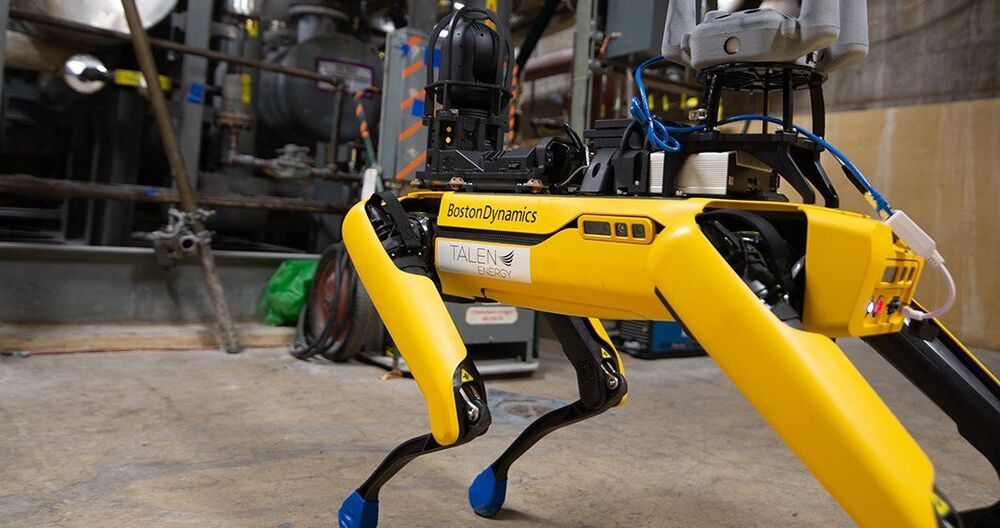
Our customers are putting Spot to work in nuclear environments, increasing safety and efficiency at their their electrical production facilities. Learn how thre… See More.
Spot is going to work in nuclear environments, increasing the safety, efficiency, and cost-effectiveness of their electrical production facilities.
Gain-of-function experiments aim to increase the transmissibility and virulence of existing viruses, making them deadlier for humans. The stated purpose is to better understand pathogens and to develop vaccines for possible future pandemics. Critics say this type of research is extremely dangerous and should be banned or regulated. They claim it has not prevented any pandemics to date, and that the COVID-19 outbreak might be the result of an accidental release from a lab that was conducting gain-of-function research.
Subscribe: https://www.youtube.com/user/deutschewelleenglish?sub_confirmation=1
For more news go to: http://www.dw.com/en/
Follow DW on social media:
►Facebook: https://www.facebook.com/deutschewellenews/
►Twitter: https://twitter.com/dwnews.
►Instagram: https://www.instagram.com/dwnews.
Für Videos in deutscher Sprache besuchen Sie: https://www.youtube.com/dwdeutsch.
#biosafety #GainOfFunction #pandemic