Circa 2017
It’s often mistaken for a sinking ship by passing boats.


For copyright matters, advertising and other questions, please contact us at: [email protected].
Subscribe ► https://bit.ly/2knsQP7
Now is as good a time as any to make a discovery! From the sheer number of amazing finds made by archaeologists, scientists, researchers, and even the general public in recent times, it’s clear that we’re going through a boom period in terms of collecting knowledge and information. There have been hundreds of astonishing discoveries made recently, and we’ve put together some of the most fascinating examples for you in this video!
#Amazing #Discoveries #IncredibleRecent #EverSee #Compilation #LightningTop


Effective COVID-19 vaccines arrived in record time. That success story, years in the making, offers lessons that could help prevent future outbreaks, including pandemic influenza.
This article was produced for Sabin Vaccine Institute by Scientific American Custom Media, a division separate from the magazine’s board of editors.
This video was made in collaboration with Academy of Ideas. They create videos explaining the ideas of history’s great thinkers in order to help supply the world with more knowledge, to empower the individual, and to promote freedom. Please check out their youtube channel for more brilliant content. https://www.youtube.com/c/academyofideas or visit their website to learn more https://academyofideas.com/
In this video we are going to explore the most dangerous of all psychic epidemics, the mass psychosis. A mass psychosis is an epidemic of madness and it occurs when a large portion of a society loses touch with reality and descends into delusions. Such a phenomenon is not a thing of fiction. Two examples of mass psychoses are the American and European witch hunts 16th and 17th centuries and the rise of totalitarianism in the 20th century.
This video will aim to answer questions surrounding mass psychosis: What is it? How does is start? Has it happened before? Are we experiencing one right now? And if so, how can the stages of a mass psychosis be reversed?
This video took a tremendous amount of work. It truly is a labor of love and if you appreciate this video and want to help support the creation of more videos, please consider supporting After Skool on Patreon — https://www.patreon.com/AfterSkool.
Get the After Skool Kid’s Book — Why Don’t Country Flags Use The Color Purple? https://www.amazon.com/Dont-Country-Flags-Color-Purple/dp/05…atfound-20
Get in touch via https://www.afterskool.net/
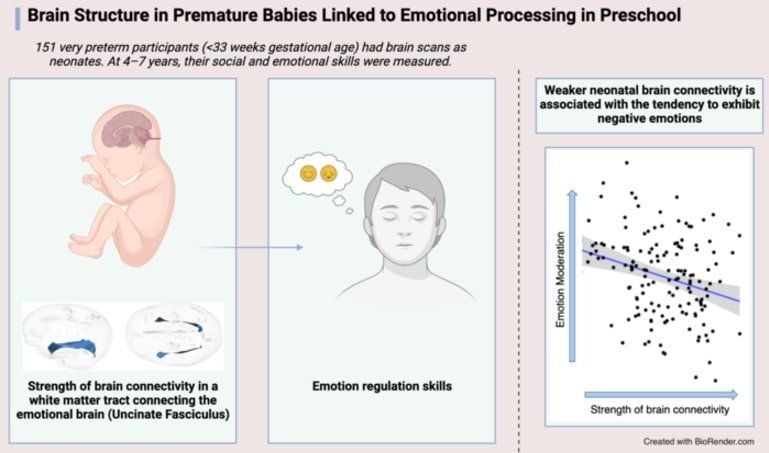
Summary: Brain connectivity at birth may impact emotional processing and social development later in childhood, especially in children born preterm. Researchers found children born preterm with a weaker uncinate fasciculus, the white-matter tract that connects brain regions associated with emotional processing, were more likely to interpret situations in a negative light.
Source: SfN
The strength of brain connections at birth may predict the future emotional and social development of babies born prematurely, according to new research published in eNeuro.