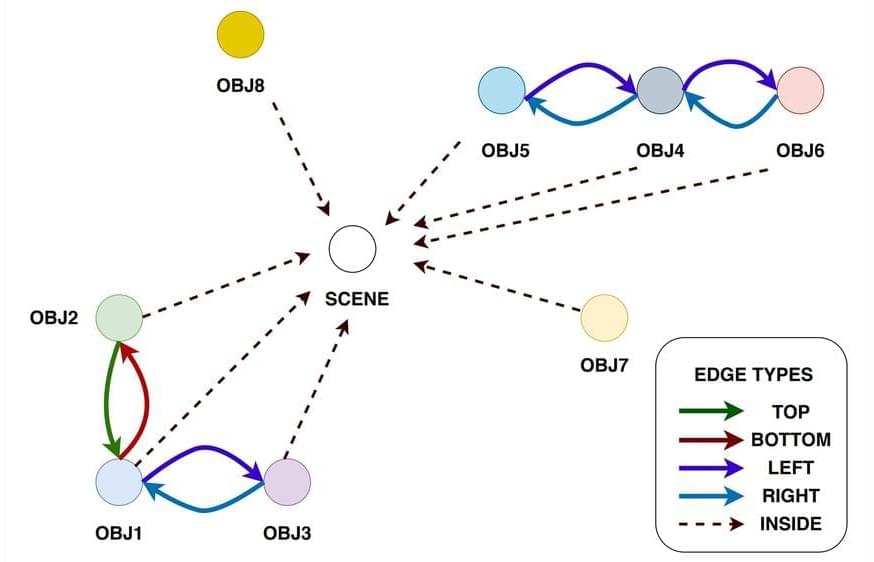
Join this session to hear from a panel of distinguished technical leaders as they talk about Universal Scene Description (USD) as a standard for the 3D evo.
The volcano has been in a state of “heightened unrest” for more than a month, with the number of earthquakes rising from between 10 and 20 per day to 40 to 50 per day, likely due to an increase in magma inside the volcano, according to the Hawaiian Volcano Observatory.
The strongest was a 5.0-magnitude earthquake that struck the Big Island two weeks ago, although local officials said it did not cause major damage or injuries.
An exploration of a strange phenomenon of solar flares that could reset technology and civilization to something close to the stone age overnight.
My Patreon Page:
https://www.patreon.com/johnmichaelgodier.
My Event Horizon Channel:
Intermission in D by miguel johnson.
When in 2015, Eileen Brown looked at the ETER9 Project (crazy for many, visionary for few) and wrote an interesting article for ZDNET with the title “New social network ETER9 brings AI to your interactions”, it ensured a worldwide projection of something the world was not expecting.
Someone, in a lost world (outside the United States), was risking, with everything he had in his possession (very little or less than nothing), a vision worthy of the American dream. At that time, Facebook was already beginning to annoy the cleaner minds that were looking for a difference and a more innovative world.
Today, after that test bench, we see that Facebook (Meta or whatever) is nothing but an illusion, or, I dare say, a big disappointment. No, no, no! I am not now bad-mouthing Facebook just because I have a project in hand that is seen as a potential competitor.
I was even a big fan of the “original” Facebook; but then I realized, it took me a few years, that Mark Zuckerberg is nothing more than a simple kid, now a man, who against everything and everyone, gave in to whims. Of him, initially, and now, perforce, of what his big investors, deluded by himself, of what his “metaverse” would be.
“If Martian life ever existed, even if viable lifeforms are not now present on Mars, their macromolecules and viruses would survive much, much longer,” says study lead author Michael Daly, a pathologist at Uniformed Services University of the Health Sciences, in a statement. “That strengthens the probability that, if life ever evolved on Mars, this will be revealed in future missions.”
Mars is an exceedingly hostile place. The planet’s surface is dry and frozen, and cosmic radiation and solar protons are constantly bombarding it. But that may not have always been the case—scientists believe water flowed on Mars between 2 and 2.5 billion years ago, which would’ve made the planet slightly more hospitable.
Researchers were curious to know what kind of life might have evolved—and, potentially, survived into the present—on the Red Planet. To attempt to answer that question, they mimicked the cold, arid conditions of Mars here on Earth with six species of microorganisms.
Motherboard is live, talking with journalist Kelsey Atherton about the use of AI and robotic weapons.
Follow MOTHERBOARD
Facebook: http://www.facebook.com/motherboardtv.
Twitter: http://twitter.com/motherboard.
Tumblr: http://motherboardtv.tumblr.com/
Instagram: http://instagram.com/motherboardvice.
More videos from the VICE network: https://www.fb.com/vicevideo
Commonly assumed to be silent, 53 animals have had their ‘voices’ added to a family tree of vocalizations in an effort to determine when acoustic communication emerged in evolutionary history.
The species that are finally being heard come from four different animal clades, including 50 turtle species, the South American lungfish (Lepidosiren paradoxa), a limbless amphibian called Cayenne caecilian (Typhlonectes compressicauda), and a reptile from New Zealand known as a tuatara (Sphenodon punctatus).
“All recorded species were found to possess a varied acoustic repertoire comprising a number of different sounds,” the authors conclude.