Scientists overheard the “conversations” of mushrooms and the way they communicate is very similar in structure to human speech.


Visit our sponsor, Brilliant: https://brilliant.org/IsaacArthur/
Kardashev-2 Civilizations are hypothetical empires which encompass entire stars, with access to billions of times the energy Earth has, often seen as builders of megastructures like Dyson Spheres. But could civilizations with only the technology we have become Kardashev-2?
Visit our Website: http://www.isaacarthur.net.
Support us on Patreon: https://www.patreon.com/IsaacArthur.
SFIA Merchandise available: https://www.signil.com/sfia/
Social Media:
Facebook Group: https://www.facebook.com/groups/1583992725237264/
Reddit: https://www.reddit.com/r/IsaacArthur/
Twitter: https://twitter.com/Isaac_A_Arthur on Twitter and RT our future content.
SFIA Discord Server: https://discord.gg/53GAShE
Listen or Download the audio of this episode from Soundcloud: Episode’s Audio-only version: https://soundcloud.com/isaac-arthur-148927746/low-tech-kardashev-2-civilizations.
Episode’s Narration-only version: https://soundcloud.com/isaac-arthur-148927746/low-tech-karda…ation-only.
Credits:
Low-Tech Kardashev-2 Civilizations.
Science & Futurism with Isaac Arthur.
Episode 270: December 24, 2020
Written, Produced & Narrated by Isaac Arthur.
Editors:
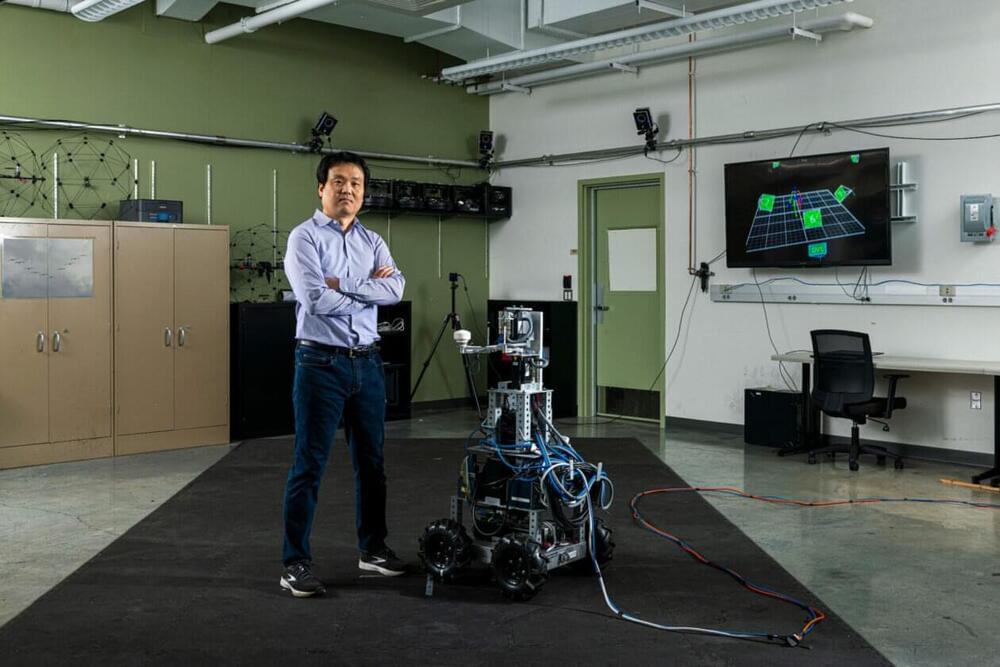
A new study by Missouri S&T researchers shows how human subjects, walking hand-in-hand with a robot guide, stiffen or relax their arms at different times during the walk. The researchers’ analysis of these movements could aid in the design of smarter, more humanlike robot guides and assistants.
“This work presents the first measurement and analysis of human arm stiffness during overground physical interaction between a robot leader and a human follower,” the Missouri S&T researchers write in a paper recently published in the journal Scientific Reports.
The lead researcher, Dr. Yun Seong Song, assistant professor of mechanical and aerospace engineering at Missouri S&T, describes the findings as “an early step in developing a robot that is humanlike when it physically interacts with a human partner.”
Get a free month of Curiosity Stream: https://curiositystream.com/isaacarthur.
Giant Stars are often considered too hot and short lived to colonize, but it may be that they shall be the most powerful and pivotal systems in a future galaxy.
Visit our Website: http://www.isaacarthur.net.
Support us on Patreon: https://www.patreon.com/IsaacArthur.
Facebook Group: https://www.facebook.com/groups/1583992725237264/
Reddit: https://www.reddit.com/r/IsaacArthur/
Twitter: https://twitter.com/Isaac_A_Arthur on Twitter and RT our future content.
SFIA Discord Server: https://discord.gg/53GAShE
Listen or Download the audio of this episode from Soundcloud: Episode’s Audio-only version: https://soundcloud.com/isaac-arthur-148927746/colonizing-giant-stars.
Episode’s Narration-only version: https://soundcloud.com/isaac-arthur-148927746/colonizing-gia…ation-only.
Credits:
Colonizing Giant Stars.
Science & Futurism with Isaac Arthur.
Episode 279, February 25, 2021
Written, Produced & Narrated by Isaac Arthur.
Editors:
Darius Said.
Jason Burbank.
Keith Blockus.
Cover Art:
A team of researchers at the Korea Advanced Institute of Science and Technology, working with a colleague from Institute for Basic Science, both in the Republic of Korea, has found an easy way to create an electronic network inside a polymer. They used an acoustic field to connect liquid metal dots.
In their paper published in the journal Science, the group describes their technique and its possible uses. Ruirui Qiao and Shi-Yang Tang with the University of Queensland in Australia and the University of Birmingham, in the U.K., respectively, have published a Perspectives piece in the same journal outlining the work done by the team.
As portable devices have become mainstream, consumers have demanded more ease of use. One such call is for devices to be bendable and/or stretchable. It is believed such a change would make them fit more easily and naturally in pockets or purses—and they might be more comfortable in the hands, as well.
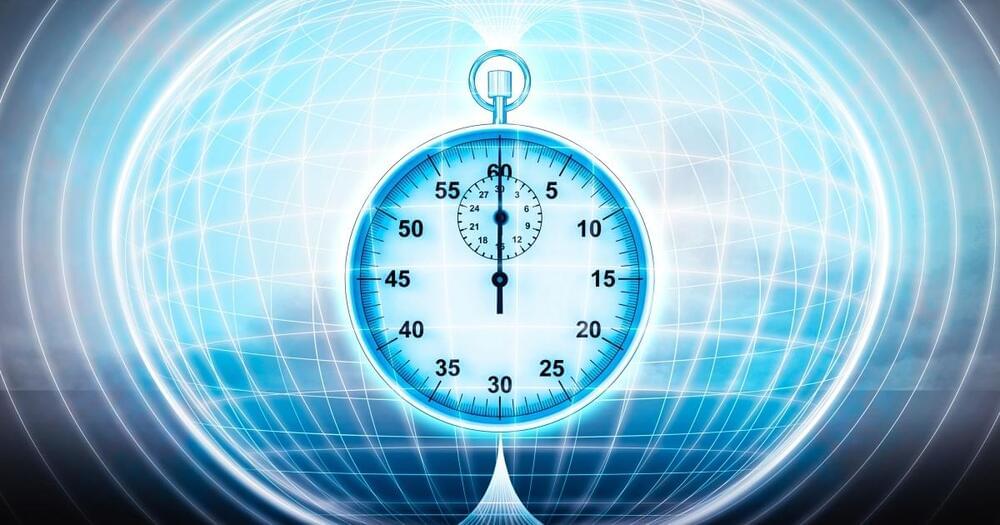
But it gets weirder.
The light from the table sitting just one meter away from you is also taking some time to reach you. Since its half as far away as the chair, you are seeing it as it was 330 picoseconds ago. That’s half as far back in the past as the chair. Ok, fine, but they both appear to you in the now. What you perceive as the “now” is really layer after layer of light reaching your eye from many different moments in the past. Your “now” is an overlapping mosaic of “thens.” What you imagine to be the real world existing simultaneously with you is really a patchwork of moments from different pasts. You never live in the world as it is. You only experience it as it was, a tapestry of past vintages.