Toggle light / dark theme

New chip ramps up AI computing efficiency

However, AI functionalities on these tiny edge devices are limited by the energy provided by a battery. Therefore, improving energy efficiency is crucial. In today’s AI chips, data processing and data storage happen at separate places – a compute unit and a memory unit. The frequent data movement between these units consumes most of the energy during AI processing, so reducing the data movement is the key to addressing the energy issue.

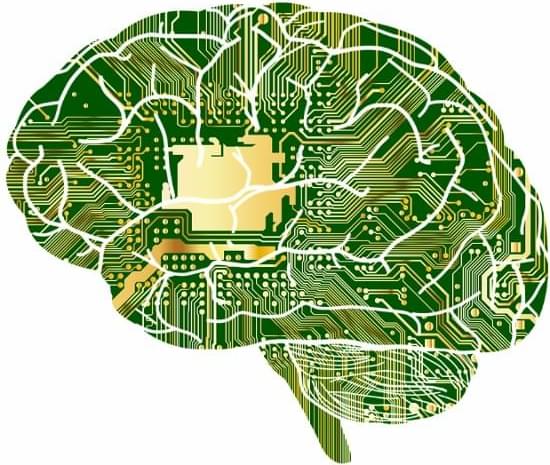
Stanford University engineers have come up with a potential solution: a novel resistive random-access memory (RRAM) chip that does the AI processing within the memory itself, thereby eliminating the separation between the compute and memory units. Their “compute-in-memory” (CIM) chip, called NeuRRAM, is about the size of a fingertip and does more work with limited battery power than what current chips can do.

“Having those calculations done on the chip instead of sending information to and from the cloud could enable faster, more secure, cheaper, and more scalable AI going into the future, and give more people access to AI power,” said H.-S Philip Wong, the Willard R. and Inez Kerr Bell Professor in the School of Engineering.

Modeling the Mind: From Buddhism to Artificial General Intelligence

Discussion with Joscha Bach, Marcus Bingenheimer, Pei Wang, and Simon Wiles about Buddhist models of the mind and contemporary research in Artificial General Intelligence.

This event was a Global Studies webinar, co-sponsored by the Science, Technology, and Society CHAT Interdisciplinary Research Group, and the Temple University Libraries. It took place on 2021/03/05.

To view other library event recordings, visit: https://library.temple.edu/watchpastprograms

Five Fictional Realities in “For All Mankind”

Alternate history has never been more entertaining than in the hit Apple TV+ series, “For All Mankind.” The science fiction television show is so popular that it was renewed for a fourth season even before Season 3 ended on August 12, 2022.

Unlike most science fiction, “For All Mankind” re-imagines the past instead of envisioning the future. Starting in the 1960s and running through the 1990s in Season 3, the series is built around the space race that began with the United States and the Soviet Union competing to reach the moon. But in the fantastical world created by “For All Mankind,” things turn out very differently. Here are five fictional realities showing how the series cleverly rewrites history.

New Model for Predicting Belief Change

Summary: A new predictive model is able to determine who will change their minds about contentious scientific information when presented with evidence-based research.

Source: Santa Fe Institute.

A new kind of predictive network model could help determine which people will change their minds about contentious scientific issues when presented with evidence-based information.

Instagram: Must have been trolling that maybe forced the Meta chief to post another

This Friday, Meta chief Mark Zuckerberg has shared another post on Instagram after being trolled for the previous one. He stated that Meta is actually working on the graphics, which seemed literally “poor” in the first image.

Must have seen all the mockings and the memes about the amateur-looking picture.


Mark Zuckerberg shared a post on Instagram: “Major updates to Horizon and avatar graphics coming soon. I’ll share more at Connect. Also, I know the photo I posted earlier this week was pretty basic — it was taken very quickly to celebrate a launch. The graphics in Horizon are capable of much more — even on headsets — and Horizon is improving very quickly.”. Follow their account to see 239 posts.

Another Path to Intelligence

It turns out there are many ways of “doing” intelligence, and this is evident even in the apes and monkeys who perch close to us on the evolutionary tree. This awareness takes on a whole new character when we think about those non-human intelligences which are very different to us. Because there are other highly evolved, intelligent, and boisterous creatures on this planet that are so distant and so different from us that researchers consider them to be the closest things to aliens we have ever encountered: cephalopods.

Cephalopods—the family of creatures which contains octopuses, squids, and cuttlefish—are one of nature’s most intriguing creations. They are all soft-bodied, containing no skeleton, only a hardened beak. They are aquatic, although they can survive for some time in the air; some are even capable of short flight, propelled by the same jets of water that move them through the ocean. They do strange things with their limbs. And they are highly intelligent, easily the most intelligent of the invertebrates, by any measure.

Octopuses in particular seem to enjoy demonstrating their intelligence when we try to capture, detain, or study them. In zoos and aquariums they are notorious for their indefatigable and often successful attempts at escape. A New Zealand octopus named Inky made headlines around the world when he escaped from the National Aquarium in Napier by climbing through his tank’s overflow valve, scampering eight feet across the floor, and sliding down a narrow, 106-foot drainpipe into the ocean. At another aquarium near Dunedin, an octopus called Sid made so many escape attempts, including hiding in buckets, opening doors, and climbing stairs, that he was eventually released into the ocean. They’ve also been accused of flooding aquariums and stealing fish from other tanks: Such tales go back to some of the first octopuses kept in captivity in Britain in the 19th century and are still being repeated today.

Can we make the future a million years from now go better?

You can buy What We Owe the Future here: https://www.basicbooks.com/titles/william-macaskill/what-we-…541618626/

In his new book about longtermism, What We Owe the Future, the philosopher William MacAskill argues that concern for the long-term future should be a key moral priority of our time. There are three central claims that justify this view. 1. Future people matter. 2. There could be a lot of them. 3. We can make their lives go better. In this video, we focus on the third claim.

We’ve had the opportunity to read What We Owe the Future in advance thanks to the Forethought Foundation. They reached out asking if we could make a video on the occasion of the book launch. We were happy to collaborate, to help spread the ideas of the longtermist philosophy as far as possible smile

Interested in donating to safeguard the long-term future of humanity? You can donate to an expert managed fund at: https://www.givingwhatwecan.org/charities/longtermism-fund.

▀▀▀▀▀▀▀▀▀PATREON, MEMBERSHIP, KO-FI▀▀▀▀▀▀▀▀▀▀▀▀▀▀▀▀▀

🟠 Patreon: https://www.patreon.com/rationalanimations.

/* */