Mandiant says CVE-2026–20245 was exploited as a Cisco SD-WAN zero-day to escalate admin access to root on a provider network.
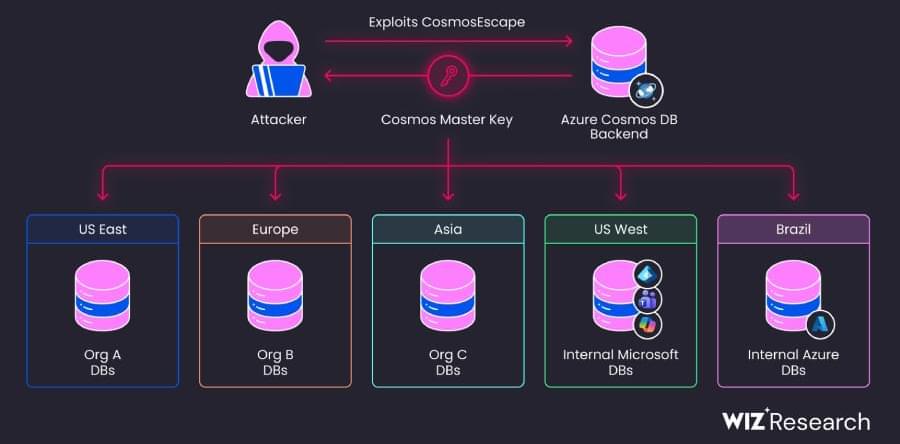
New details have been revealed on how hackers exploited a Cisco Catalyst SD-WAN vulnerability tracked as CVE-2026–20245 in zero-day attacks to create rogue root accounts on targeted devices.
The CVE-2026–20245 vulnerability is a high-severity command injection flaw in Cisco Catalyst SD-WAN Manager (vManage), Controller (vSmart), and Validator (vBond) that allows authenticated attackers to execute arbitrary commands as root by uploading a crafted file.
Cisco said the vulnerability stemmed from insufficient validation of user-supplied input and could be exploited by authenticated attackers with local access to affected devices.
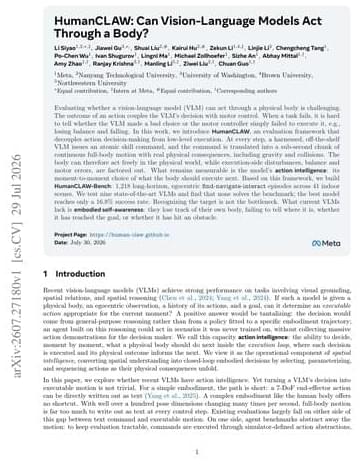
View recent discussion. Abstract: Transformers replace recurrence with a memory that grows with sequence length and self-attention that enables ad-hoc lookups over past tokens. Consequently, they lack an inherent incentive to compress history into compact latent states with consistent transition rules. This often leads to learning solutions that generalize poorly. We introduce Next-Latent Prediction (NextLat), which extends standard next-token training with self-supervised predictions in the latent space. Specifically, NextLat trains a transformer to learn latent representations that are predictive of its next latent state given the next token. Theoretically, we show that these latents provably converge towards belief states, compressed information about the history necessary to predict the future.
The main reason for sealing wine bottles with a cork is to protect the liquid from oxygen. However, it is not an impermeable barrier, and a small amount of air leaks in, which is not always entirely bad news. The gas helps the wine mature and develop a more complex flavor.
In a paper published in the journal Science Advances, researchers highlight several mechanisms that control how oxygen enters and behaves inside the bottle.
Oxygen is, in fact, a crucial consideration. Too much, and the wine can oxidize and spoil, while too little can stunt its development and lead to unpleasant aromas. So winemakers have a delicate balancing act to get it right.