A hidden world beneath Albania’s surface has just been unveiled, and it’s more extraordinary than anyone imagined. This underground lake could hold secrets that will reshape our understanding of Earth’s mysteries.
Category: futurism – Page 267




Make Your Pong Experience More Fun with This Interactive Table
Now featuring a vertical solo mode.
Sleep’s dual role: How it consolidates memories while preparing the brain for new learning
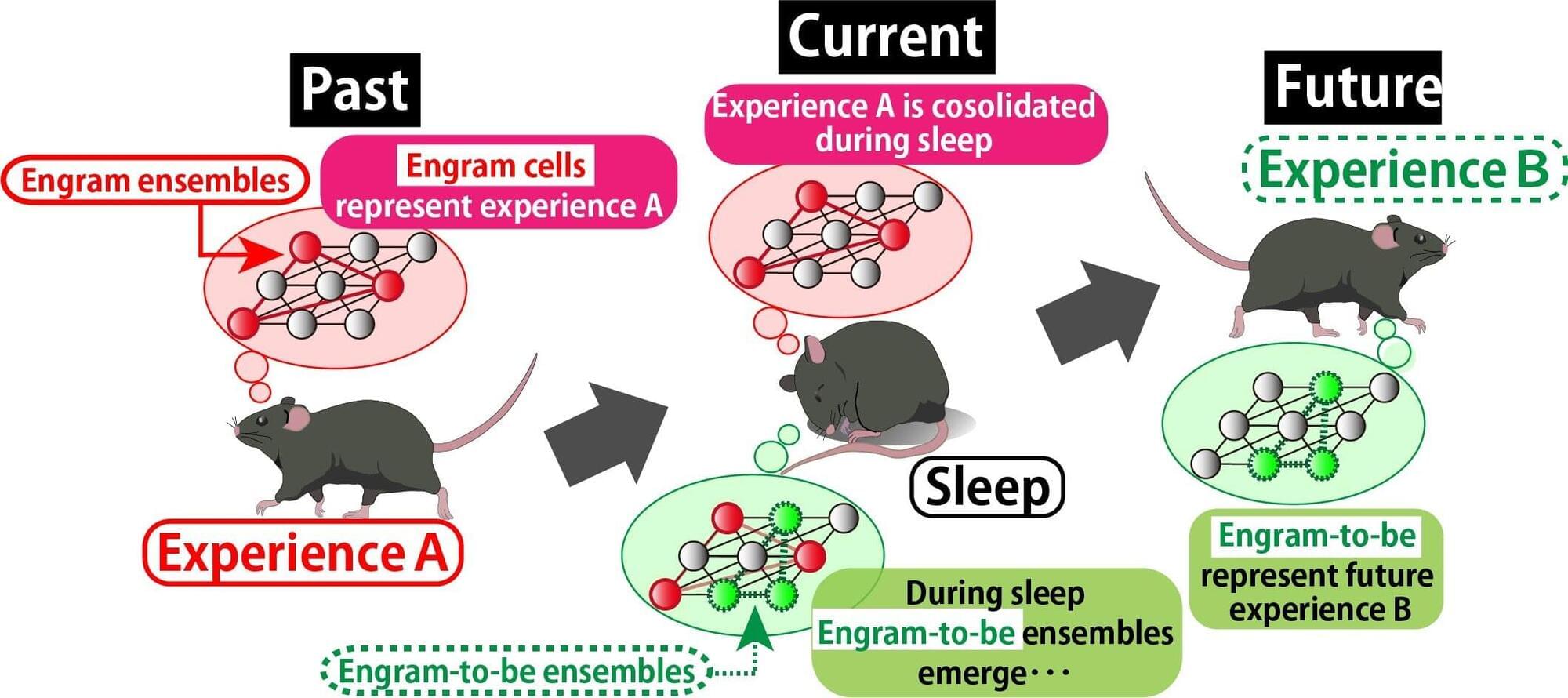
Memory formation, storage, and retrieval are fundamental processes that define who we are and how we interact with the world. At the cellular level, these processes rely on specialized neurons called engram cells—neuronal populations that physically encode our experiences and allow us to recall them later. Over the past few decades, scientists have made significant progress in identifying these neuronal ensembles and understanding some aspects of memory allocation.
Although sleep is widely known to be essential for memory processing and consolidation, many of its underlying mechanisms and functions are unclear. Traditional views have largely focused on sleep as a backward-looking process that serves to strengthen past experiences, but could it simultaneously help prepare the brain for new learning?
In a recent effort to tackle this question, a research team from Japan, led by Distinguished Professor Kaoru Inokuchi from the University of Toyama, uncovered a dual role for sleep in memory processing. Their paper, which will be published in Nature Communications on April 28, 2025, explores how the brain simultaneously preserves past memories while preparing for future ones during sleep periods.