Discover why some puzzles stump supersmart AIs but are easy for humans, what this reveals about the quest for true artificial general intelligence—and why video games are the next frontier




Cytonics: Our mission is to rid the world of the pain, suffering, and debilitated quality of life caused by Osteoarthritis (OA).
Sand batteries are emerging as a viable alternative to lithium-ion for thermal energy storage, capable of holding heat with minimal loss.
Tacking—a maneuver used to sail a boat against the wind, changing direction in a zig-zag fashion—is one of the most difficult but necessary sailing maneuvers. While tacking is common, the movement of the sails and wind forces during the turn are not well understood.
Humanoid robots — long seen as futuristic — are already here, walking, talking, and working among us. Here are 10 advanced examples.
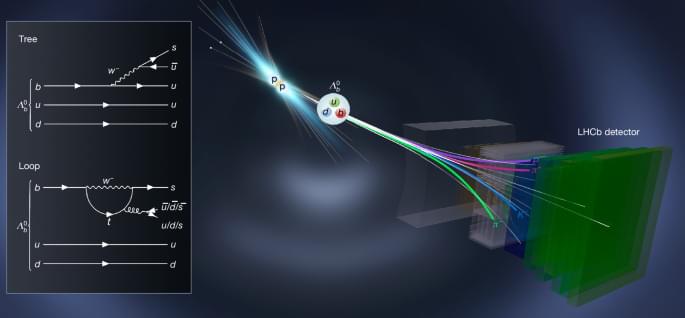
The LHCb experiment is being built, operated and maintained by the LHCb Collaboration. All authors contributed to the design, construction, deployment and operation of the detector, the data taking, the development of the reconstruction and simulation software, data processing and data analysis. The final manuscript was reviewed and approved by all authors.
Correspondence to X. Yang.