Humans have built so many dams around the world that the Earth’s poles have wandered away from the planet’s rotational axis, new research suggests.
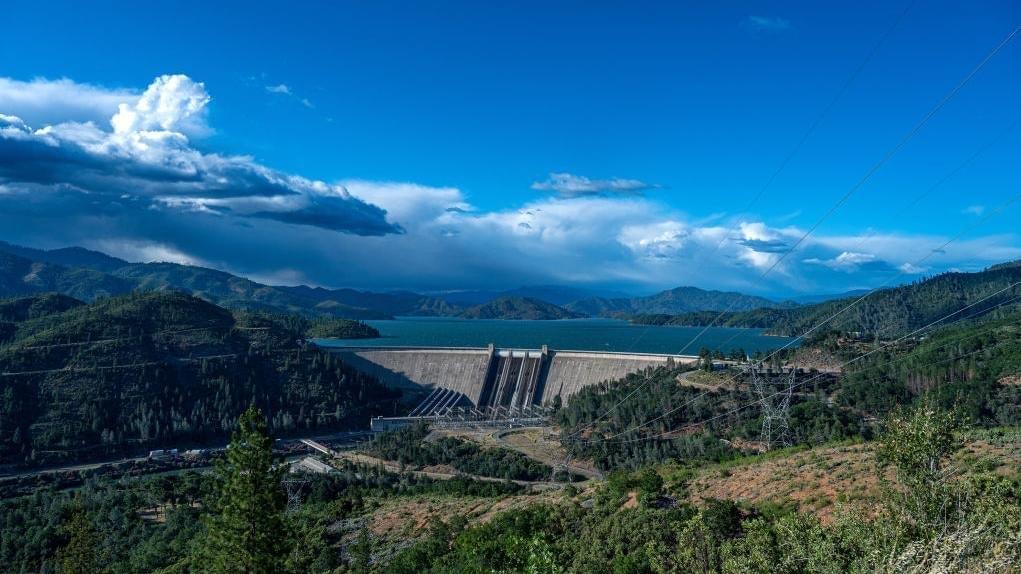
Over the last 200 years, humans have constructed nearly 7,000 massive dams, impounding enough water to nudge the Earth’s poles by about three feet (one meter) and cause a 0.83-inch (21-millimeter) drop in global sea levels, according to a new study in Geophysical Research Letters.
This drift is possible because Earth’s solid crust forms a hard shell around a molten layer of gooey magma. This means that whenever a significant amount of mass is redistributed across the planet’s surface, the outermost rock layer wobbles, shifting relative to Earth’s molten interior. When this happens, different areas on the Earth’s surface end up directly over the planet’s rotational axis. As a result, the planet’s poles pass through different surface locations than before, a phenomenon known as true polar wander.