An unholy alliance?
Read more


Scientists have taken a major step towards creating an aircraft of the future, one powered by an ion drive rather than using moving parts and fuel like conventional aircraft.
In a paper published today in Nature, a team led by Steven Barrett from the Massachusetts Institute of Technology (MIT) described how they created a so-called electroaerodynamic-powered plane, one that uses solid-state propulsion, meaning no propellers or jet engines with expendable fuel.
“The future of flight shouldn’t be things with propellers and turbines,” Barrett says in the video below. “[It] should be more like what you see in Star Trek, with a kind of blue glow and something that silently glides through the air.”
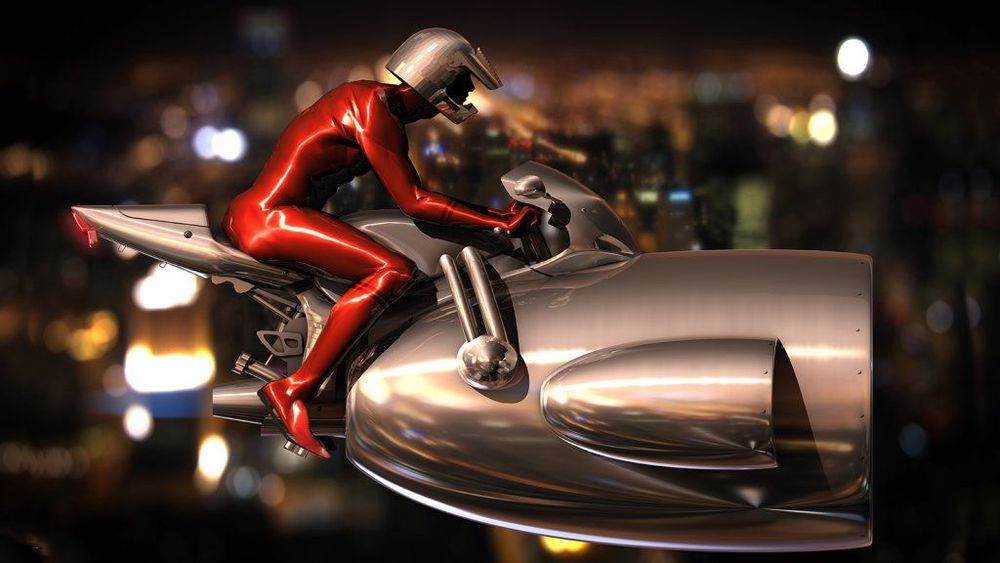

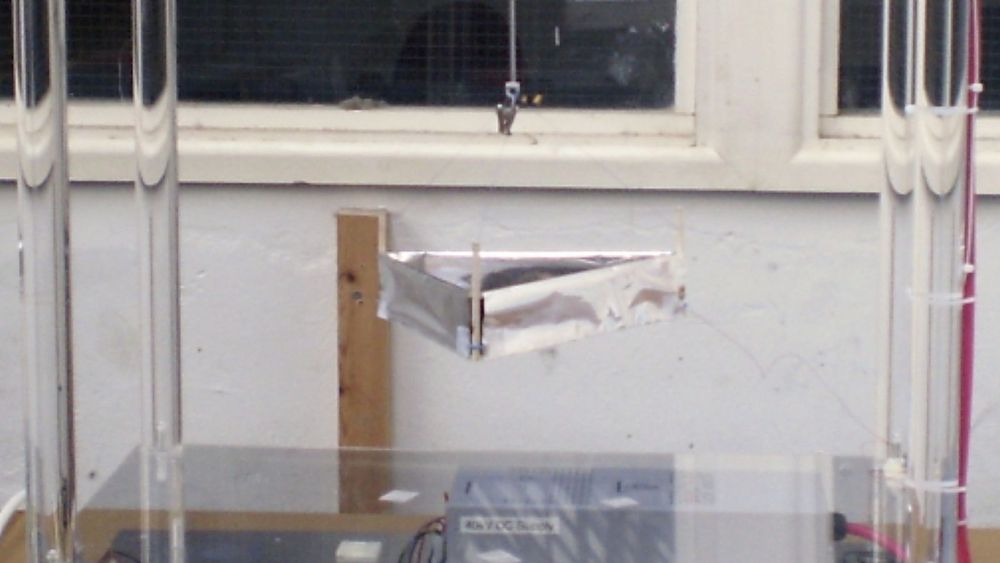
Stealth drones and other aircraft of the future could be powered by engines that don’t have any moving parts, can’t be detected by infrared, and are more efficient than what we have today. A new study by MIT researchers demonstrated all of these capacities and more for ionic thrusters and now at least one major aerospace company, Lockheed Martin, has said it’s investigating the technology.
“I think UAVs would be the most likely initial application if [ionic thrusters] work,” said the lead researcher in the study, MIT aerospace professor Steven Barrett, in an email to The Verge. Ionic thrusters for aircraft work by generating a high-voltage electrical field that strips electrons from air molecules, “ionizing” them and pushing them away behind an aircraft as ionic wind, to move the craft forward. Scientists and hobbyists have been tinkering with small, lightweight model planes using these kinds of propulsion systems since the 1960s. The technology uses no moving parts and is almost completely silent. It hasn’t come to full-size planes, though, due to power concerns.



Researchers at Erasmus University in Rotterdam studied the faces of almost 2,700 elderly Dutch Europeans, and found that those carrying a variation of the MC1R gene (most prevalent in redheaded people) looked on average two years younger than they actually are.

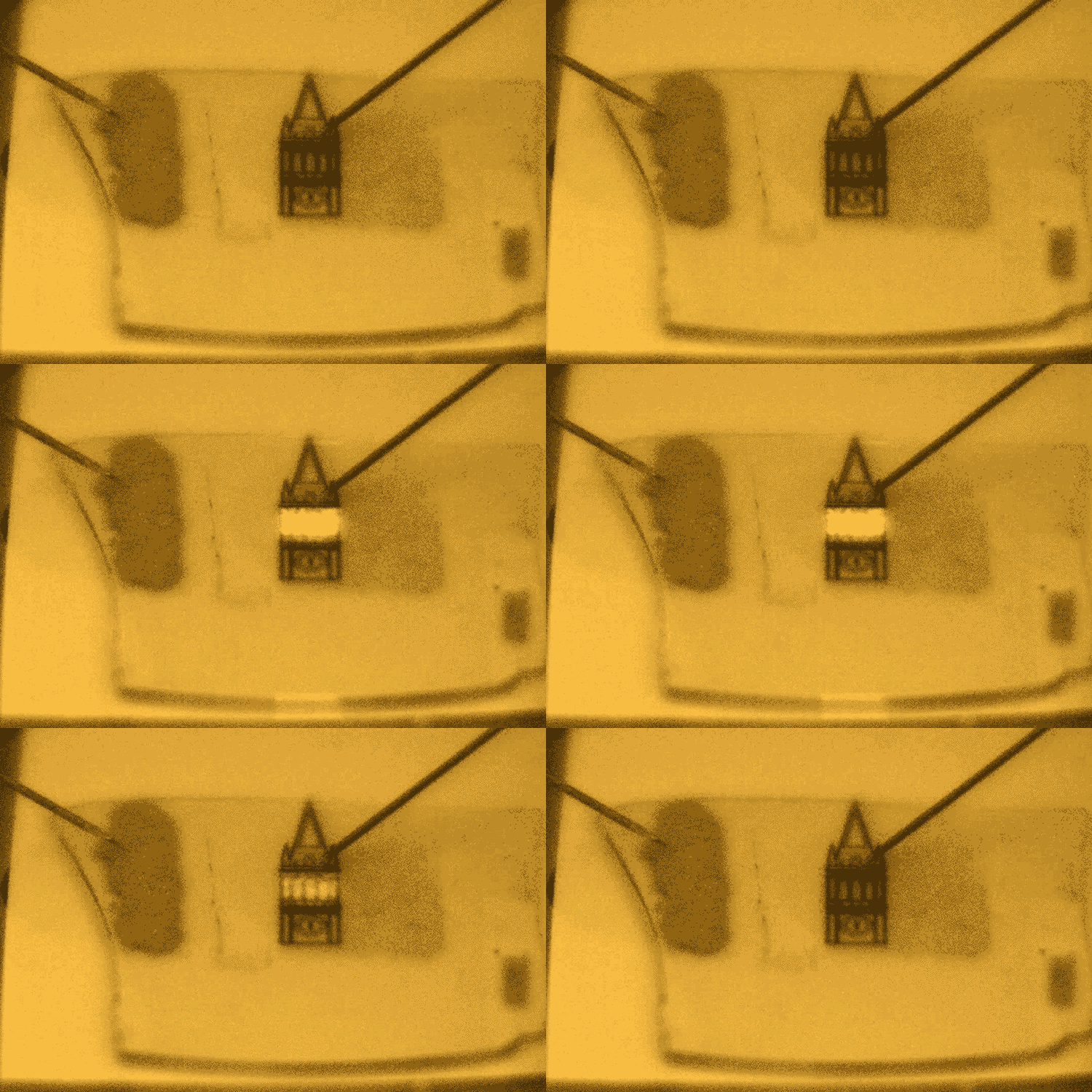
The device opens the door to invisible displays on walls and windows – displays that would be bright when turned on but see-through when turned off — or in futuristic applications such as light-emitting tattoos, according to the researchers.
“The materials are so thin and flexible that the device can be made transparent and can conform to curved surfaces,” said Der-Hsien Lien, a postdoctoral fellow at UC Berkeley and a co-first author along with Matin Amani and Sujay Desai, both doctoral students in the Department of Electrical Engineering and Computer Sciences at Berkeley.
Their study was published March 26 in the journal Nature Communications. The work was funded by the National Science Foundation and the Department of Energy.