Toggle light / dark theme

Thailand Creating Forests

As a result of deforestation, only 6.2 million square kilometers remain of the original 16 million square kilometers of forest that formerly covered Earth. Apart from adveserly impacting people’s livelihoods, rampant deforestation around the world is threatening a wide range of tree species, including the Brazil nut and the plants that produce cacao and açaí palm; animal species, including critically-endangered monkeys in the remote forests of Vietnam’s Central Highlands, and contributing to climate change instead of mitigating it (15% of all greenhouse gas emissions are the result of deforestation).

While the world’s forest cover is being unabashedly destroyed by industrial agriculture, cattle ranching, illegal logging and infrastructure projects, Thailand has found a unique way to repair its deforested land: by using a farming technique called seed bombing or aerial reforestation, where trees and other crops are planted by being thrown or dropped from an airplane or flying drone.

The tree seed bombing in Thailand is one of the greatest examples of ‘Conscious Entrepreneurs’ or ‘Spiritual Entrepreneurs’ out there right.

The Future of Humanity’s Food Supply Is in the Hands of AI

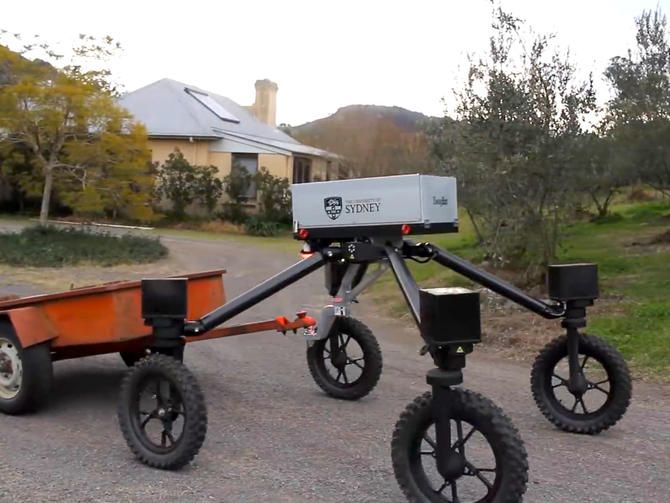
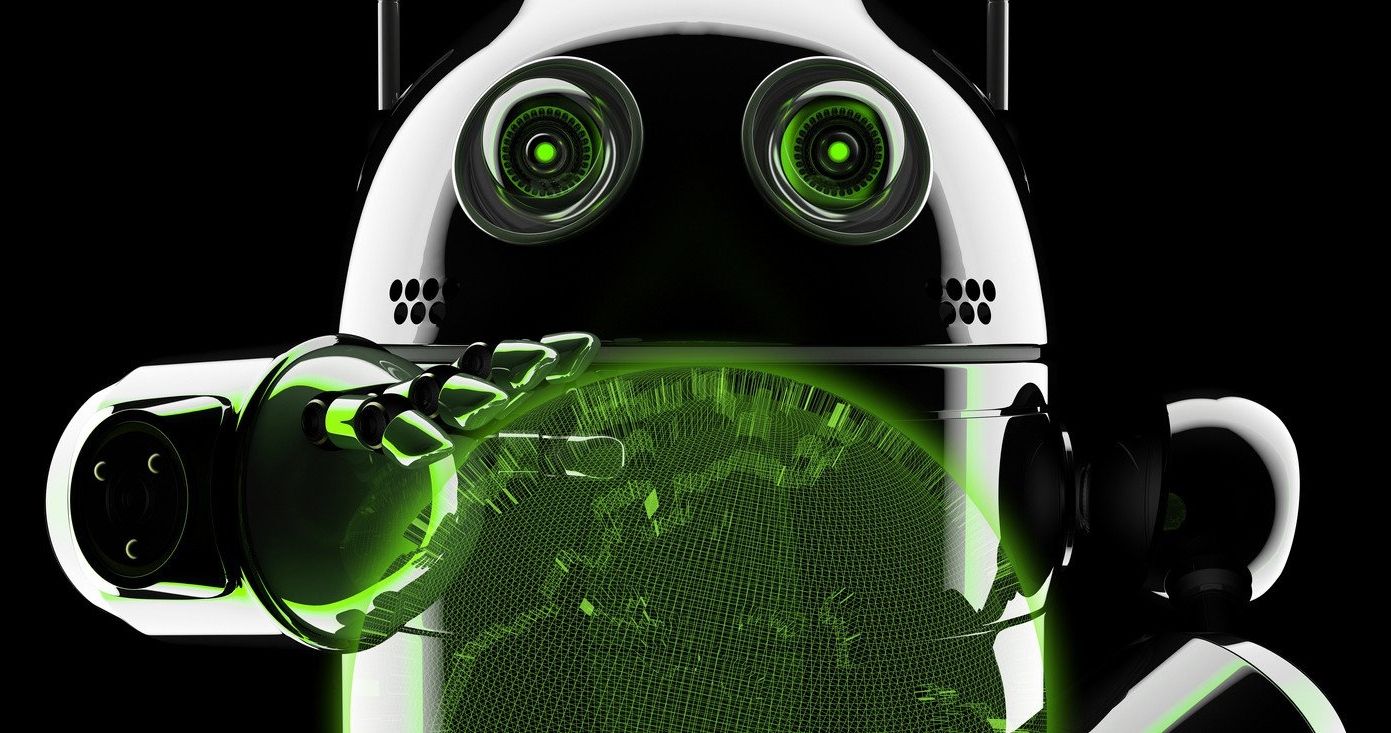
Perhaps it’s serendipitous, then, that the machines have finally arrived. Truly smart, truly impressive robots and machine learning algorithms that may help usher in a new Green Revolution to keep humans fed on an increasingly mercurial planet. Think satellites that automatically detect drought patterns, tractors that eyeball plants and kill the sick ones, and an AI-powered smartphone app that can tell a farmer what disease has crippled their crop.

Forget scarecrows. The future of agriculture is in the hands of the machines.

A Digital Green Thumb

Deep learning is a powerful method of computing in which programmers don’t explicitly tell a computer what to do, but instead train it to recognize certain patterns. You could feed a computer photos of diseased and healthy plant leaves, labeled as such. From these it will learn what diseased and healthy leaves look like, and determine the health of new leaves on its own.

Google’s Superhuman Computer Can Tell Where Nearly Any Photo Was Taken

PlaNet, made by a team led by Google computer vision specialist Tobias Weyand, can determine the location of photos just by studying its pixels.

You can usually tell where a picture was taken by recognizing certain location cues within the photo. Major landmarks like the Great Wall of China or the Tower of London are immediately recognizable and fairly easy to pinpoint, but how about when the photo lacks any familiar location cues, like a photo of food, of pets, or one taken indoors?

People do fairly well on this task by relying on all sorts of knowledge about the world. You could figure out where a photo was taken by looking at any words found on the photo, or by looking at the architectural styles or vegetation.

Urban Produce: The Future of Farming is Growing UP!

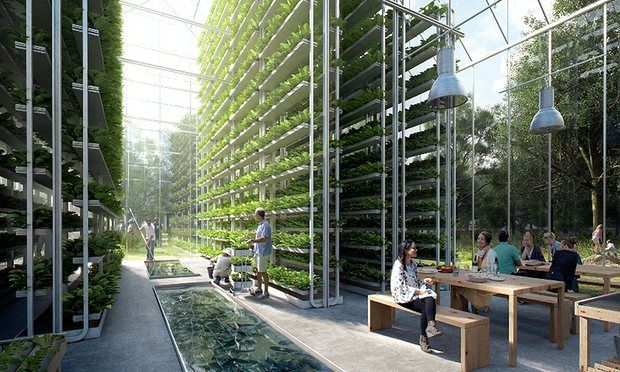
Urban Produce High Density Vertical Growing System is a patented technology that was developed taking advanced hydroponic technology and automating it. Urban Produce has the capacity to grow 16 acres of produce on 1/8 of an acre with just one of it’s High Density Vertical Growing Systems. Our mission is to build our patented systems across the U.S. to provide both locally grown sustainable produce to Urban Cities while also stimulating the local economies. We are 21st century growing! www.urbanproduce.com

Earthrise — Japan’s Future Farms

By 2050, the world will need to feed an additional 2.5 billion people living in cities. Yet as the demand for food rises, the amount of land available for agriculture in developed countries is expected to decline. In Japan, at the Fujitsu factory of Aizu-Wakamatsu which still manufactures semiconductor chips for computers, a different project is underway which may offer a solution to this problem. The company has converted an unused part of the factory into a farm to grow food — and more specifically, to grow lettuce. Fujitsu has focused on growing a low-potassium variety, which is sold to people with kidney problems who cannot process the mineral properly. Join Rachel Mealey in Japan’s Fukushima Prefecture to visit the sun-free and soil-free urban farms of the future.

/* */