Patrick Keating of Keating International gives an exclusive insight into how the food system has progressed since the earliest forms of agtech.

A team of researchers at Columbia University has developed a 3D food printer capable of printing and cooking multiple ingredients at one time.

Nice.
This summer, more than a million tons of chardonnay grapes are plumping on manicured vineyards around the world. The grapes make one of the most popular white wines, but their juicy fruit and luscious leaves are also targets for diseases such as downy mildew, a stubborn fungus-like parasite.
Tags: Wine, Pesticides, CRISPR
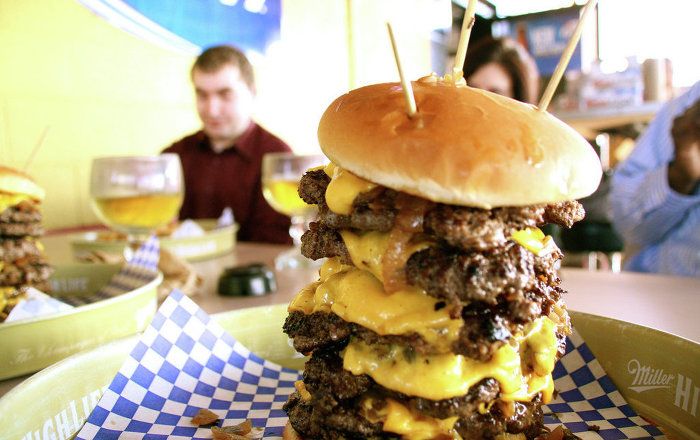
The rapid growth of the world’s human population raises the issue of more efficient food production; one solution to the problem is “clean meat,” which is produced in the equivalent of meat fermenters, Bruce Friedrich, Executive Director of the Good Food Institute, told Radio Sputnik.
The world’s human population reached 7.4 billion in March 2016, having reached 7 billion in October 2011. In 2050, it is expected to reach 9.7 billion, raising the question of how to produce enough food for everybody.
Bruce Friedrich, Executive Director of the Good Food Institute, told Radio Sputnik that current methods of agricultural production are using energy inefficiently.

Fixing one thing only gets you so far, as all the other forms of damage will still, on their own, kill you. Aubrey de Grey of the SENS Research Foundation believes that only small gains in overall life span are possible without addressing all of the causes of aging.
Five years from now, it will be possible to take a trip overseas to have most of the senescent cells that have built up in your tissues cleared away via some form of drug or gene therapy treatment. That will reduce your risk of suffering most age-related diseases, and in fact make you measurably younger — it is a narrow form of rejuvenation, targeting just one of the various forms of cell and tissue damage that cause aging, age-related disease, and ultimately death. I say five years and mean it. If both of the present senescent cell clearance startup companies Oisin Biotechnologies and UNITY Biotechnology fail rather than succeed, and it is worth noting that the Oisin founders have a therapy that actually works in animal studies, while drugs and other approaches have also been shown to both clear senescent cells and extend life in mice, then there will be other attempts soon thereafter. The basic science of senescent cell clearance is completely open, and anyone can join in — in fact the successful crowdfunding of the first Major Mouse Testing Program study earlier this year was exactly that, citizen scientists joining in to advance the state of the art in this field.
Five years from now, however, there will be no definitive proof that senescent cell clearance extends life in humans, nor that it reduces risk of age-related disease in our species over the longer term. There will no doubt be a few more studies in mice showing life extension. There will be initial human evidence that clearance of senescent cells causes short-term improvements in technical biomarkers of aging such as DNA methylation patterns, or more easily assessed items such as skin condition — given how much of the skin in old people is made up of senescent cells — or markers of chronic inflammation. These are all compelling reasons to undertake the treatment, but if you want definite proof of life extension you’ll have to wait a decade or more beyond the point of first availability, as that is about as long as it takes to put together and run academic studies that make a decent stab at quantifying effects on mortality in old people.
Uncertainty is the state of affairs when considering the effects of potentially life-extending therapies on human life span. Consider the practice of calorie restriction, for example, where theory suggests the likely outcome is a few extra years, but certainly not a large number of extra years or else it would be very apparent in epidemiological data. I think that an enterprising individual could, given a good relationship with the Calorie Restriction Society, put together a 20-year or 40-year study to that would — in theory — produce a decent set of data on practitioners and outcomes in the wild. It won’t happen, most likely, because for one the funding isn’t there for such a study, and secondly we’ll be well into the era of widely available rejuvenation therapies along the way. Those calorie restriction practitioners will be taking advantage of treatments to repair the causes of aging just like everyone else.
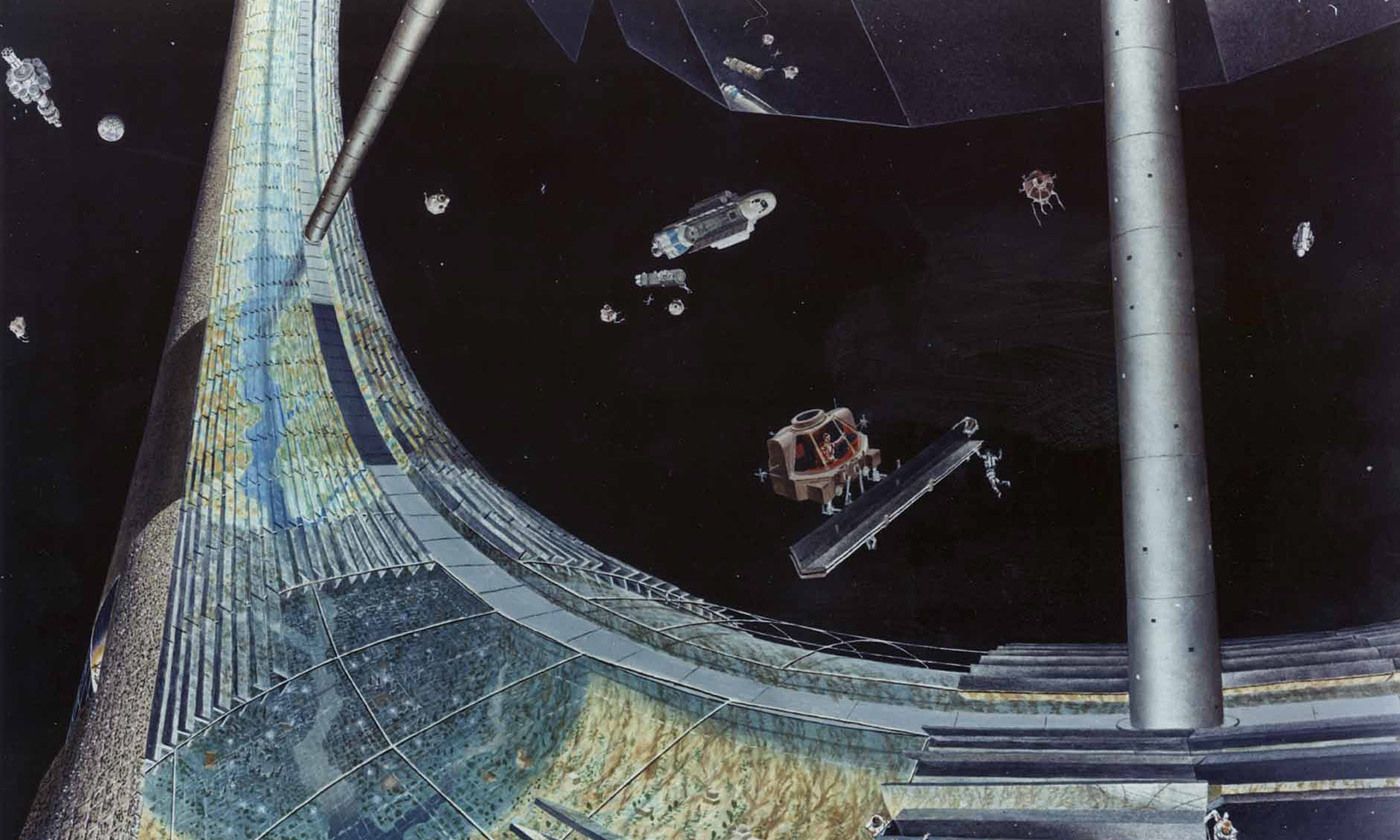
If human beings are ever to colonise other planets – which might become necessary for the survival of the species, given how far we have degraded this one – they will almost certainly have to use generation ships: spaceships that will support not just those who set out on them, but also their descendants. The vast distances between Earth and the nearest habitable planets, combined with the fact that we are unlikely ever to invent a way of travelling that exceeds the speed of light, ensures that many generations will be born, raised and die on board such a ship before it arrives at its destination.
A generation ship would have to be a whole society in microcosm, with hospitals and schools, living quarters and perhaps entertainment districts, a security force, maybe even a judiciary. It would need to be able to provide food for its crew, and that might require agriculture or aquaculture, perhaps even domestic animals (which might also be needed for the colonisation effort). Its design therefore presents a major challenge: not just to engineers but also to social scientists. How should the crew be selected and the environment structured to minimise interpersonal conflict? What size of population is optimal for it to remain committed to the single overarching project of colonising a new planet without too much of a risk of self-destructive boredom or excessive narrowing of the gene pool? Does mental health require that a quasi-natural environment be recreated within the ship (with trees, grass and perhaps undomesticated birds and small animals)?
As well as the technological and social challenges confronting the designers of such ships, there are fascinating philosophical and ethical issues that arise. The issue I want to focus on concerns the ethics of a project that locks the next generation into a form of living, the inauguration of which they had no say over, and that ensures their options are extremely limited.
Could we see a day when 3D Printers replace convection ovens and microwaves in the kitchen?
Over the last few decades, a new wave of science has been infused into the world of food in the form of molecular gastronomy. By definition, food preparation and cooking involve physical and chemical changes, and molecular gastronomy simply uses scientific principles to take food in new technical and even artistic directions.
It’s also a great excuse to have some fun with liquid nitrogen.
Back in 2013, another big step in food science came with a successful crowdfunding campaign to make a true functional food replacement containing all the necessary nutrients to sustain life. With a clever name that provoked everyone to read the ingredient list twice for anything resembling people, Soylent tastes like pancake batter but doesn’t make good pancakes.
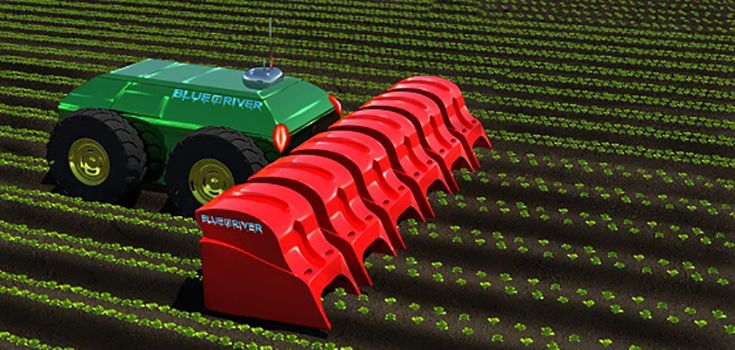
Should all new technologies be used?
At the head of all this you will hear about the latest technology from the biotech world, such as CRISPR, that allows scientists to edit the very genome of a plant or animal, but not all technologies that can be used should be used.
While learning to grow massive quantities of organic food in urban landscapes without pesticides is great news, taking away human oversight from farming isn’t necessarily going to make our food better.
Sure, chatbots are useful for service industries like hospitality and food delivery, but in health care? Some groups are testing the use of chatbots to retrieve medical information from within a messaging app. At first glance, that seems a bit impersonal, but a closer look reveals a wide range of use cases where bots could make your next visit to the hospital, doctor’s office, or pharmacy faster and more effective.
Let’s run this back a bit. If you’re not familiar with bots, here’s a brief explanation. Bots are software applications that run automated tasks or scripts that serve as shortcuts for completing a certain job, but they do it faster (a lot faster) and with verve. And in health care, we spend a lot of time spent generating and retrieving information.
By putting a trained army of bots inside an application — smartphone, desktop, whatever-top — health care workers can rapidly improve throughput by simply cutting out a bunch of steps. That’s something most care providers today would welcome, especially with millions of new people entering the system as a result of the Affordable Care Act and the aging of baby boomers. With the crush of increased data entry and new regulations, costs and rote work are skyrocketing.
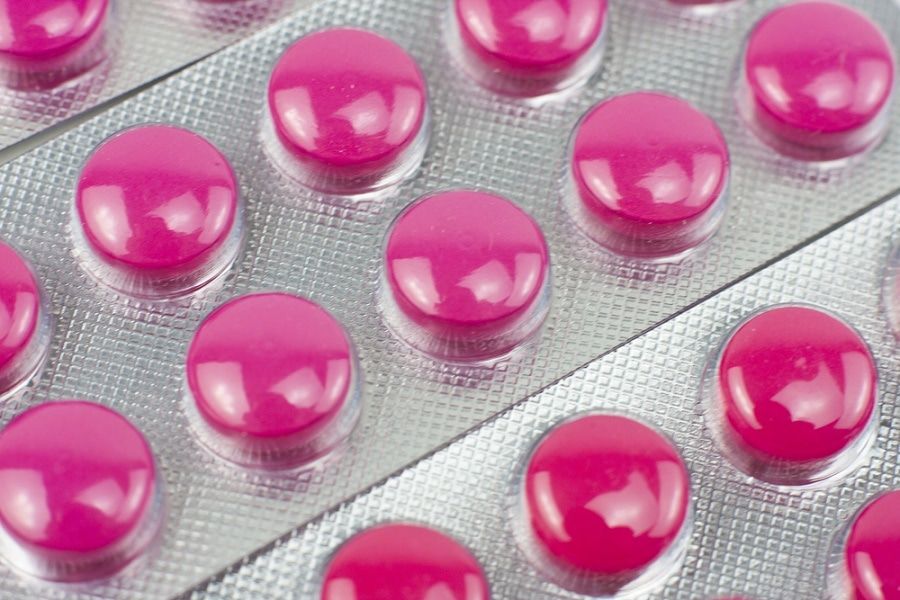
Plastic packaging may seem impenetrable, and often nearly impossible to remove, but water molecules can still pass through. This permeability to moisture can reduce the lifespan of a product.
Packaging is everywhere, even for individual vegetables or fruits. Wrapping products ranging from electronics to food in plastic films protect them from bacteria, dust, and to some extent water.
According to Praveen C. Ramamurthy, the lifespan of a moisture-sensitive organic light-emitting diode can be maximized for more than a year if the packaging has the ability to restrict water vapor from penetrating at a rate less than 10-6 grams per square meter every day. Modern day packaging is not capable of accomplishing that goal, however Ramamurthy and colleagues wanted to find out if combining graphene to flexible polymer was sufficient.
