“The industry reports that, for the first time ever, solar was the number one source of new generating capacity, beating out wind and gas.”

“The industry reports that, for the first time ever, solar was the number one source of new generating capacity, beating out wind and gas.”

“Using survey data from a sample of senior investment professionals from mainstream (i.e. not SRI funds) investment organizations we provide insights into why and how investors use reported environmental, social and governance (ESG) information.”

NASA scientists have proposed a bold plan that could give Mars its atmosphere back and make the Red Planet habitable for future generations of human colonists.
By launching a giant magnetic shield into space to protect Mars from solar winds, the space agency says we could restore the Red Planet’s atmosphere, and terraform the Martian environment so that liquid water flows on the surface once again.
Mars may seem like a cold, arid wasteland these days, but the Red Planet is thought to have once had a thick atmosphere that could have maintained deep oceans filled with liquid water, and a warmer, potentially habitable climate.
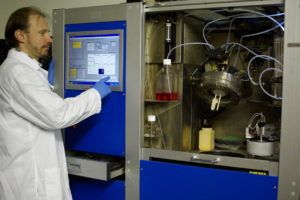
Superlubricity nano-structured self-assembling coating repairs surface wear, decreases emissions and increases HP and gas mileage.
Globally about 15 percent of manmade carbon dioxide comes from vehicles. In more developed countries, cars, trucks, airplanes, ships and other vehicles account for a third of emissions related to climate change. Emissions standards are fueling the lubricant additives market with innovation.
Up to 33% of fuel energy in vehicles is used to overcome friction. Tribology is the science of interacting surfaces in relative motion inclusive of friction, wear and lubrication. This is where TriboTEX, a nanotechnology startup is changing the game of friction modification and wear resilience with a lubricant additive that forms a nano-structured coating on metal alloys.
This nano-structured coating increases operating efficiency and component longevity. It is comprised of synthetic magnesium silicon hydroxide nanoparticles that self-assemble as an ultralow friction layer, 1/10 of the original friction resistance. The coating is self-repairing during operation, environmentally inert and extracts carbon from the oil. The carbon diamond-like nano-particle lowers the friction budget of the motor, improving fuel economy and emissions in parallel while increasing the power and longevity of the motor.
TriboTEX has a Kickstarter campaign that has just surpassed $100,000 in funding. The early bird round has just closed that offered the product at one half the cost of its retail. The final round offers the lubricant system self-forming coating at 75 percent and is ending shortly. The founder Dr. Pavlo Rudenko, Ph.D. is a graduate of Singularity University GSP11 program.
“Launched in 2007, the Fuller Challenge has defined an emerging field of practice: the whole systems approach to understanding and intervening in complex and interrelated crises for wide-scale social and environmental impact. The entry criteria have established a new framework through which to identify and measure effective, enduring solutions to global sustainability’s most entrenched challenges. The rigorous selection process has set a unique standard, gaining renown as “Socially-Responsible Design’s Highest Award.”
The Fuller Challenge attracts bold, visionary, tangible initiatives focused on a well-defined need of critical importance. Winning solutions are regionally specific yet globally applicable and present a truly comprehensive, anticipatory, integrated approach to solving the world’s complex problems.”
Deadline is March 31, 2017
Posthumanists and perhaps especially transhumanists tend to downplay the value conflicts that are likely to emerge in the wake of a rapidly changing technoscientific landscape. What follows are six questions and scenarios that are designed to focus thinking by drawing together several tendencies that are not normally related to each other but which nevertheless provide the basis for future value conflicts.

2017 only just arrived, but one manufacturing company is already looking 45 years into the future.
Arconic, a materials science company, has envisioned a 3-mile-high (4.8-km) skyscraper built from materials that are either in-development or have already been brought to market, including smog-eating surfaces and retractable balconies.
The tower was concocted as part of the company’s larger campaign known as The Jetsons, an homage to the 1962 cartoon set in 2062. Arconic’s engineers worked alongside futurists to imagine the technologies that will be most useful several decades from now.

Bigger question is what happens when it begins to impact it’s other neighbors including Japan and Tiawan?
Bigger question is what happens when it begins to impact it’s other neighbors including Japan and Taiwan?
Hongkongers were forced to breathe China’s airpocalypse smog over the weekend when monsoon winds from the northeast pushed the poisonous air from the mainland down to the city.
According to South China Morning Post, Hong Kong’s Environmental Protection Department reported that 11 of 16 stations in different districts recorded Air Quality Health Index readings by Sunday afternoon.
The districts of Tung Chung and Tuen Mun posted a score of 10, the highest mark in the “very high” health risk category.
Changing another world to support Earth life is called terraforming. But maybe it’s a better idea to just change Earth life to live on other worlds.
Support us at: http://www.patreon.com/universetoday
More stories at: http://www.universetoday.com/
Follow us on Twitter: @universetoday
Follow us on Tumblr: http://universetoday.tumblr.com/
Like us on Facebook: https://www.facebook.com/universetoday
Google+ — https://plus.google.com/+universetoday/