Toggle light / dark theme

Researchers develop electric field-based dressing to help heal wound infections

Researchers at Indiana University School of Medicine have found a way to charge up the fight against bacterial infections using electricity.

Work conducted in the laboratories of the Indiana Center for Regenerative Medicine and Engineering, Chandan Sen, Ph.D. and Sashwati Roy, Ph.D. has led to the development of a dressing that uses an to disrupt biofilm . Their findings were recently published in the high-impact journal Annals of Surgery.

Bacterial biofilms are thin, slimy films of bacteria that form on some wounds, including burns or post-surgical infections, as well as after a , such as a catheter, is placed in the body. These bacteria generate their own electricity, using their own electric fields to communicate and form the biofilm, which makes them more hostile and difficult to treat. The Centers for Disease Control and Prevention estimates 65 percent of all infections are caused by bacteria with this biofilm phenotype, while the National Institutes of Health estimates that number is closer to 80 percent.

Read more

Manipulating atoms one at a time with an electron beam

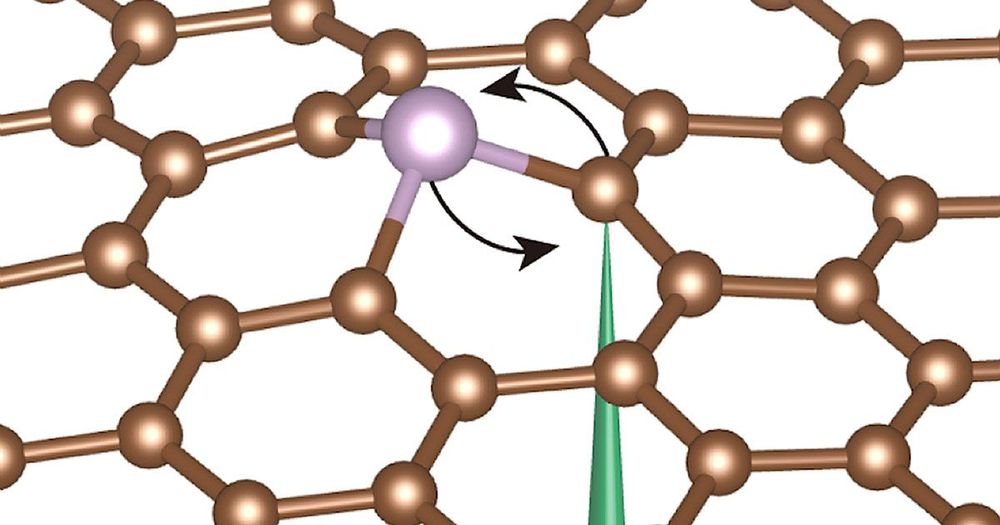
The ultimate degree of control for engineering would be the ability to create and manipulate materials at the most basic level, fabricating devices atom by atom with precise control.

Now, scientists at MIT, the University of Vienna, and several other institutions have taken a step in that direction, developing a method that can reposition atoms with a highly focused electron and control their exact location and bonding orientation. The finding could ultimately lead to new ways of making quantum computing devices or sensors, and usher in a new age of “atomic engineering,” they say.

The advance is described today in the journal Science Advances, in a paper by MIT professor of nuclear science and engineering Ju Li, graduate student Cong Su, Professor Toma Susi of the University of Vienna, and 13 others at MIT, the University of Vienna, Oak Ridge National Laboratory, and in China, Ecuador, and Denmark.

Read more

Human gut microbiome physiology can now be studied in vitro using Organ Chip technology

The human microbiome, the huge collection of microbes that live inside and on our body, profoundly affects human health and disease. The human gut flora in particular, which harbor the densest number of microbes, not only break down nutrients and release molecules important for our survival but are also key players in the development of many diseases including infections, inflammatory bowel diseases, cancer, metabolic diseases, autoimmune diseases, and neuropsychiatric disorders.

Most of what we know about human– interactions is based on correlational studies between disease state and bacterial DNA contained in stool samples using genomic or metagenomic analysis. This is because studying direct interactions between the microbiome and outside the human body represents a formidable challenge, in large part because even commensal bacteria tend to overgrow and kill within a day when grown on culture dishes. Many of the commensal microbes in the intestine are also anaerobic, and so they require very low oxygen conditions to grow which can injure human cells.

A research team at Harvard’s Wyss Institute for Biologically Inspired Engineering led by the Institute’s Founding Director Donald Ingber has developed a solution to this problem using ‘organ-on-a-chip’ (Organ Chip) microfluidic culture technology. His team is now able to culture a stable complex human microbiome in direct contact with a vascularized human intestinal epithelium for at least 5 days in a human Intestine Chip in which an oxygen gradient is established that provides high levels to the endothelium and epithelium while maintaining hypoxic conditions in the intestinal lumen inhabited by the commensal bacteria. Their “anaerobic Intestine Chip” stably maintained a microbial diversity similar to that in human feces over days and a protective physiological barrier that was formed by human intestinal tissue. The study is published in Nature Biomedical Engineering.

Read more

The Challenge of Building a Self-Driving Car

Be one of the first 500 people to sign up with this link and get 20% off your subscription with Brilliant.org! https://brilliant.org/realengineering/

New vlog channel: https://www.youtube.com/channel/UCMet4qY3027v8KjpaDtDx-g

Patreon:
https://www.patreon.com/user?u=2825050&ty=h
Facebook:
http://facebook.com/realengineering1
Instagram:
https://www.instagram.com/brianjamesmcmanus
Twitter:

Discord:
https://discord.gg/s8BhkmN

Get your Real Engineering shirts at: https://standard.tv/collections/real-engineering

Credits:
Writer/Narrator: Brian McManus
Editor: Stephanie Sammann (https://www.stephanie-sammann.com/)
Animator: Mike Ridolfi (https://www.moboxgraphics.com/)
Sound: Graham Haerther (https://haerther.net/)
Thumbnail: Simon Buckmaster https://twitter.com/forgottentowel

References:

The Biggest Problems We’re Facing Today & The Future of Engineering: Crash Course Engineering #46

In our final episode of Crash Course Engineering we are going to take all the tools and ideas we’ve discussed throughout this series and try to imagine where we’re headed. We’re going to explore some of the biggest problems that today’s engineers are trying to solve and make some guesses about what the future of the field might look like.

Crash Course Engineering is produced in association with PBS Digital Studios: https://www.youtube.com/playlist?list=PL1mtdjDVOoOqJzeaJAV15Tq0tZ1vKj7ZV

RESOURCES:
http://www.engineeringchallenges.org/
https://www.wired.com/2016/03/inside-cunning-unprecedented-h…ower-grid/
https://www.ncbi.nlm.nih.gov/pmc/articles/PMC3866520/

***

Read more

Brain mapping: New technique reveals how information is processed

Scientists have discovered a new method for quickly and efficiently mapping the vast network of connections among neurons in the brain.

Researchers combined infrared laser stimulation techniques with functional magnetic resonance imaging in animals to generate mapping of connections throughout the brain. The technique was described in a study published in the journal Science Advances.

“This is a revolution in detecting connections in the brain,” said senior author Anna Wang Roe, Ph.D., a professor in the Division of Neuroscience at OHSU’s Oregon National Primate Research Center. “The ability to easily map connections in the living brain with high precision opens doors for other applications in medicine and engineering.”

Read more

Asteroid Mining: Getting the first mission off the ground

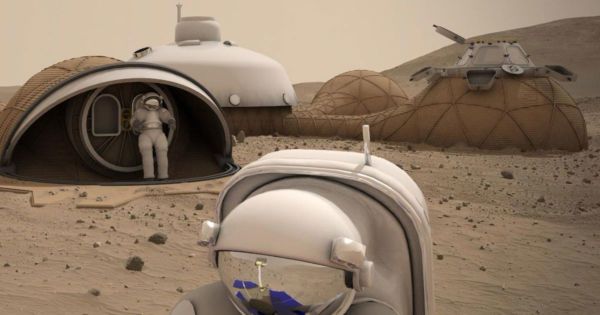
A fully-contained near-Earth asteroid retrieved to cislunar space can be used as a Research and Development destination for resource extraction and engineering tests as space-native material, unaltered by a radical change in environment, in industrial quantity, and in an accessible orbit.

As a geologist and data manager working in petroleum exploration, I’m not qualified to analyze an all-encompassing view of asteroid mining…but maybe I’m qualified to share what I see from my perspective. Rather than looking at all the reasons why asteroid mining is not currently happening, I’d like to dive deep into how changing decision-making perspectives may make a mission possible.

As human activity and accessibility to do business in space broadens, potential demand for resources delivered to space will also increase. Now is the time to start looking at alternative sources of materials to fuel this expansion. Rather than launching everything from Earth, some materials could be sourced from near-Earth asteroids that are energetically easier to reach than our Moon. While mining asteroids for bulk materials like water might be theoretically profitable compared to launch from Earth, the upfront costs so far have been prohibitive. We’ve already seen the first wave of asteroid mining startups come and go. The high cost of technology development and long timescales for return-on-investment have kept commercial asteroid mining missions grounded.

Read more

DARPA: This Smart Contact Lens Could Give Soldiers Superpowers

“Smart” contact lenses sound like something from a sci fi movie — but they’re real, and they could help troops in the field.


French engineering school IMT Atlantique revealed what it calls “the first stand-alone contact lens with a flexible micro battery” earlier this month.

And, notably, it caught the attention of the U.S. military’s attention: the Defense Advanced Research Projects Agency (DARPA) is reportedly interested in the contact lens to augment troops’ visual capabilities in the field, according to Task and Purpose — meaning the gadget could represent the augmented contact lens that DARPA has spent a decade searching for.

Weird Flex

The biggest challenge that IMT Atlantique engineers encountered was to scale down the battery. But thanks to a newly developed flexible micro battery, they found a way to continuously light an LED light source for “several hours,” according to a press release.

Read more

/* */