Toggle light / dark theme

Space travel will radically change human psychology and spirituality

It may cause us to geneticly engineer ourselves to live in dangerous environments too.


Throughout human history, we have associated our spirituality, myths, and religions with the sky. Constellations are peppered with sky stories, from Orion to Warepil (the eagle constellation of aboriginal Australians). The Lakota Native Americans associated the Milky Way as a path for departed souls. Jesus ascended to the heavens. The primary god of ancient Egyptians was Ra, the god of the Sun. And the entire Universe was seen inside Krishna’s mouth.

Jason Batt, a science fiction author, mythologist, and futurist, has spent a lot of time thinking about stories like this, and how our relationship with the heavens will change when we become a space-faring race. “So what happens to humanity?” Batt, who is also a co-founder of Deep Space Predictive Research Group and a Creative Manager of 100 Year Starship, pondered while speaking to Big Think. “What is going to change in us? What is going to transform?”

Even though we often associate our space travel with feats of engineering and science, there is an undeniable connection with our myth as well. We see this in how we name our rockets destined for space: Gemini, Apollo, Artemis. Going to space is big, not just for our technology, but for our spirits.

Deterministic Formation of Single Organic Color Centers in Single-Walled Carbon NanotubesClick to copy article linkArticle link copied!

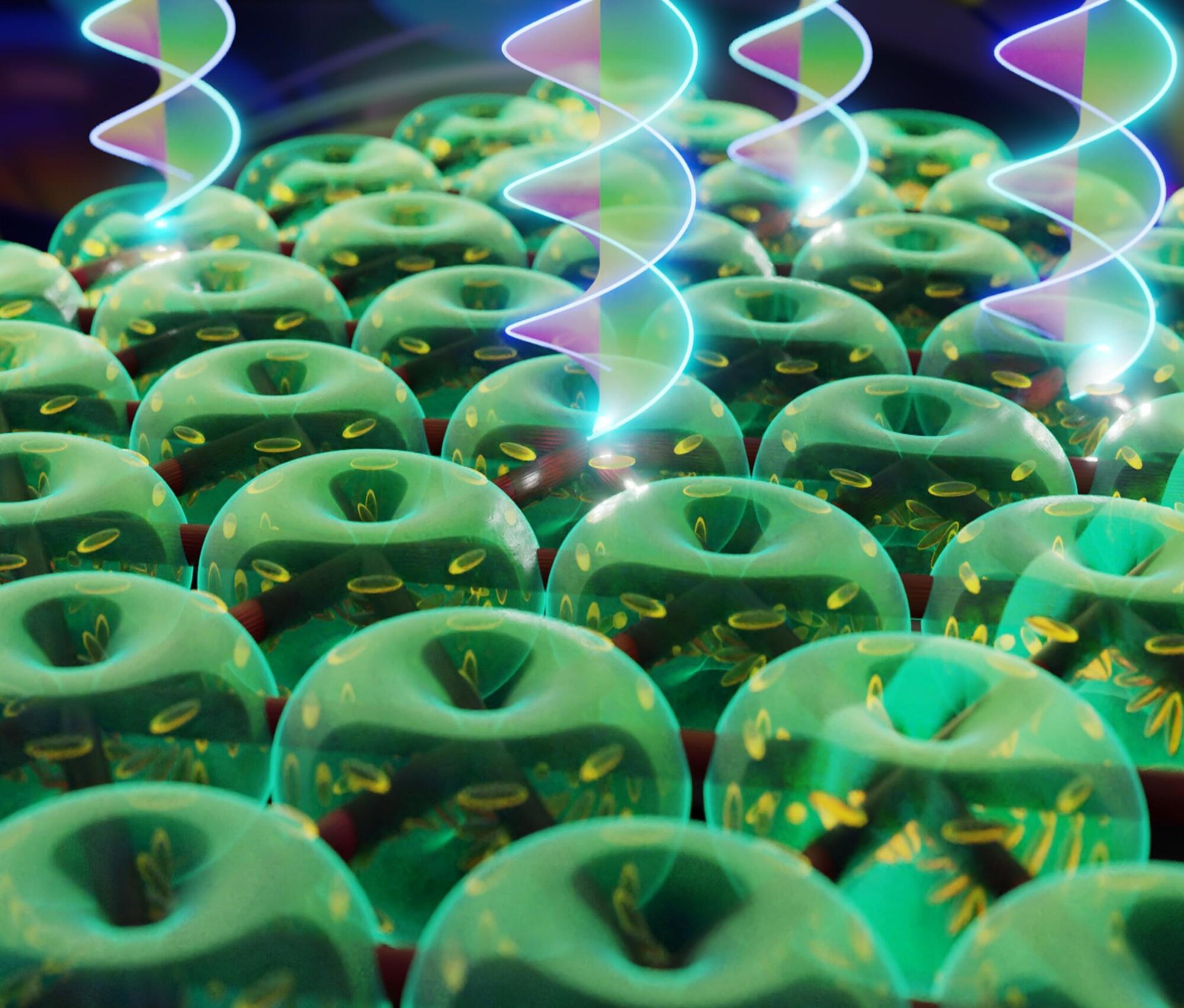
Quantum light sources using single-walled carbon nanotubes show promise for quantum technologies but face challenges in achieving precise control over color center formation. Here, we present a novel technique for deterministic creation of single organic color centers in carbon nanotubes using in situ photochemical reaction. By monitoring discrete intensity changes in photoluminescence spectra, we achieve precise control over the formation of individual color centers. Furthermore, our method allows for position-controlled formation of color centers as validated through photoluminescence imaging. We also demonstrate photon antibunching from a color center, confirming the quantum nature of the defects formed. This technique represents a significant step forward in the precise engineering of atomically defined quantum emitters in carbon nanotubes, facilitating their integration into advanced quantum photonic devices and systems.

Engineering the first reusable launchpads on the moon

Engineers need good data to build lasting things. Even the designers of the Great Pyramids knew the limestone they used to build these massive structures would be steady when stacked on top of one another, even if they didn’t have tables of the compressive strength of those stones.

But when attempting to build structures on other worlds, such as the moon, engineers don’t yet know much about the local materials. Still, due to the costs of getting large amounts of materials off of Earth, they will need to learn to use those materials even for critical applications like a landing pad to support the landing / ascent of massive rockets used in re-supply operations.

A new paper published in Acta Astronautica from Shirley Dyke and her team at Purdue University describes how to build a lunar landing pad with just a minimal amount of prior knowledge of the material properties of the regolith used to build it.

NASA’s Webb, Curiosity Named in TIME’s Best Inventions Hall of Fame

Two icons of discovery, NASA’s James Webb Space Telescope and NASA’s Curiosity rover, have earned places in TIME’s “Best Inventions Hall of Fame,” which recognizes the 25 groundbreaking inventions of the past quarter century that have had the most global impact, since TIME began its annual Best Inventions list in 2000. The inventions are celebrated in TIME’s December print issue.

“NASA does the impossible every day, and it starts with the visionary science that propels humanity farther than ever before,” said Nicky Fox, associate administrator, Science Mission Directorate, NASA Headquarters in Washington. “Congratulations to the teams who made the world’s great engineering feats, the James Webb Space Telescope and the Mars Curiosity Rover, a reality. Through their work, distant galaxies feel closer, and the red sands of Mars are more familiar, as they expanded and redefined the bounds of human achievement in the cosmos for the benefit of all.”

Decades in the making and operating a million miles from Earth, Webb is the most powerful space telescope ever built, giving humanity breathtaking views of newborn stars, distant galaxies, and even planets orbiting other stars. The new technologies developed to enable Webb’s science goals – from optics to detectors to thermal control systems – now also touch Americans’ everyday lives, improving manufacturing for everything from high-end cameras and contact lenses to advanced semiconductors and inspections of aircraft engine components.

Ultra-low power, fully biodegradable artificial synapse offers record-breaking memory

In Nature Communications, a research team affiliated with UNIST present a fully biodegradable, robust, and energy-efficient artificial synapse that holds great promise for sustainable neuromorphic technologies. Made entirely from eco-friendly materials sourced from nature—such as shells, beans, and plant fibers—this innovation could help address the growing problems of electronic waste and high energy use.

Traditional artificial synapses often struggle with high power consumption and limited lifespan. Led by Professor Hyunhyub Ko from the School of Energy and Chemical Engineering, the team aimed to address these issues by designing a device that mimics the brain’s synapses while being environmentally friendly.

Research reinvents MXene synthesis at a fraction of the cost

MXenes (pronounced like the name “Maxine”) are a class of two-dimensional materials, first identified just 14 years ago, with remarkable potential for energy storage, catalysts, ultrastrong lightweight composites, and a variety of other purposes ranging from electromagnetic shielding to ink that can carry a current.

But manufacturing MXenes has been expensive, difficult and crude.

“MXenes have been made by a very elaborate, multi-step process that involved days of high-temperature work, followed by using dangerous chemicals like hydrofluoric acid and creating a lot of waste,” said Prof. Dmitri Talapin of the University of Chicago Pritzker School of Molecular Engineering (UChicago PME) and Department of Chemistry. “That may have been okay for early-stage research and lab exploration, but became a big roadblock for taking the next step to large-scale applications.”

Archimedean screw inspires new way to encode chirality into magnetic materials

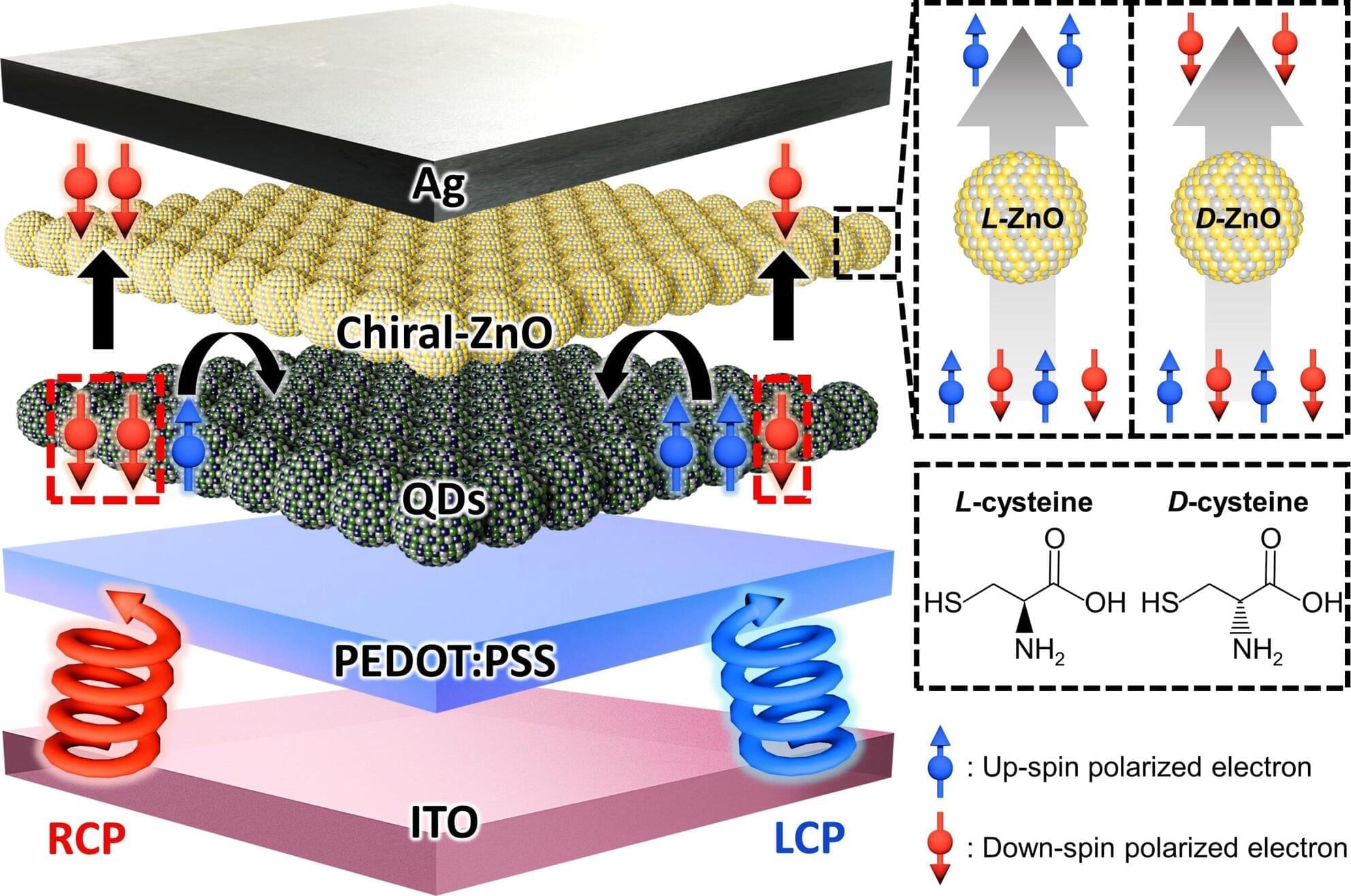
In physics and materials science, the term “spin chirality” refers to an asymmetry in the arrangement of spins (i.e., the intrinsic angular momentum of particles) in magnetic materials. This asymmetry can give rise to unique electronic and magnetic behaviors that are desirable for the development of spintronics, devices that leverage the spin of electrons and electric charge to process or store information.

The creation of materials that exhibit desired spin chirality and associated physical effects on a large scale has so far proved challenging. In a recent paper published in Nature Nanotechnology, researchers at École Polytechnique Fédérale de Lausanne (EPFL), the Max Planck Institute for Chemical Physics of Solids and other institutes introduced a new approach to encode chirality directly into materials by engineering their geometry at a nanoscale.

“Dirk and myself were initially inspired by the elegance of the Archimedean screw and began wondering whether we could build a magnonic analog, something that could ‘pump’ magnons (i.e., collective electron spin excitations) in a similarly directional way,” Dr. Mingran Xu, first author of the paper, told Tech Xplore.

A simple spin swap reveals exotic anyons

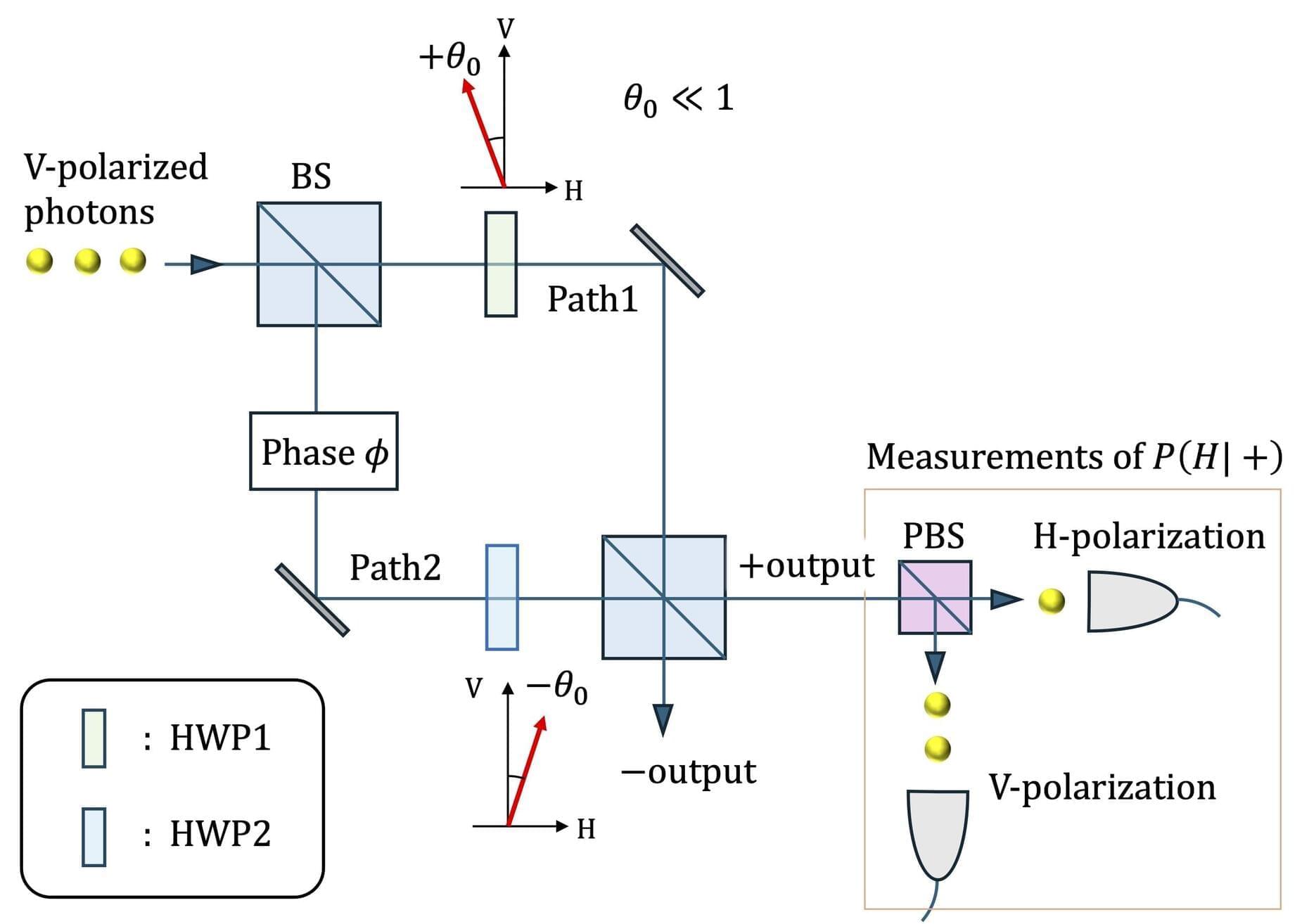
Researchers from the University of Innsbruck, the Collège de France, and the Université Libre de Bruxelles have developed a simple yet powerful method to reveal anyons—exotic quantum particles that are neither bosons nor fermions—in one-dimensional systems. Their paper is published in Physical Review Letters.

In conventional three-dimensional space, particles belong to one of two categories: fermions or bosons. In low-dimensional settings, however, quantum mechanics allows for more exotic behavior. Here, anyons can emerge—quasi-particles whose exchange properties continuously interpolate between those of bosons and fermions, leading to fractional statistics. Detecting and engineering such particles in one dimension has long been a central challenge, typically requiring, as theory proposals suggest, intricate scattering schemes or density-dependent tunneling processes.

The new study by teams led by Hanns-Christoph Nägerl at the University of Innsbruck and Nathan Goldman at the Université Libre de Bruxelles and Collège de France (CNRS) now introduces a remarkably simple yet powerful approach. The researchers propose an effective “swap” model that leverages the spin degree of freedom of ultracold atoms. By assigning a complex phase to the exchange—or “swap”—of two spins, the system naturally acquires the fractional statistical behavior characteristic of anyons.

/* */