Toggle light / dark theme

Hyderabad Students Convert Discarded Bike Into Low-Cost EV With Wireless Charging

The Indian Electric Vehicle market is set to reach a sales volume of 10.8 lakh units by 2025. However, these vehicles are currently at a high price and are not affordable to consumers in low-income categories.

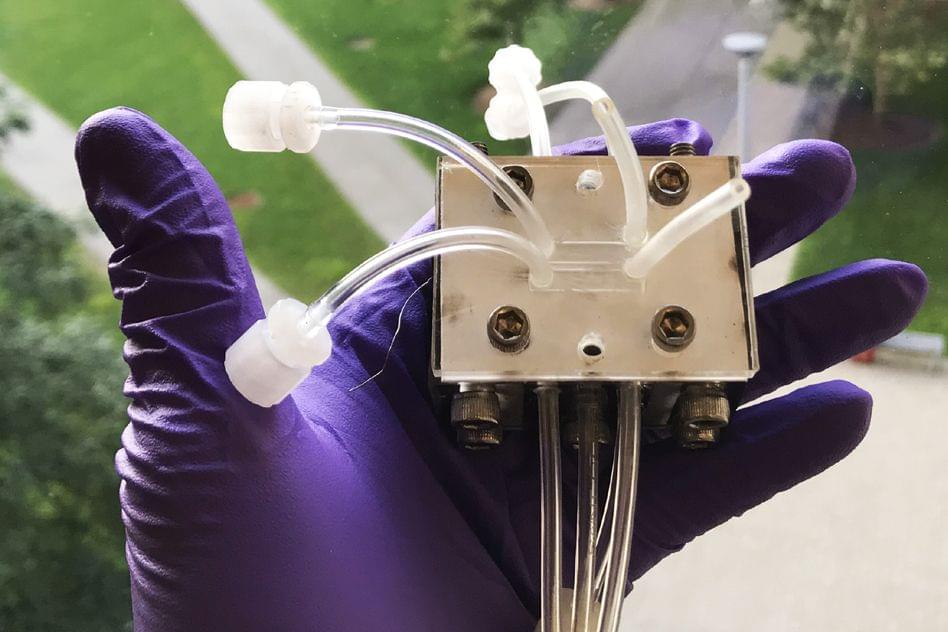
To bridge this gap, a team of seven students at the KL University, Hyderabad have retrofitted an old and discarded bike into an EV.

“We also added futuristic features including wireless charging and cell balancing, which ensures equalised charging,” says Charan Sai (21), a fourth-year student of Electronics and Electrical Engineering, and the lead of the project.

A high-resolution, wearable electrotactile rendering device that virtualizes the sense of touch

A collaborative research team co-led by City University of Hong Kong (CityU) has developed a wearable tactile rendering system, which can mimic the sensation of touch with high spatial resolution and a rapid response rate.

The team demonstrated its application potential in a braille display, adding the sense of touch in the metaverse for functions such as virtual reality shopping and gaming, and potentially facilitating the work of astronauts, deep-sea divers and others who need to wear thick gloves.

“We can hear and see our families over a long distance via phones and cameras, but we still cannot feel or hug them. We are physically isolated by space and time, especially during this long-lasting pandemic,” said Dr. Yang Zhengbao, Associate Professor in the Department of Mechanical Engineering of CityU, who co-led the study.

Hurricane Resistant Homes

Deltec Homes is changing the way the world builds. For over five decades, we have designed and engineered homes to fight climate change and withstand the harshest of weather conditions. The connections, both inside and out, that our homes provide make it truly the strongest home for people and our planet.

The engineering and innovation behind each Deltec is why they have stood against some of the most detrimental storms in history including direct hits from Hurricanes Dorian, Michael, Maria, Irma, Harvey, Sandy, Katrina, Hugo, Ivan and Charley.

Please check out this June, 2021, Weather Channel interview of our President, Steve Linton, describing why our homes are hurricane resistant.

5 Engineer Entrepreneurs Who Have Made it Big in Non-Engineering Sectors

Engineering and entrepreneurship — a match made in heaven!

Entrepreneurship is often glamorized, but in reality, it takes a lot of time and effort to make it. After all, there’s a reason why most startups fail. Additionally, managing a business requires specific skills, such as attention to detail and the ability to lead others. Having an analytical mindset is just as important.

Given these aspects, it’s not surprising that engineers make great entrepreneurs. Jeff Bezos, Bill Gates, Steve Wozniak, and Henry Ford all started their careers as engineers. However, not all engineers work in tech.


Hunters Race/Unsplash.

From Engineer to Entrepreneur.
5 engineer entrepreneurs who have made it big in non-engineering sectors
Credits: andresr/iStocknullEngineering and technology go hand in hand. Take the iPhone, for example. Its design, features, and performance are a result of engineering excellence.

The Social Brain Ep.4: Brain Decoding: The Science of ‘Mind Reading’

Can scientists read your mind and figure out what you’re thinking just by looking at your brain? Well, sort of.

In this episode of The Social Brain with Taylor Guthrie (@The Cellular Republic) and I (@Sense of Mind) talk about a fascinating new area of cognitive neuroscience, called “brain decoding” as well as its counterpart, “brain encoding,” and related topics. It all centers on the question posed above and the future applications, some of which are scary while others are inspiring.

– What do you want us to cover in future episodes? Drop it in the comments!

Link to follow:
Make sure to subscribe to Taylor’s Channel: @The Cellular Republic.

Videos that we mentioned:
- Breaking the Neural Code (James Haxby talk): https://youtu.be/gl3du4CaALg.
- Kanwisher vs. Haxby Debate: https://youtu.be/u1xTfTPqWmo.
- Decoding Language Representation (Alexander Huth talk): https://youtu.be/rmqzLv089b4
- Engineering Thoughts and Memories (Jack Gallant talk): https://youtu.be/muwIhFLqies.

Podcast: Social Brain Podcast:

Researchers resolve decades-long debate about shock-compressed silicon with unprecedented detail

Silicon, an element abundant in Earth’s crust, is currently the most widely used semiconductor material and is important in fields like engineering, geophysics and plasma physics. But despite decades of studies, how the material transforms when hit with powerful shockwaves has been a topic of longstanding debate.

“One might assume that because we have already studied in so many ways there is nothing left to discover,” said Silvia Pandolfi, a researcher at the Department of Energy’s SLAC National Accelerator Laboratory. “But there are still some important aspects of its behavior that are not clear.”

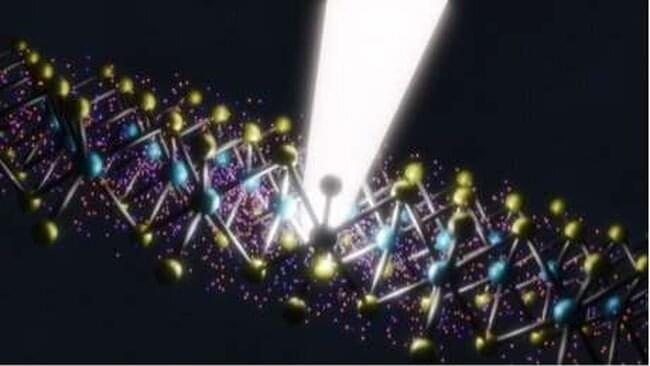
Now, researchers at SLAC have finally put this controversy to rest, providing the first direct, high-fidelity view of how a single silicon crystal deforms during shock compression on nanosecond timescales. To do so, they studied the crystal with X-rays from SLAC’s Linac Coherent Light Source (LCLS) X-ray laser. The team published their results in Nature Communications on September 21st. What they learned could lead to more accurate models that better predict what will happen to certain materials in .

Generating New Materials

Inspired by the way termites build their nests, scientists at the California Institute of Technology (Caltech) developed a framework to design new materials that mimic the fundamental rules hidden in nature’s growth patterns. The researchers demonstrated that by using these rules, it is possible to create materials designed with specific programmable properties.

The research was published in the journal Science on August 26. It was led by Chiara Daraio, G. Bradford Jones Professor of Mechanical Engineering and Applied Physics and Heritage Medical Research Institute Investigator.

“Termites are only a few millimeters in length, but their nests can stand as high as 4 meters—the equivalent of a human constructing a house the height of California’s Mount Whitney,” says Daraio. If you peer inside a termite nest you will see a network of asymmetrical, interconnected structures, similar to the interior of a sponge or a loaf of bread. Made of sand grains, dirt, dust, saliva, and dung, this disordered, irregular structure appears arbitrary. However, a termite nest is specifically optimized for stability and ventilation.

Battery tech breakthrough paves way for mass adoption of affordable electric car

A breakthrough in electric vehicle battery design has enabled a 10-minute charge time for a typical EV battery. The record-breaking combination of a shorter charge time and more energy acquired for longer travel range was announced today (Oct. 12) in the journal Nature.

“The need for smaller, faster-charging batteries is greater than ever,” said Chao-Yang Wang, the William E. Diefenderfer Professor of Mechanical Engineering at Penn State and lead author on the study. “There are simply not enough batteries and critical raw materials, especially those produced domestically, to meet anticipated demand.”

In August, California’s Air Resources Board passed an extensive plan to restrict and ultimately ban the sale of gasoline-powered cars within the state. By 2035, the largest auto market in the United States will effectively retire the internal combustion engine.

Aram Kradjian — Director, Research & Innovation, Jaguar Land Rover — Reimagining Future Of Mobility

Is Director, Research & Innovation, at Jaguar Land Rover (https://www.jaguarlandrover.com/innovation), where he is focused on heading the global research department, spearheading cutting edge research (collaborating with the tech industry, government, regulators and academia), as well as product design, innovation, and strategy, helping to drive the latest technologies and innovations into their products and services.

Aram also serves as a Visiting Professor in Technology Innovation at King’s College London.

Aram has a B.Eng, Mechanical Engineering, American University of Beirut; an M.Sc., Production Systems Engineering, RWTH Aachen University, and an MBA, General Management, INSEAD.

New system retrofits diesel engines to run on 90% hydrogen

Engineers from UNSW Sydney have successfully converted a diesel engine to run as a hydrogen-diesel hybrid engine—reducing CO2 emissions by more than 85% in the process.

The team, led by Professor Shawn Kook from the School of Mechanical and Manufacturing Engineering, spent around 18 months developing the hydrogen-diesel direct injection dual-fuel system that means existing diesel engines can run using 90% hydrogen as fuel.

The researchers say that any diesel engine used in trucks and power equipment in the transportation, agriculture and mining industries could ultimately be retrofitted to the new hybrid system in just a couple of months.

/* */