Russia on December 2 is set to tap a potentially enormous new natural-gas market outside Europe when its state-run Gazprom opens the 3,000-kilometer Power of Siberia pipeline and starts feeding China with blue fuel.
Scientists from Tokyo Metropolitan University have used aligned “metallic” carbon nanotubes to create a device which converts heat to electrical energy (a thermoelectric device) with a higher power output than pure semiconducting carbon nanotubes (CNTs) in random networks. The new device bypasses the troublesome trade-off in semiconductors between conductivity and electrical voltage, significantly outperforming its counterpart. High power thermoelectric devices may pave the way for more efficient use of waste heat, like wearable electronics.
Thermoelectric devices can directly convert heat to electricity. When we think about the amount of wasted heat in our environment like in air conditioning exhausts, vehicle engines or even body heat, it would be revolutionary if we could somehow scavenge this energy back from our surroundings and put it to good use. This goes some way to powering the thought behind wearable electronics and photonics, devices which could be worn on the skin and powered by body heat. Limited applications are already available in the form of body heat powered lights and smartwatches.
The power extracted from a thermoelectric device when a temperature gradient is formed is affected by the conductivity of the device and the Seebeck coefficient, a number indicating how much electrical voltage is generated with a certain difference in temperature. The problem is that there is a trade-off between the Seebeck coefficient and conductivity: the Seebeck coefficient drops when the device is made more conductive. To generate more power, we ideally want to improve both.
Yay face_with_colon_three
The pressure of deep-ocean sound waves could be used to stop tsunamis in their tracks, researchers have found, by dissipating their energy across wider areas and reducing the height and speed of these monster waves before they reach land.
Tsunamis — which can be caused by earthquakes, landslides, or any sudden release of energy underwater — are capable of devastating coastal regions when they hit land, and right now, there’s not much we can do to stop them.
But mathematician Usama Kadri from the University of Cardiff in the UK thinks acoustic-gravity waves (AGWs) could be the solution.
An international team led by researchers at Princeton University has directly observed a surprising quantum effect in a high-temperature iron-containing superconductor.
Superconductors conduct electricity without resistance, making them valuable for long-distance electricity transmission and many other energy-saving applications. Conventional superconductors operate only at extremely low temperatures, but certain iron-based materials discovered roughly a decade ago can superconduct at relatively high temperatures and have drawn the attention of researchers.
Exactly how superconductivity forms in iron-based materials is something of a mystery, especially since iron’s magnetism would seem to conflict with the emergence of superconductivity. A deeper understanding of unconventional materials such as iron-based superconductors could lead eventually to new applications for next-generation energy-saving technologies.
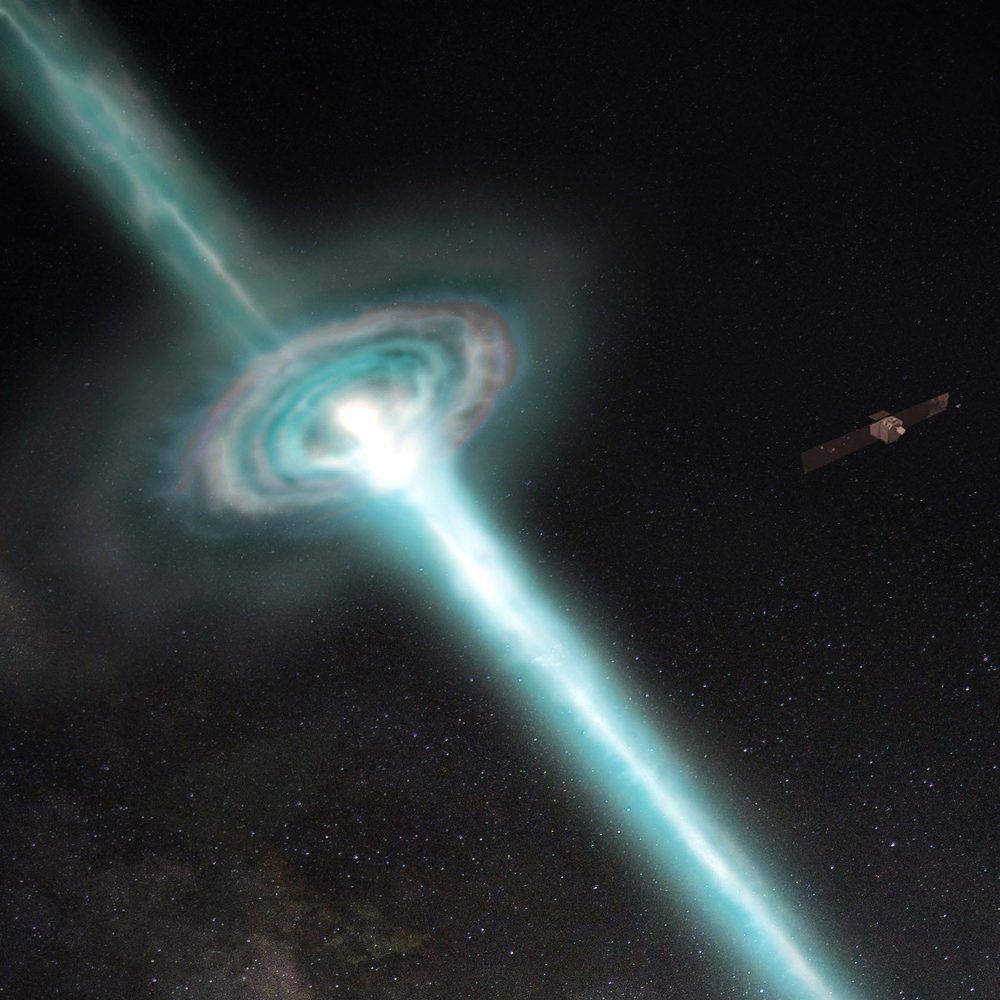
When gigantic stars run out of fuel they collapse under their own gravity and, in a last hurrah, send out a blast of light and matter in the most violent known explosions in the universe.
Now astronomers have discovered that these cataclysmic events, known as gamma ray bursts, release roughly twice as much energy as previously thought.
The rethink comes after an international team registered a record-breaking observation of the highest-energy radiation ever measured from gamma ray bursts.
We are proud to share with you a new video featuring our friends War & Pierce performing their original song, “I Lived To Tell About It,” live outside in Los Angeles. Turn it up and remember we are stronger than any obstacle or challenge we may face. Together, we will persevere in love and peace.
Hear more and connect with War & Pierce:
www.warandpierce.com
https://www.facebook.com/warandpierce
Tweets by warandpierce
https://www.instagram.com/warandpierce/
JOIN THE MOVEMENT
Join us as a YouTube Member here: https://www.youtube.com/channel/UCn25nZ12HEZq_w_m_1DmbbA/sponsor
GET SOCIAL
https://www.facebook.com/PlayingForChange
Tweets by playing4change
http://instagram.com/playing4change
Playing For Change (PFC) is a movement created to inspire and connect the world through music, born from the shared belief that music has the power to break down boundaries and overcome distances between people. The primary focus of PFC is to record and film musicians performing in their natural environments and combine their talents and cultural power in innovative videos called Songs Around The World. Creating these videos motivated PFC to form the Playing For Change Band—a tangible, traveling representation of its mission, featuring musicians met along their journey; and establish the Playing For Change Foundation—a separate 501©3 nonprofit organization dedicated to building music and art schools for children around the world. Through these efforts, Playing For Change aims to create hope and inspiration for the future of our planet.
The use of ultrasound waves allows the device to produce audible noise as well as a physical sensation.
“Even if not audible to us, ultrasound is still a mechanical wave and it carries energy through the air,” researcher Diego Martinez Plasencia said in the press release. “Our prototype directs and focuses this energy, which can then stimulate your ears for audio, or stimulate your skin to feel content.”
The researchers envision future versions of the device making use of multiple beads to create even more detailed holograms. And perhaps even more exciting than the prototype itself is the fact that, unlike many cutting-edge technologies, this one might not have too much difficulty making the leap to consumer product.
A huge test for the fuel of the future.
Twentieth Century technology has relied on the use of fuels and chemical propellants to propel our ships, planes, and cars. The propulsion technology of the future will not use chemical combustion to produce thrust, and the 21st century will see the emergence of propellant-less propulsion systems. Such technologies will provide the means to travel faster than ever before at a fraction of current costs and with no pollution by-products.
This becomes absolutely crucial for interplanetary and interstellar travel, as we have stated before in RSF commentary1 reporting on Resonance-based technology may provide inertial mass reduction—the future of space travel will not be performed with chemical propellants. As an example, to date the most viable proposal for an interstellar mission with current technological capabilities is the Breakthrough Starshot project which will use a fleet of light sail probes propelled to 20% percent the speed of light via laser pulses.
Considering the significant limitations of combustion-based propulsion (as well as the harmful environmental impacts), there is a strong drive to develop the next-generation propulsion systems that will move us into the next phase of technological advancement. Torus Tech, a research and development company founded by Nassim Haramein, the founder of the Resonance Science Foundation, is researching quantum vacuum engineering technologies that will enable gravitational control and zero-point energy production.