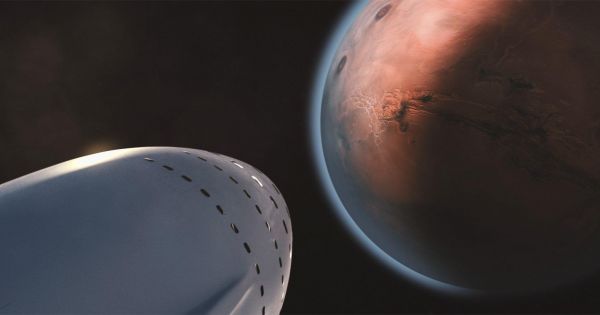
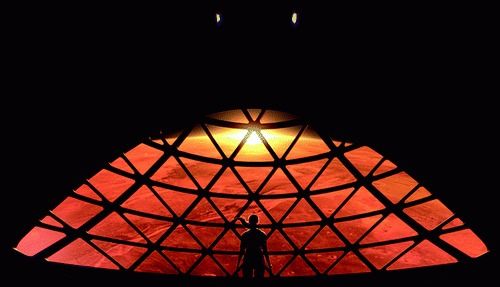
They say everything’s sweeter the second time around, and that seems to be the case for SpaceX’s plans to colonize Mars. Last year, Musk unveiled his plans to colonize the Red Planet and make it fit for human habitation. Now, that version of the plan has been published and made available for free— with a few notable updates.
In the paper, the focus is on affordability, as that is the primary factor in making life on Mars a reality. As Musk notes, “You cannot create a self-sustaining civilization if the ticket price is $10 billion per person.” In order for it to be viable, Musk asserts that the cost should be about $200,000—equivalent to the median price of a house in the United States. In the paper, Musk outlines the steps he considers essential to ensuring this relative affordability.
But this is just the beginning. Musk posted a tweet today hinting that this version one is already being reviewed…and version 2 is on its way.
This paper is a summary of Elon Musk’s presentation at the 67th International Astronautical Congress in Guadalajara, Mexico, September 26–30, 2016. In February 2017, SpaceX announced it will launch a crewed mission beyond the moon for two private customers in late 2018.
Used with permission from SpaceX.
By talking about the SpaceX Mars architecture, I want to make Mars seem possible—make it seem as though it is something that we can do in our lifetime. There really is a way that anyone could go if they wanted to.
The human mind is already pretty open to manipulation—just ask anyone who works in advertising. But neural implant technology could potentially open up a direct digital link to our innermost thoughts that could be exploited by hackers.
In recent months, companies like Elon Musk’s Neuralink, Kernel, and Facebook have unveiled plans to create devices that will provide a two-way interface between human brains and machines.
While these devices could undoubtedly bring many benefits, they would be networked to computers and therefore essentially part of the Internet of Things. That should immediately set off alarm bells for anyone paying attention to cybersecurity news.
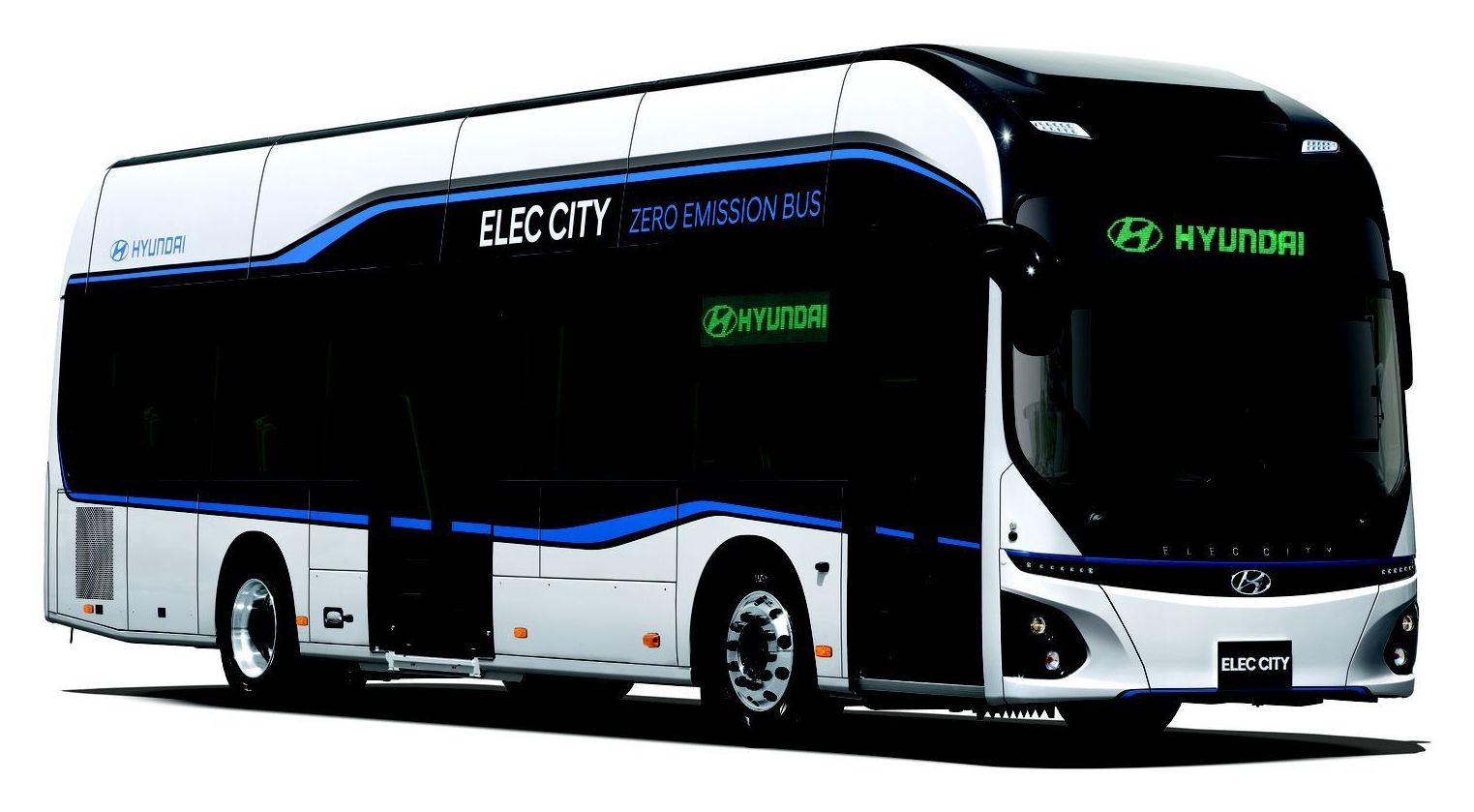
After a lot of speculation, Korean automaker Hyundai finally pulled the wraps off of its first mass-produced electric bus this week. It’s called the Elec City. It has a range of 180 miles, thanks to a 256kWh battery pack, according to Hyundai. A report from the Yonhap news agency says the bus can also be fully charged in just over an hour. The company plans to launch the bus in 2018.
While that’s more than double what had been rumored for Hyundai, it’s still a far cry from the massive 660kWh capacity of the Catalyst E2, the newest bus from American manufacturer Proterra. The Catalyst E2 supposedly gets 350 miles of street driving on a single charge, and maybe more with some highway driving mixed in. Plus, Proterra’s new bus will hit the road in 2017.
It’s not clear if Hyundai would ever bring its bus to North America, but if it did, Proterra wouldn’t be the only competition. Chinese manufacturer BYD has sold buses in California. Canadian company GreenPower has a small footholdas well. Tesla CEO Elon Musk even flirted with the idea, though it appears that the project could be on hold while he works on tunneling under Los Angeles. Adoption rates could go up as electric buses get better and cheaper, too. Despite the fact that they’re about twice as expensive as their diesel counterparts in the early going, a recent study from Columbia University estimates that they could save cities money over the long haul.
Clement Balavoine might just be what Elon Musk ordered. The Frenchman is still only 25 years old, passionate about design, traveled the (fashion) world and gravitates towards his own Mars experience with his new company Neuro. In his own words, he wants to create a label that reflects the future of the industry.
SpaceX on the other hand, is looking for innovation on so many levels on their ongoing mission to establish our first Mars colony. To get there, Elon Musk proposed the so-called Interplanetary Transport System (ITS) that combines our latest rocket technology with a space-carrier able to ship at least 100 but hopefully close to 200 passengers on each flight.
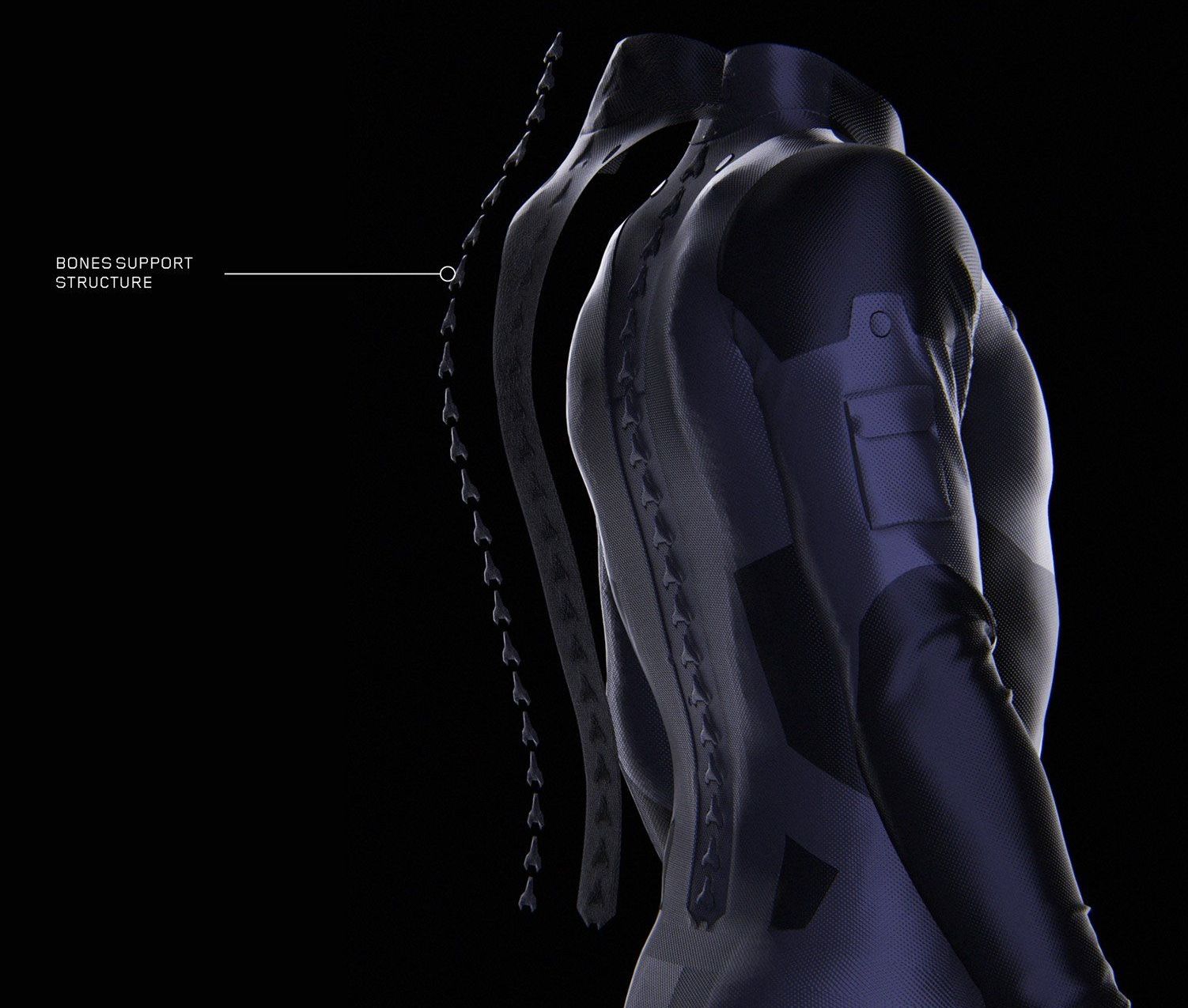
Of course, getting to Mars is an adventure that needs problem-solving skills and technology that we might not even think of yet. To better be safe than sorry, Balavoine’s new kind of spacesuit comes in handy, destined to protect our pioneering crew from bone loss, muscle atrophy and, hopefully, radiation.
One of the missions of Lifeboat Foundation has always been to contemplate the protection of our fragile Spaceship-Earth and to contemplate a day when we may need to migrate from this tiny stage. Yesterday, that day may have been moved a lot closer. But I am getting ahead of myself.
Yesterday, I had a fantasy. One that I passionately hoped would become reality. Minutes before Trump announced the withdrawal of the United States from the Paris Climate Accord, I began to daydream…
I dreamt that Trump might listen to his top science advisors and his daughter
I dreamt that he might not gamble our existence on his minority opinion that humans cannot help rescue the environment.
I dreamt that he would recognize that clean energy jobs trump legacy coal mining
I dreamt that he would avoid export tariffs for failing to respect international norms
I dreamt that he would stop pandering to Yahoos and stand for something worthy and undeniable
No such luck! The USA has lost its Mojo—at least while it is led by a man with no grasp of science, history, morals or a global perspective. As Trump begun to speak, I was sucked into a cruel nightmare. But this nightmare is reality. It’s the reality of a buffoon representing you and me in our nation’s highest office.
Question: Time for a thought experiment. Can you guess the answer?…
What do Arnold Schwarzenegger, Elon Musk, The Pope, Richard Branson and French president, Emmanuel Macron, have in common?
Answer: They are all saddened that the US is surrendering its inspiration, leadership and common sense. Clean energy creates jobs, saves our planet, and aids the political and military stability of nations. Trump doesn’t sense any of this. He is validated by his base and his Yes men. He is a climate denier, and he doesn’t even read. He only watches what others say about him on television. [continue below video]
I cannot add perspective nor amplify President Macron’s urgent message to Americans. The clip is trending on Facebook with the caption: “French president destroys Trump in 5 words”. This suggest that he is taking a jab at Trump; mocking his poor grasp on science and the environment. But, politics plays no role in this message. It is about global impact and opportunity…
The French president hasn’t made a fool of Trump. Trump has brought shame onto his office and made a fool of our system of government, all on his own. His defiance of science and complete lack of understanding history risks irreparable harm to our planet. Trump feels that American jobs come before environmental policy. Yet, he is turning his back on the biggest jobs market since the steam engine. [continue below video]
Perhaps more critically, his withdrawal from the global accord will bring about tariffs against US cars, steel, airplanes, timber and electronics. After all, by pulling out of the Paris accords, we ducking environmental safeties in an effort to make America great — or more accurately, in our effort to bury our heads in the sands and let the rest of the world take the lead on clean energy, efficiency, reducing pollution and averting global warming.
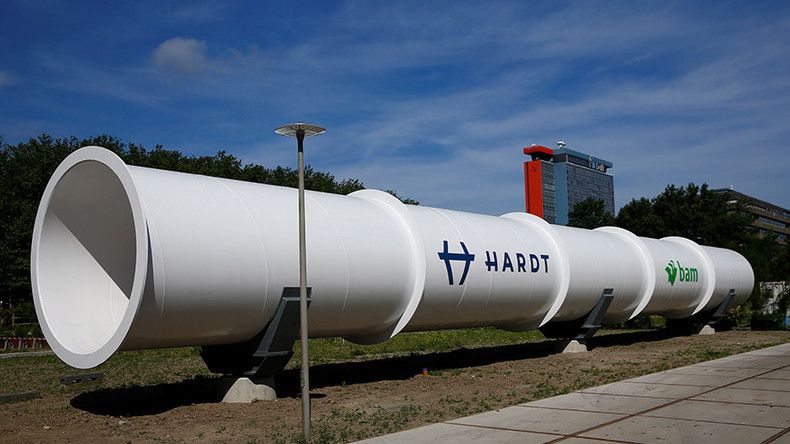
A Hyperloop test facility has been unveiled in the Netherlands, bringing Elon Musk’s vision of transporting pods of people through a tube at incredibly high speeds one step closer to fruition.
The test facility, a 30-meter-long (100ft), 3.2-meter-diameter (10.5ft) steel tube, is located at Delft Technical University.
“In this facility we will test all systems that don’t require high speeds,” said Tim Houter, CEO of Hardt Global Mobility, which is working on the project with construction company BAM, as quoted by Reuters.
Several firms are working on training environments like Star Trek’s Holodeck, but for machines.
When future robots enter the world, they won’t have a learning curve.
Artificial intelligence researchers are creating tools to help teach the robots that will assemble our gadgets in factories, or do chores around our home, before they ever step (or roll) into the real world. These simulators, most recently announced by Nvidia as a project called Isaac’s Lab but also pioneered by Alphabet’s DeepMind and Elon Musk’s OpenAI, are 3D spaces that have physics just like reality, with virtual objects that act the same way as their physical counterparts.