Nanotechnology promises significant advances in electronics, materials, biotechnology, alternative energy sources, and much more.
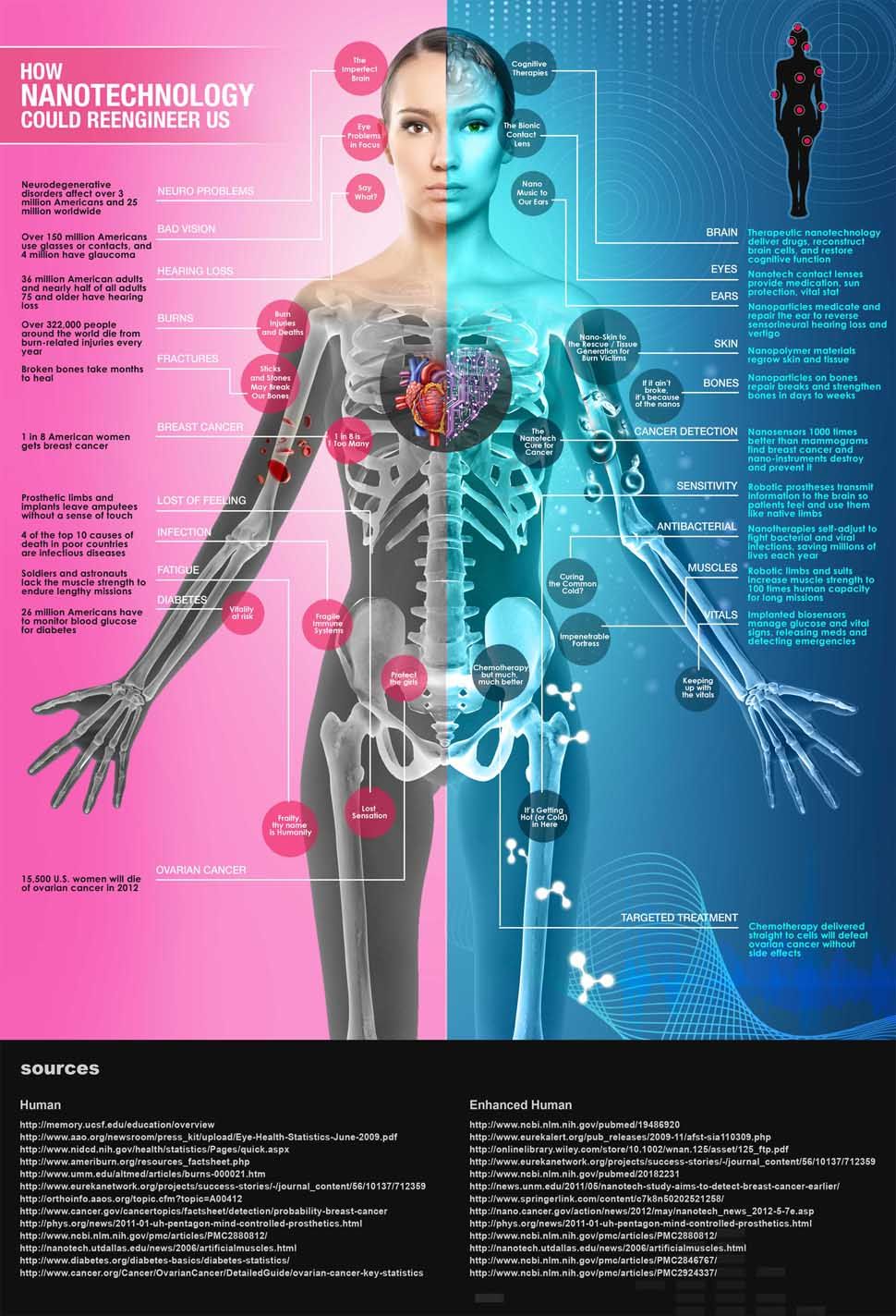
Nanotechnology promises significant advances in electronics, materials, biotechnology, alternative energy sources, and much more.
Shawn Frayne and Alex Hornstein, two young inventors based in the Philippines, are taking their passion for clean free energy and developing a way to make it accessible and cheap for everyone. These guys are working restlessly to provide a product that could be used by practically anyone to make homemade solar panels.
The factory is small enough to fit on a desktop and efficient enough to produce 300k to one million panels per year, up to one every 15 seconds. By cutting out much of the labor intensive process, which represents 50% of the total cost, this machine can dramatically reduce the price of solar. Their pocket solar panel producer can change the way the world views electricity. Image credit: YouTube/SciFri
What type of applications can a homemade solar panel have? For starters it can replace the need for outlets in a home for smaller electronics such as phones, computers, lamps, etc. One of the more intriguing applications is the added versatility solar panels can provide. In short, with these panels you can use your electronics anywhere there’s sunshine.
It’s just one atom thick, but carbyne has twice the strength of its two-dimensional cousin, graphene, and three times the stiffness of a diamond. And researchers have just discovered that it can act like a transistor for new tinier electronics.
Up until now, you can only navigate Google Glass by touching or talking to it, but London-based firm This Place just made it possible to control the device using something else: your brainwaves. The company just released an open source application called MindRDR that gives you something akin to very, very limited telekinetic abilities — so long as you have both Google Glass and Neurosky’s EEG biosensor headset. See, MindRDR serves as the bridge that connects the two, translating the brain activity from the EEG biosensor into executable commands for the high-tech eyewear. At the moment, the software can only take pictures and upload them to either Facebook or Twitter, but This Place released the app for free on GitHub in hopes that other developers will use it for more advanced projects.
MindRDR shows up as a thin white line on Glass’s screen, which moves upwards the more the user concentrates. Once that line reaches the very top, it snaps a picture of whatever you want — you simply need to repeat the process to upload the image to a social network. In the future, though, its creators believe that the app could be a huge help to people who can’t move on their own. These include quadriplegics, those with multiple sclerosis, and especially those suffering from locked-in syndrome.
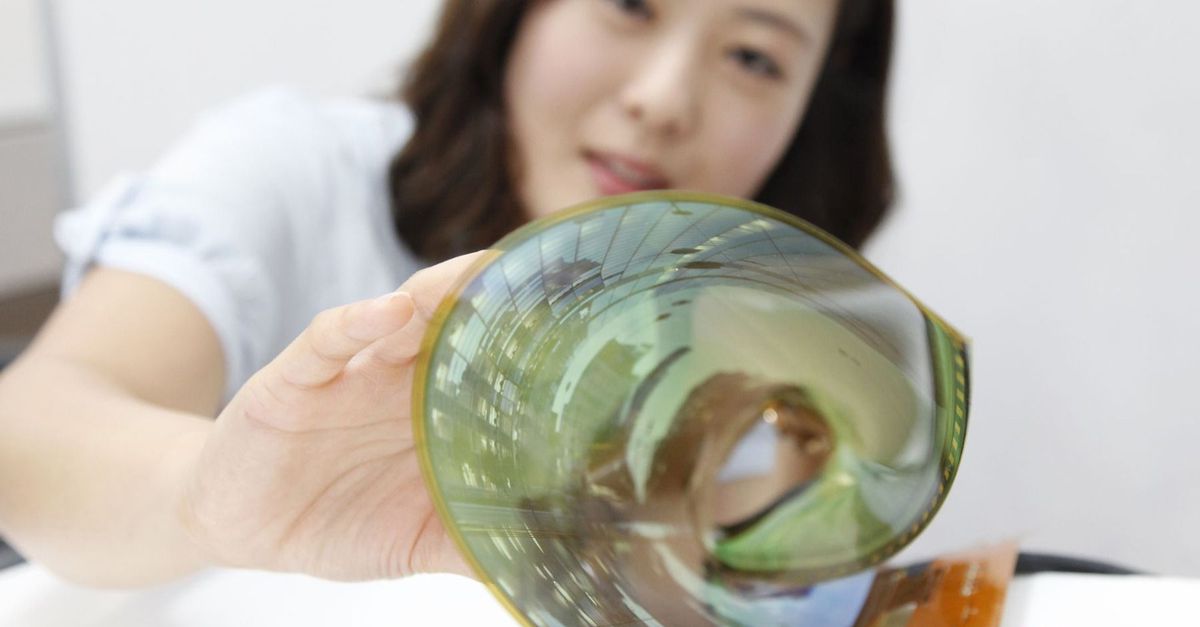
Pretty soon setting up a TV will be as easy as unrolling a poster, if LG has anything to say about it.
The Korean electronics manufacturer unveiled a new kind of big-screen display that is ultra-thin and rolls up, and it expects to put the tech into TVs by 2017.
Flexible displays have been around for years, but LG Display has taken the concept up a couple of notches with these two new 18-inch OLED panels, each with 1,200 × 800 resolution. Not only are they relatively large, but each can be rolled up tightly to a radius of just 1.2 inches without affecting the display at all.
The BiCS uses 48-layer stacking process that improves reliability and speed. Toshiba was the company that invented flash memory and has the 15nm NAND cells which are the smallest in the world.
Right now company is gearing up for its mass production and giving out samples to the companies.
These new developments made by Micron and Intel, and Toshiba will take about one year to reach the market. These 3D SSDs will give a tough time to the existing players and will provide better speeds and more storage at cheaper rates to users.
Boeing has announced that the ABS–3A, the world’s first all-electric propulsion satellite, has commenced its tour of duty.
The communications satellite is being operated by ABS, a Bermuda-based satellite network that provides TV, Internet, and cellular services across the world. Unlike conventional satellites, which have mostly used propellant systems that burn chemicals of one kind or another to get about the place, the ABS–3A makes use of a xenon-ion propulsion system to achieve thrust.
Specifically, the all-electric propulsion system uses electron bombardment to create xenon ions, which are then expelled by the spacecraft, producing thrust in the opposite direction.
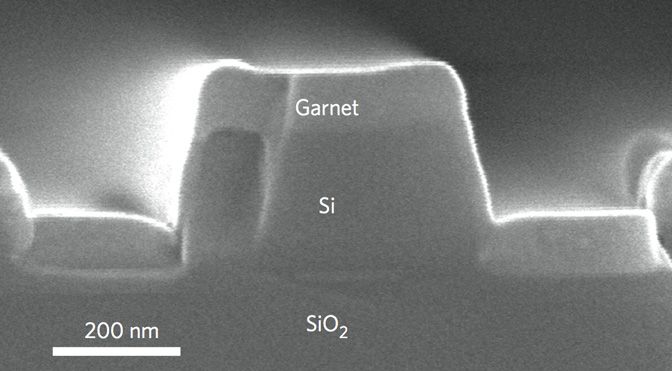
Light-emitting diodes (LEDs) are a cornerstone of consumer tech. They make thin-and-light TVs and smartphones possible, provide efficient household, handheld, and automobile illumination, and, of course, without LEDs your router would not have blinkenlights. Thanks to some engineers from MIT, though, a new diode looks set to steal the humble LED’s thunder. Dubbed a diode for light, and crafted using standard silicon chip fabrication techniques, this is a key discovery that will pave the path to photonic (as opposed to electronic) pathways on computer chips and circuit boards.
In electronics, a diode is a gate that only allows electrons to pass in one direction (and with an LED, it also emits light at the same time). In this case, the diode for light — which is made from a thin layer of garnet — is transparent in one direction, but opaque in the other. Garnet is usually hard to deposit on a silicon wafer, but the MIT researchers found a way to do it — and that’s really the meat of this discovery.
 Basically, it’s now possible, with regular chip-fab tools, to create an integrated silicon circuit with optical, rather than electronic, interconnects — both internally, and between other chips. Photons, moving through the kind of transparent metamaterials that would be required to make such a circuit, move a lot faster than electrons. Furthermore, optical channels, through wavelength-division multiplexing, can carry a lot more data than electric signals. At the moment, hundreds of copper wires connect the CPU, northbridge, and memory — with on-chip photonic controllers, a motherboard might only have 10 or 20 channels.

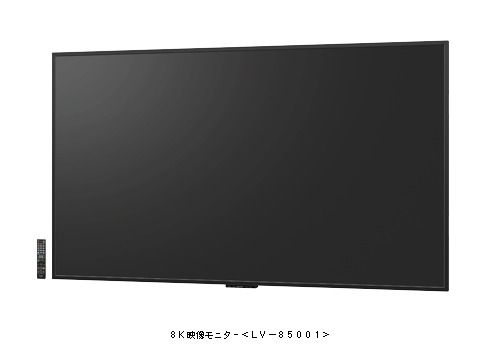
Sharp has demonstrated Super Hi-Vision 8K displays before (as seen above during CES 2015), but today in Japan it announced an 85-inch version is going on sale October 30th. Dubbed the LV-85001, it’s a monitor (it has a tuner so you could call it a TV, but that can’t actually receive 8K video) for professional use only, mostly since there aren’t really any broadcasts or content to watch in 8K. Coming in at 16 times the resolution of 1080p screens, the 7,680 × 4,320 pixel LCD panel uses Sharp’s IGZO technology. To actually watch any 8K video, you’ll need to plug into all four of its HDMI inputs at once just to have enough bandwidth. If you’re interested (and why wouldn’t you be, even though there’s almost nothing to watch), just contact Sharp’s business-to-business sales unit, and bring along a check for 16,000,000 yen, or about $133,034 US.
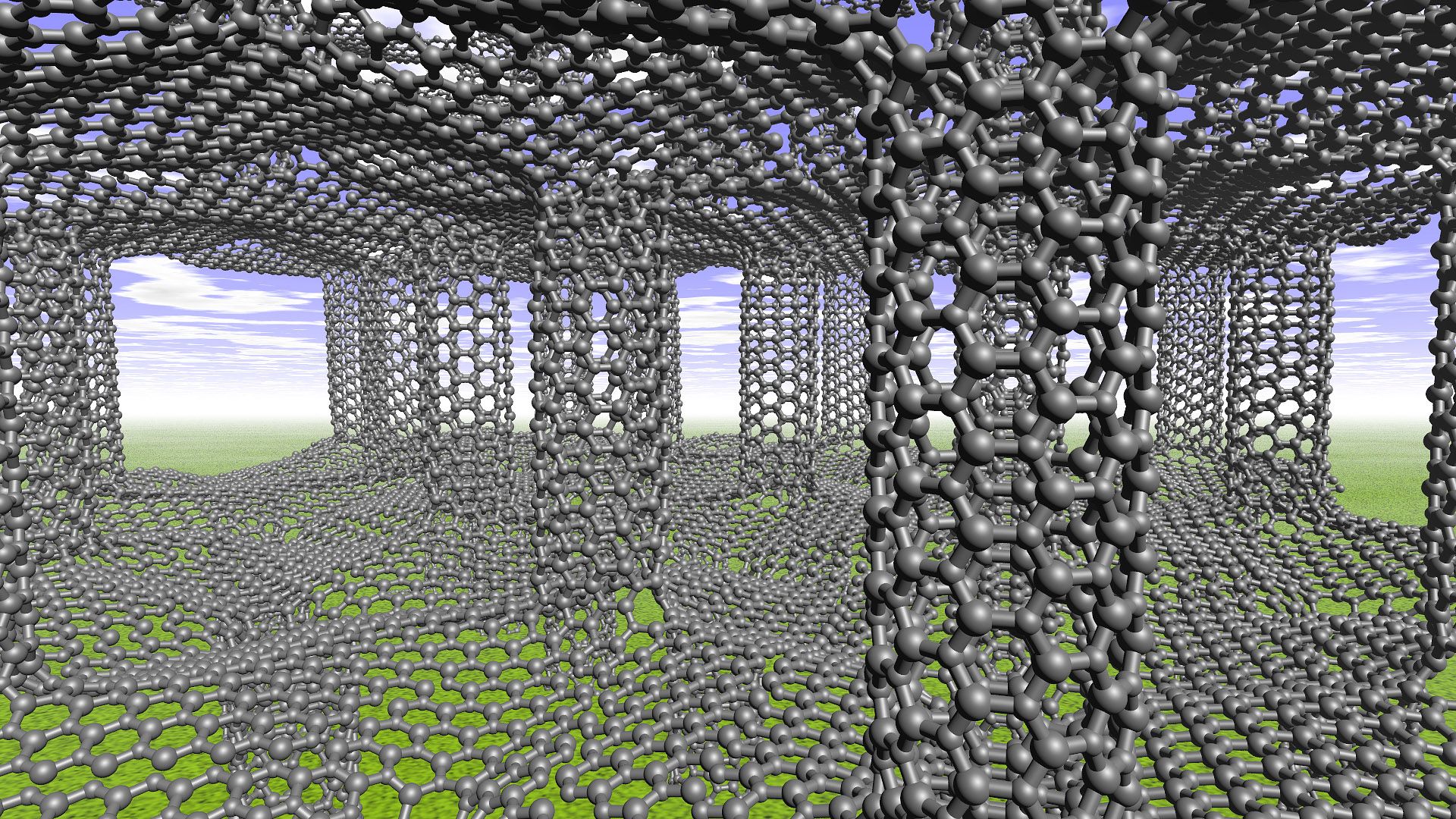
Rice University researchers discovered that putting nanotube pillars between sheets of graphene could create hybrid structures with a unique balance of strength, toughness and ductility throughout all three dimensions.
Carbon nanomaterials are common now as flat sheets, nanotubes and spheres, and they’re being eyed for use as building blocks in hybrid structures with unique properties for electronics, heat transport and strength. The Rice team is laying a theoretical foundation for such structures by analyzing how the blocks’ junctions influence the properties of the desired materials.
Rice materials scientist Rouzbeh Shahsavari and alumnus Navid Sakhavand calculated how various links, particularly between carbon nanotubes and graphene, would affect the final hybrid’s properties in all directions. They found that introducing junctions would add extra flexibility while maintaining almost the same strength when compared with materials made of layered graphene.
