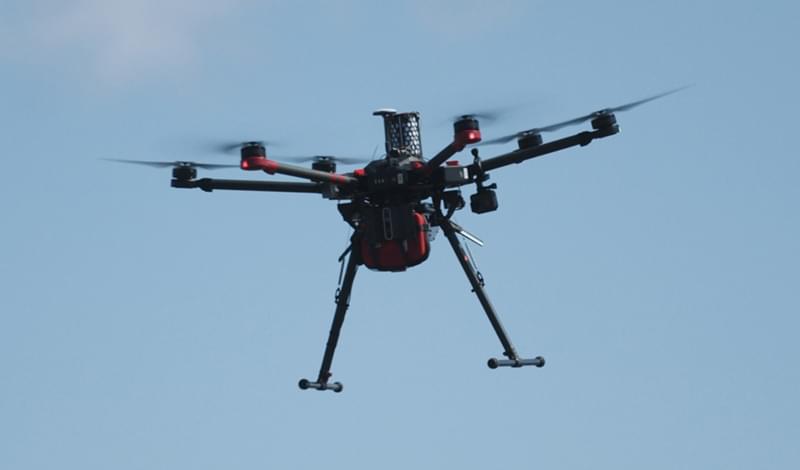
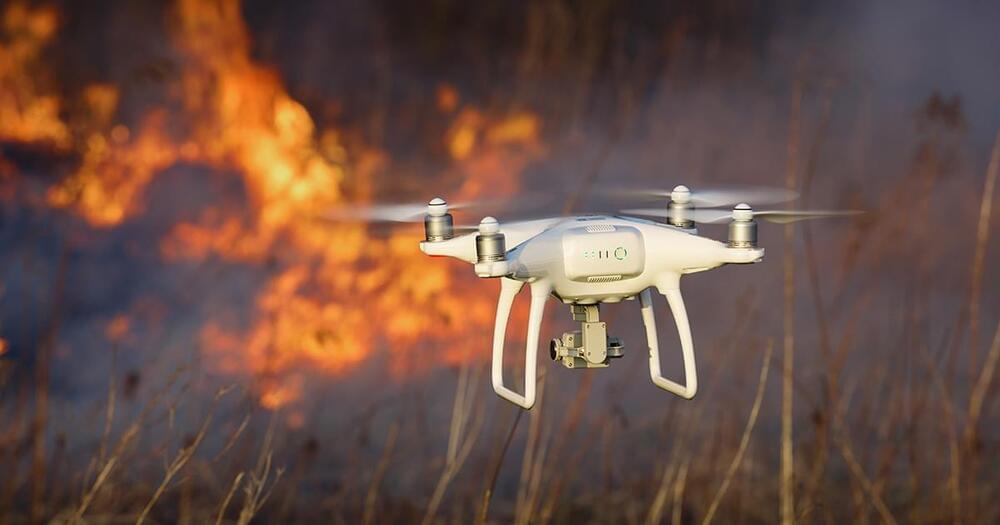
Recently, Autel Robotics released a new drone charging platform that allows drones to take on multiple recursive missions independent of weather across a wide variety of industrial applications, including industrial energy inspection, natural disaster monitoring, and more.
But another tilt-rotor VTOL drone from Autel can transition to a “fixed-wing” mode, and “scout areas after a hurricane, with a lot of different really high-end camera options,” said John Simmons, a representative for Autel Robotics at the CES 2022 exhibit.
The drone charging platform is called EVO Nest, while the long-range, fixed-wing VTOL is called the “Dragonfish” series. And it could simplify the energy needs of visual surveillance, monitoring, and public service.
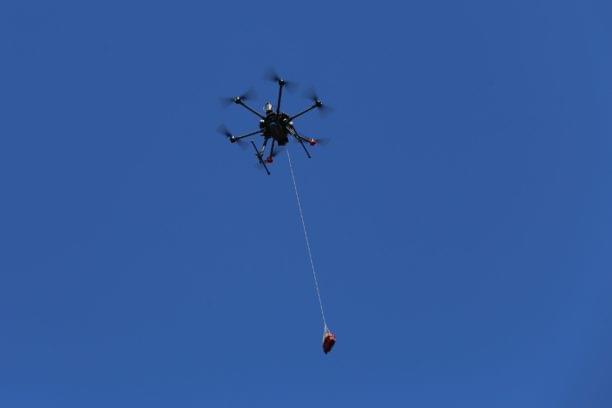
An autonomous drone delivers a defibrillator – and saves the life of a cardiac arrest patient. Swedish drone company Everdrone says it’s a medical history first – but the grateful patient says that it’s a technology that should be used everywhere.
For heart attack patients, seconds count: the minutes that an ambulance can take to reach a patient in cardiac arrest can mean the difference between life and death. Autonomous drones offer a game-changing solution. Autonomous drone specialists Everdrone operate the drone delivery system in Region Västra Götaland, supported by Vinnova, Swelife and Medtech4Health. Their innovative solution has been developed with Center for Resuscitation Science at Karolinska Institutet, SOS Alarm and Region Västra Götaland.
Now, the technology can claim a life saved. In Trollhättan, Sweden on December 92,021, an Everdrone autonomous drone delivered a defibrillator that helped save the life of a 71-year-old man.
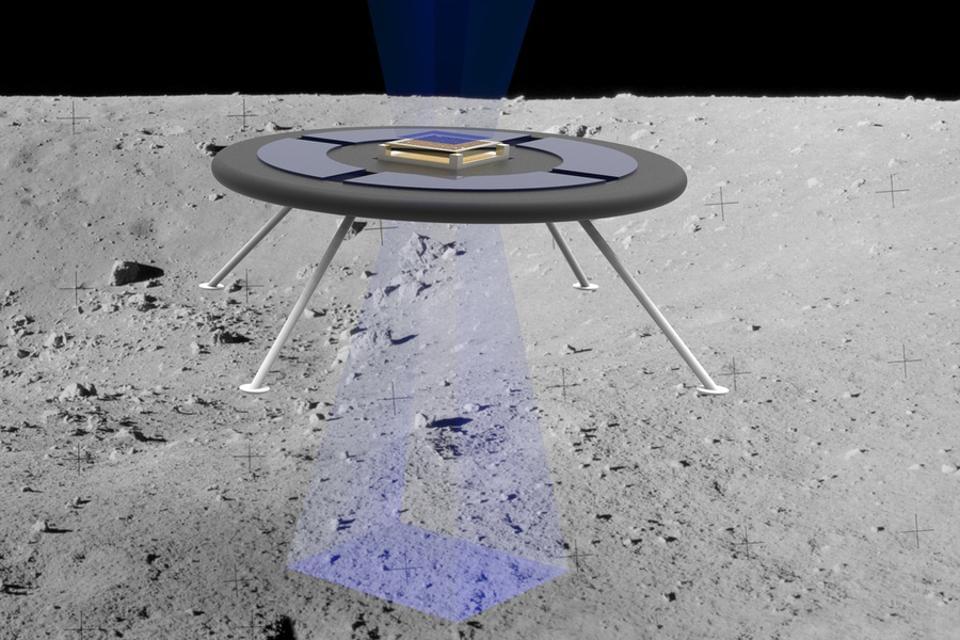
When thinking of the power of the Ingenuity drone on Mars, which has done more than a dozen flights on the Red Planet to scout ahead of the Perseverance rover, imagine what it would be like to fly a similar machine over the moon.
But without a substantial atmosphere to speak of — the moon is essentially “airless” — such a hovering drone needs a completely different way to stay above ground than on Mars. The early-stage design, being developed at the Massachusetts Institute of Technology, proposes using the moon’s static charge to keep the vehicle flying.
The moon’s electrical properties are well-known to science, as it produces such qualities as hovering dust — especially at the line of daylight and darkness. Small rovers on the moon haven’t been used yet at all, although we have seen a few on the Japanese Hayabusa2 mission to asteroid Ryugu.
“That spacecraft operated around a small asteroid and deployed small rovers to its surface,” lead author Oliver Jia-Richards, a graduate student in MIT’s department of aeronautics and astronautics, said in a statement. “Similarly, we think a future [moon] mission could send out small hovering rovers to explore the surface of the moon and other asteroids.”
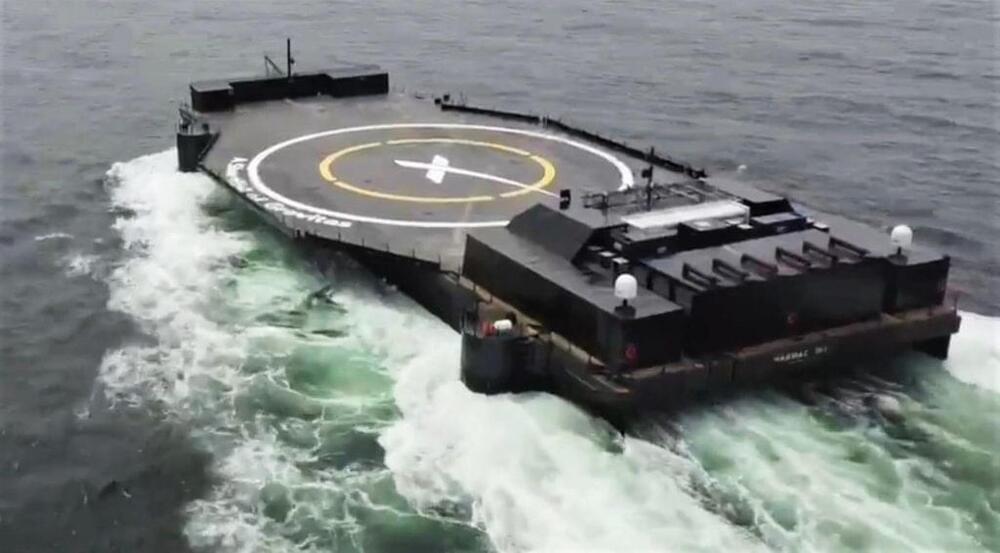
SpaceX drone ship Of Course I Still Love You (OCISLY) departed Port Canaveral on January 1st, heading to sea on the first day of the year for SpaceX’s first launch of 2022.
With a launch manifest that’s never been more jam-packed and seemingly achievable, it’s no surprise that SpaceX is wasting no time kicking off what could be its third record-breaking year in a row. Barring delays, drone ship ASOG will arrive about 640 km (400 mi) downrange at its recovery site – just northeast of the Bahamas – a day or two before Falcon 9’s first launch and landing attempt of the year. Known as Starlink 4–5 (Group 4 Launch 5) and scheduled to lift off no earlier than (NET) 4:49 pm EST (21:49 UTC), Thursday, January 6th, it will be SpaceX’s 34th dedicated Starlink launch since May 2019.
Perhaps more importantly, if the mission goes to plan and doesn’t have rideshare payloads, SpaceX will start 2022 having just launched its 1997th Starlink satellite, including two prototypes that came to be known as Tintin A and B and kicked off the constellation’s in-space hardware testing phase in February 2018. Excluding all prototypes, Starlink 4–5 will mark the launch of more than 1900 (1922) nominally operational Starlink satellites.
To help first responders find people during disasters, researchers are training a search and rescue drone to listen for human screams — and then locate their source.
Help from above: Drones are proving incredibly useful for search and rescue operations. If a person is lost, sending a drone over an area to look for them is faster than trying to cover the same ground with people or dogs.
It’s also safer to use a search and rescue drone if the person happens to be trapped in a disaster zone, such as the site of a wildfire or in a collapsed building.
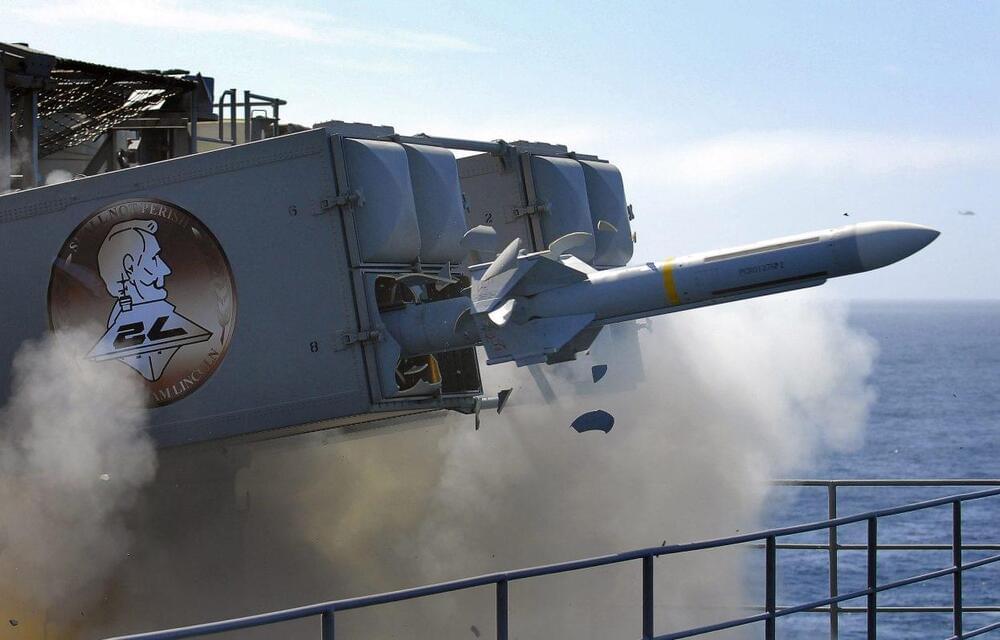
Defense company Raytheon has clinched a US Navy contract to provide engineering and technical services for the Evolved Seasparrow Missile and NATO Seasparrow Missile programs, the Pentagon has said.
A press release by the Department of Defense on December 30 stated, “Raytheon Company [of] Tucson, Arizona, is awarded a $55,121,826 modification to a previously awarded contract for engineering and technical services in support of the Evolved Seasparrow Missile and NATO Seasparrow Missile Systems programs.”
The contract combines purchases for the US government (99%); and those of Japan and the United Arab Emirates (1%) under the Foreign Military Sales program.
Sometimes, good things come in small packages. Extremely tiny packages such as a microrobot that can pollinate fields of crops, help rescue people, and so on. Researchers at MIT (Massachusetts Institute of Technology) are already working on that and they’re making significant progress.
You are on the PRO Robots channel and in this video we present to you the news digest for December 2021. New robots, the most realistic humanoid robot in the world, luxury flying cars of the future, xenobots — nanorobots that have learned to reproduce, nanochip for reprogramming living matter, drones with legs, universal robots, robotic cleaners, flying humanoids, Neuralink chip testing on people, new smart augmented reality glasses, the launch of the telescope, which will tell about the evolution of the universe, and much more in one release! All the most interesting high-tech news for December in one release. Watch the video till the end and write in comments, which news interested you most of all? And what areas of science and technology we should cover in the next issues?
PRO Robots is not just a channel about robots and future technologies, we are interested in science, technology, new technologies and robotics in all its manifestations, science news, technology news today, science and technology news 2021, so that in the future it will be possible to expand future release topics. Today, our vlog just talks about complex things, follows the tech news, makes reviews of exhibitions, conferences and events, where the main characters are best robots in the world! Subscribe to the channel, like the video and join us!