
After months of warnings, the first successful attack using Microsoft’s BlueKeep vulnerability has arrived—but isn’t nearly as bad as it could have been.
Category: cybercrime/malcode – Page 319
The Race For Quantum Supremacy I VICE on HBO
Computer giants are racing to build the first quantum computer, a device with millions of times more processing strength than all the computers currently on Earth combined. This technology will harness the unusual laws of quantum mechanics to bring unimaginable advances in fields like materials science and medicine, but could also pose the greatest threat to cybersecurity yet. VICE’s Taylor Wilson meets the scientists at the cutting edge of this new age of computing.
Check out VICE News for more: http://vicenews.com
Follow VICE News here:
Facebook: https://www.facebook.com/vicenews
Twitter: https://twitter.com/vicenews
Tumblr: http://vicenews.tumblr.com/
Instagram: http://instagram.com/vicenews
More videos from the VICE network: https://www.fb.com/vicevideo

This aggressive IoT malware is forcing Wi-Fi routers to join its botnet army
Gafgyt has been updated with new capabilities, and it spreads by killing rival malware.
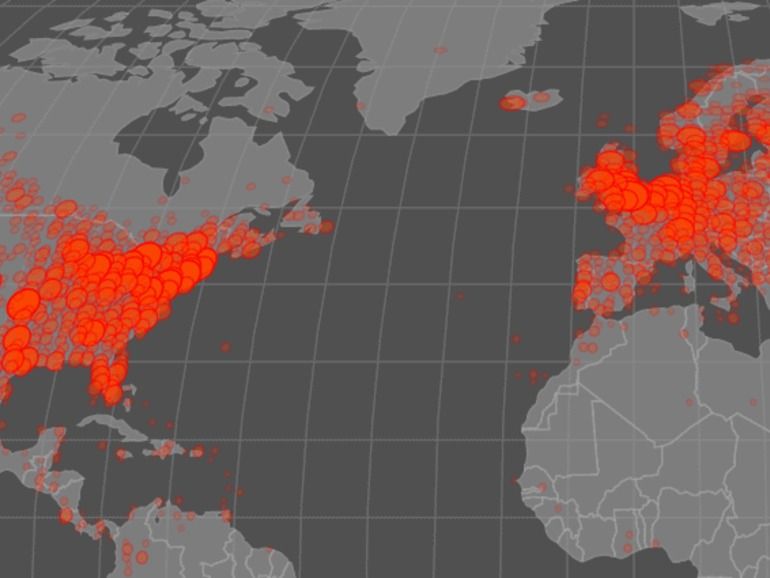
Thousands of QNAP NAS devices have been infected with the QSnatch malware
Over 7,000 infections reported in Germany alone. The malware is still spreading.

New ‘unremovable’ xHelper malware has infected 45,000 Android devices
Factory resets aren’t helping. Neither are mobile antivirus solutions. Malware keeps reinstalling itself.

Confirmed: North Korean malware found on Indian nuclear plant’s network
Two days after rumors of a malware infection at the Kudankulam Nuclear Power Plant surfaced on Twitter, the plant’s parent company confirms the security breach.

Indian nuclear power plant’s network was hacked, officials confirm
After initial denial, company says report of “malware in system” is correct.

A nearly impossible to remove Android malware has infected 45,000 devices
Security researchers have been following the xHelper malware on Android with great interest, owing to the app’s seemingly incomprehensible ability to reinstall itself on an infected device despite factory resets.
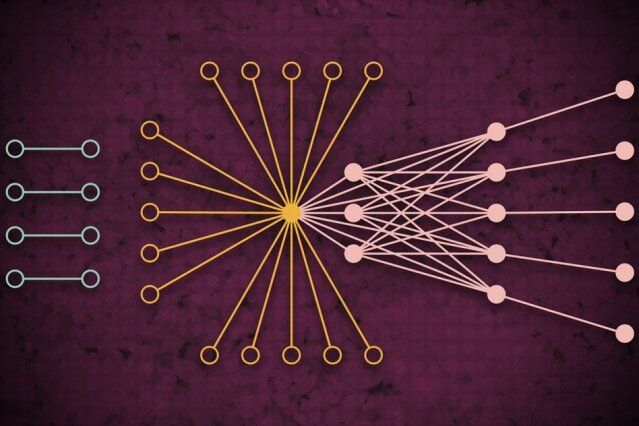
Supercomputer analyzes web traffic across entire internet
Using a supercomputing system, MIT researchers have developed a model that captures what web traffic looks like around the world on a given day, which can be used as a measurement tool for internet research and many other applications.
Understanding web traffic patterns at such a large scale, the researchers say, is useful for informing internet policy, identifying and preventing outages, defending against cyberattacks, and designing more efficient computing infrastructure. A paper describing the approach was presented at the recent IEEE High Performance Extreme Computing Conference.
For their work, the researchers gathered the largest publicly available internet traffic dataset, comprising 50 billion data packets exchanged in different locations across the globe over a period of several years.
Future Consequences of Cryptocurrency Use: Systemic Investigation of Two Scenarios
We face complexity, ambiguity, and uncertainty about the future consequences of cryptocurrency use. There are doubts about the positive and negative impacts of the use of cryptocurrencies in the financial systems. In order to address better and deeper the contradictions and the consequences of the use of cryptocurrencies and also informing the key stakeholders about known and unknown emerging issues in new payment systems, we apply two helpful futures studies tools known as the “Future Wheel”, to identify the key factors, and “System Dynamics Conceptual Mapping”, to understand the relationships among such factors. Two key scenarios will be addressed. In on them, systemic feedback loops might be identified such as a) terrorism, the Achilles’ heel of the cryptocurrencies, b) hackers, the barrier against development, and c) information technology security professionals, a gap in the future job market. Also, in the other scenario, systemic feedback loops might be identified such as a) acceleration of technological entrepreneurship enabled by new payment systems, b) decentralization of financial ecosystem with some friction against it, c) blockchain and shift of banking business model, d) easy international payments triggering structural reforms, and e) the decline of the US and the end of dollar dominance in the global economy. In addition to the feedback loops, we can also identify chained links of consequences that impact productivity and economic growth on the one hand, and shift of energy sources and consumption on the other hand.
Watch the full length presentation at Victor V. Motti YouTube Channel