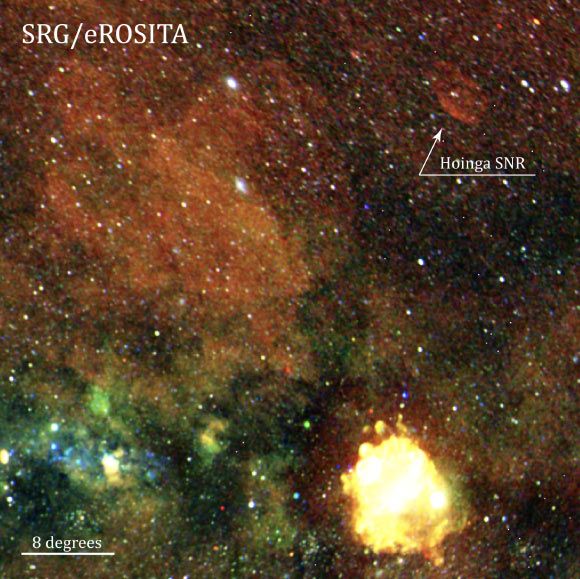
Astronomers using data from the eROSITA X-ray telescope aboard the Spektrum-Roentgen-Gamma (SRG) observatory have detected the largest supernova remnant ever discovered with X-rays.
Category: cosmology – Page 411
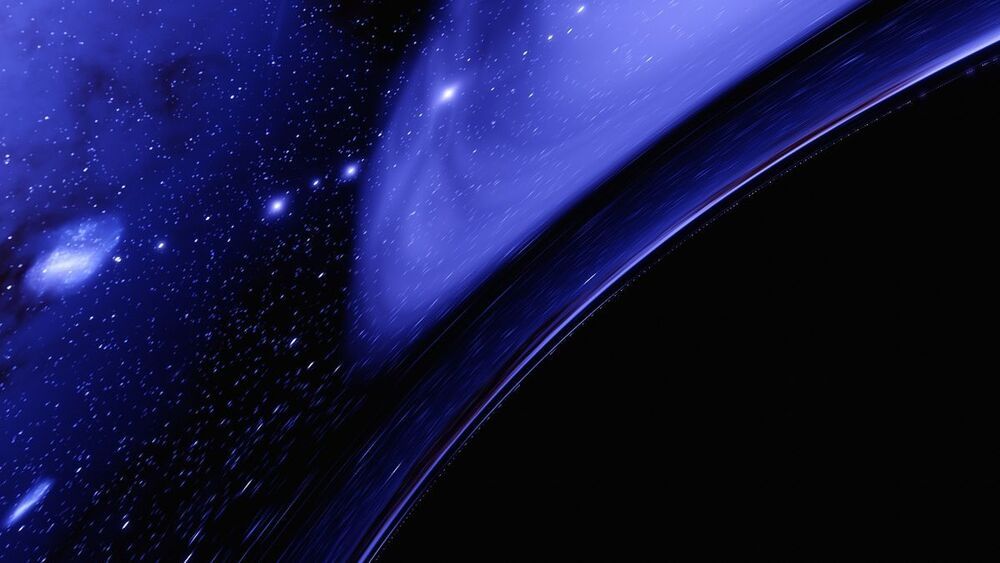
Black holes could be dark stars with ‘Planck hearts’
They may not be black or holes.
Black holes may not be black or holes, a new theory proposes.
Andromeda’s and the Milky Way’s black holes will collide. Here’s how it may play out
Supermassive black holes in the Milky Way and Andromeda will engulf each other less than 17 million years after the galaxies merge, simulations show.
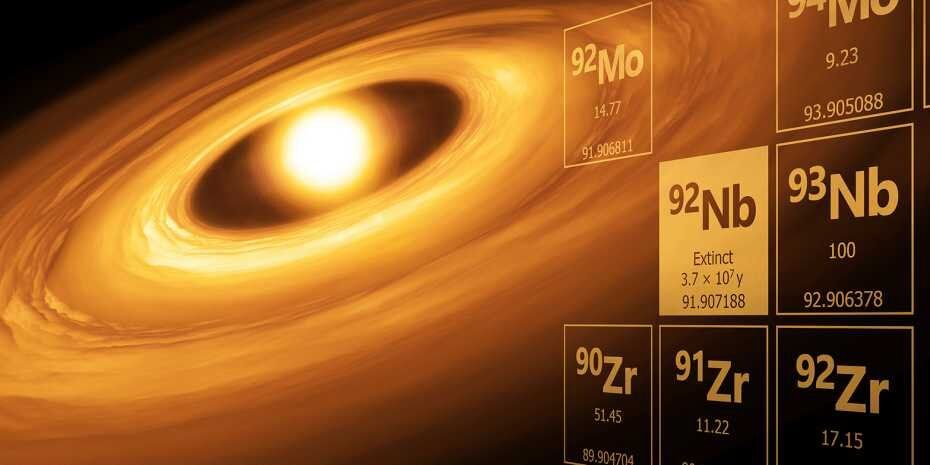
Extinct atom reveals the long-kept secrets of the solar system
Using the extinct niobium-92 atom, ETH researchers have been able to date events in the early solar system with greater precision than before. The study concludes that supernova explosions must have taken place in the birth environment of our sun.
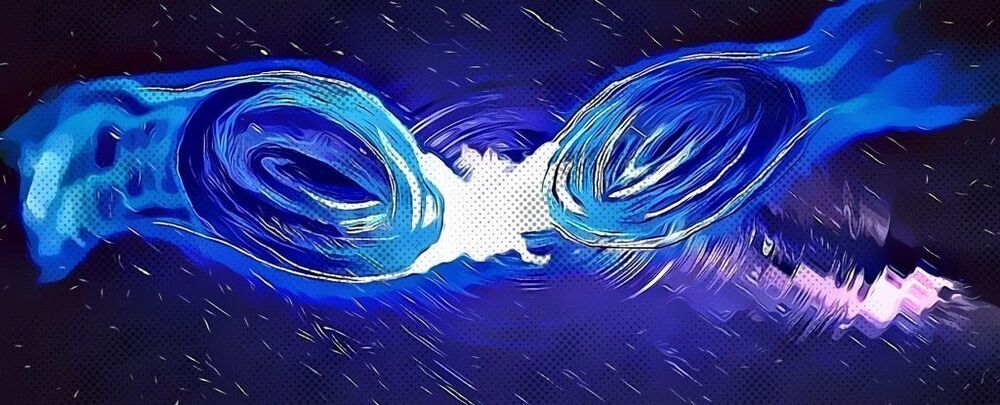
Eerie Stars of ‘Dark Matter’ May Be Behind Largest Gravitational Wave Detection Yet
On 21 May 2019, from a distance of 7 billion light-years away, our gravitational wave detectors were rocked by the most massive collision yet. From analysis of the signal, astronomers concluded that the detection was the result of two black holes smashing together, weighing in at 66 and 85 times the mass of the Sun respectively.
But what if it was something else? A new study offers a different interpretation of the event. It’s possible, according to an international team of astrophysicists, that the two objects were not black holes at all, but mysterious, theoretical objects called boson stars — potentially made up of elusive candidates for dark matter.
The gravitational wave event, called GW 190521, was a spectacular discovery. The object that resulted from the merger of the two objects would have been a black hole at around 142 times the mass of the Sun — within the intermediate mass range that no black hole had ever been detected before, called the black hole upper mass gap.
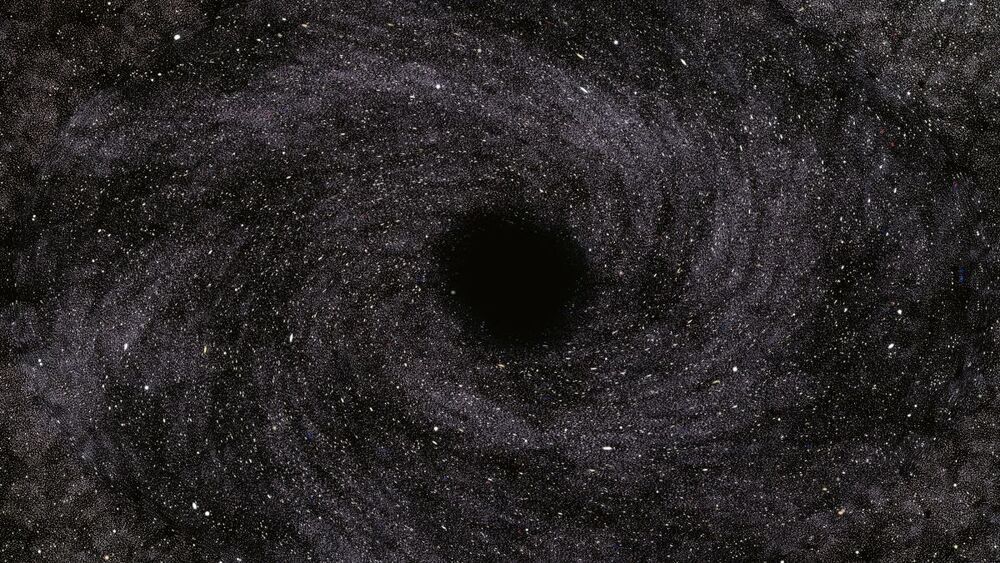
Lab-grown black hole behaves just like Stephen Hawking said it would
Researchers at the Technion-Israel Institute of Technology created a black hole analogue to confirm two of Hawking’s most important predictions, that Hawking radiation arises from nothing (it’s spontaneous) and its intensity does not change over time (it’s stationary).
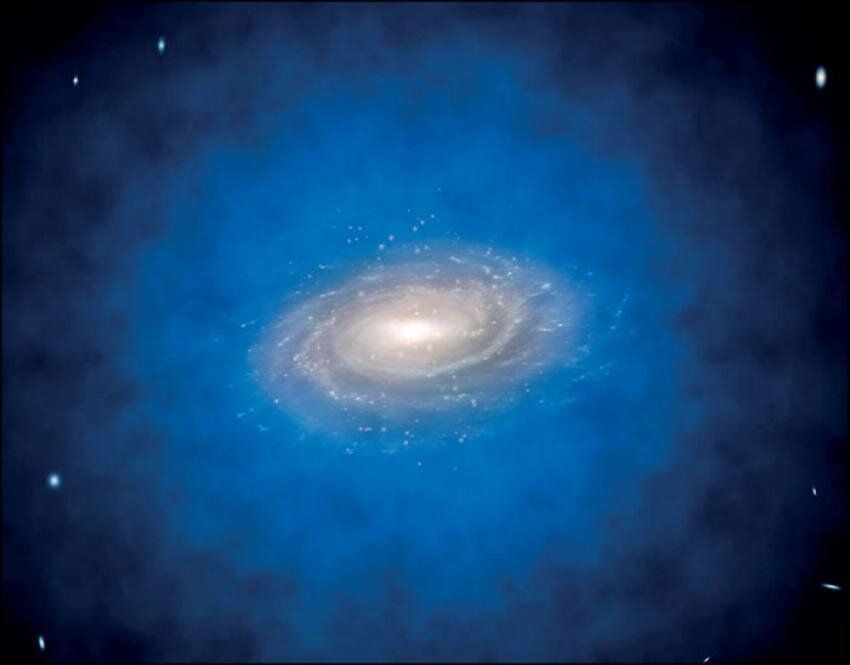
New study suggests supermassive black holes could form from dark matter
A new theoretical study has proposed a novel mechanism for the creation of supermassive black holes from dark matter. The international team find that rather than the conventional formation scenarios involving ‘normal’ matter, supermassive black holes could instead form directly from dark matter in high density regions in the centers of galaxies. The result has key implications for cosmology in the early Universe, and is published in Monthly Notices of the Royal Astronomical Society.
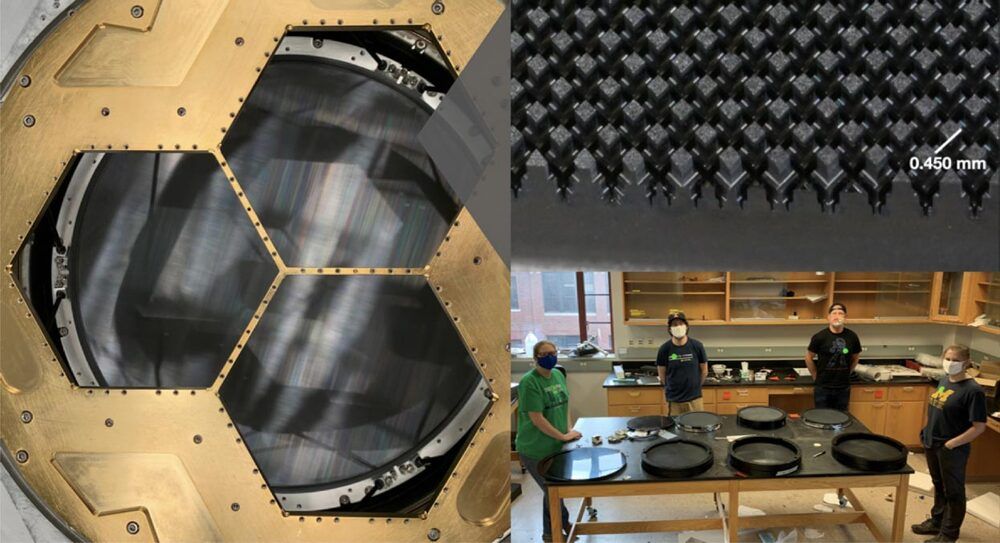
New Metamaterial Structures for Studying the Oldest Light in the Universe
The cosmic microwave background, or CMB, is the electromagnetic echo of the Big Bang, radiation that has been traveling through space and time since the very first atoms were born 380000 years after our universe began. Mapping minuscule variations in the CMB tells scientists about how our universe came to be and what it’s made of.
To capture the ancient, cold light from the CMB, researchers use specialized telescopes equipped with ultrasensitive cameras for detecting millimeter-wavelength signals. The next-generation cameras will contain up to 100000 superconducting detectors. Fermilab scientist and University of Chicago Associate Professor Jeff McMahon and his team have developed a new type of metamaterials-based antireflection coating for the silicon lenses used in these cameras.
“There are at least half a dozen projects that would not be possible without these,” McMahon said.
Scientists Have Proposed a New Particle That Is a Portal to a 5th Dimension
The path to dark matter and other fundamental enigmas may be through a warped extra dimension, according to a new study that proposes a new theory of the universe.
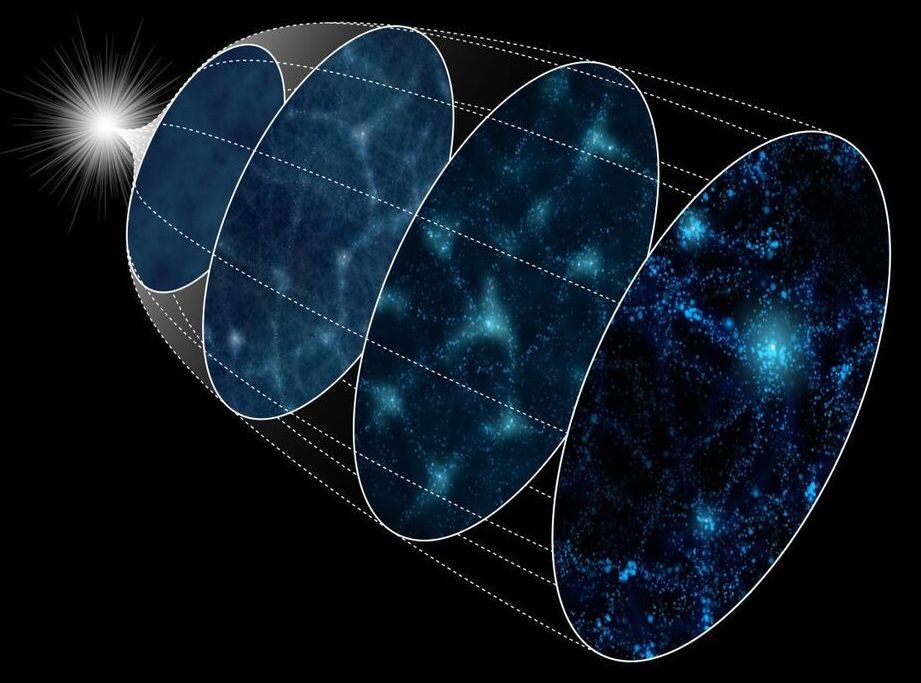
Cosmologists create 4,000 virtual universes to solve Big Bang mystery
A supercomputer presses the rewind button on the universe’s creation.
Cosmologists simulated 4000 versions of the universe in order to understand what its structure today tells us about its origins.