Computational Creativity, Concept Invention, and General Intelligence in their own right all are flourishing research disciplines producing surprising and captivating results that continuously influence and change our view on where the limits of intelligent machines lie, each day pushing the boundaries a bit further. By 2014, all three fields also have left their marks on everyday life – machine-composed music has been performed in concert halls, automated theorem provers are accepted tools in enterprises’ R&D departments, and cognitive architectures are being integrated in pilot assistance systems for next generation airplanes.
Category: computing – Page 165

Nobel Prize: Quantum Tunneling on a Large Scale
The 2025 Nobel Prize in Physics recognizes the discovery of macroscopic quantum tunneling in electrical circuits.
This story will be updated with a longer explanation of the Nobel-winning work on Thursday, 9 October.
Running up against a barrier, a classical object bounces back, but a quantum particle can come out the other side. So-called quantum tunneling explains a host of phenomena, from electron jumps in semiconductors to radioactive decays in nuclei. But tunneling is not limited to subatomic particles, as underscored by this year’s Nobel Prize in Physics. The prize recipients—John Clarke from the University of California, Berkeley; Michel Devoret from Yale University; and John Martinis from the University of California, Santa Barbara—demonstrated that large objects consisting of billions of particles can also tunnel across barriers [1– 3]. Using a superconducting circuit, the physicists showed that the superconducting electrons, acting as a collective unit, tunneled across an energy barrier between two voltage states. The work thrust open the field of superconducting circuits, which have become one of the promising platforms for future quantum computing devices.

Computer advances and ‘invisibility cloak’ vie for physics Nobel
A math theory powering computer image compression, an “invisibility cloak” or the science behind the James Webb Space Telescope are some achievements that could be honored when the Nobel physics prize is awarded Tuesday.
The award, to be announced at 11:45 am (0945 GMT) in Stockholm, is the second Nobel of the season, after the Medicine Prize was awarded on Monday to a US-Japanese trio for research into the human immune system.
Mary Brunkow and Fred Ramsdell, of the United States, and Japan’s Shimon Sakaguchi were recognized by the Nobel jury for identifying immunological “security guards”
Observing quantum weirdness in our world: Nobel physics explained
The Nobel Prize in Physics was awarded to three scientists on Tuesday for discovering that a bizarre barrier-defying phenomenon in the quantum realm could be observed on an electrical circuit in our classical world.
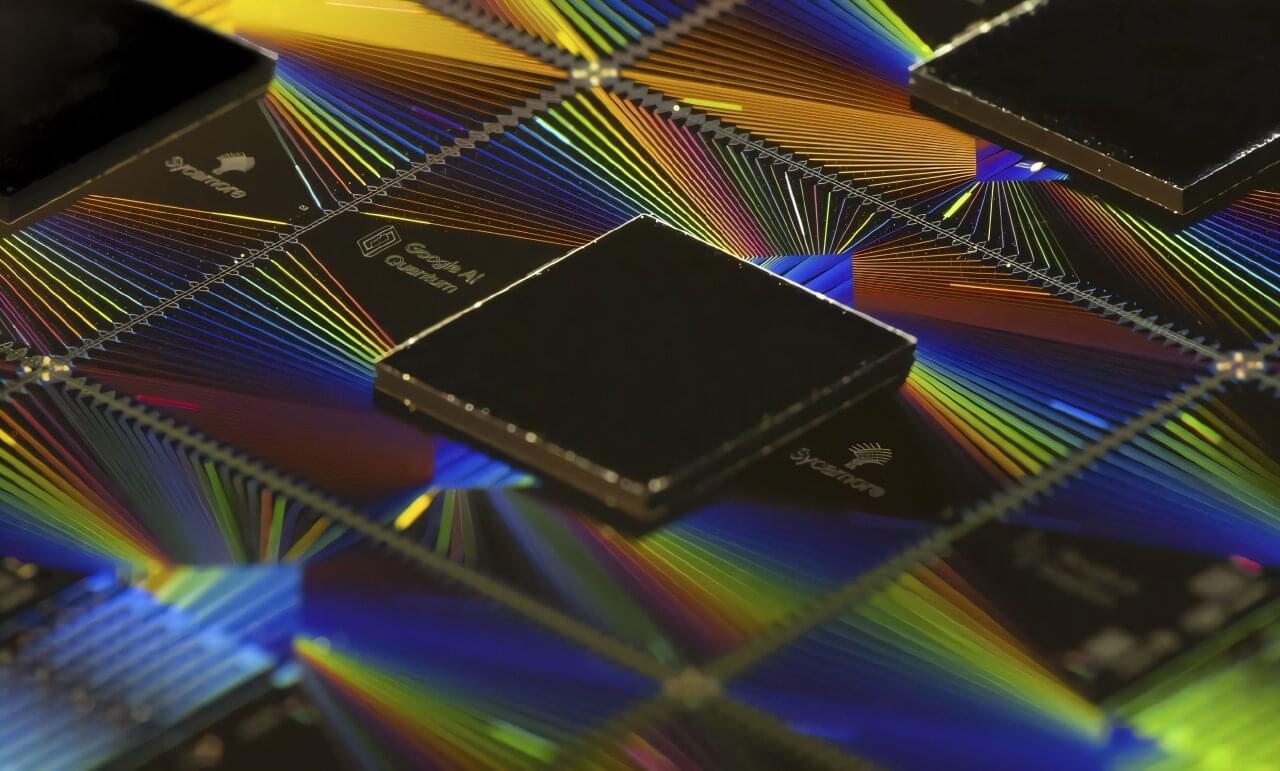
The discovery, which involved an effect called quantum tunneling, laid the foundations for technology now being used by Google and IBM aiming to build the quantum computers of the future.
Here is what you need to know about the Nobel-winning work by John Clarke of the UK, Frenchman Michel Devoret and American John Martinis.
Powerful and precise multi-color lasers now fit on a single chip
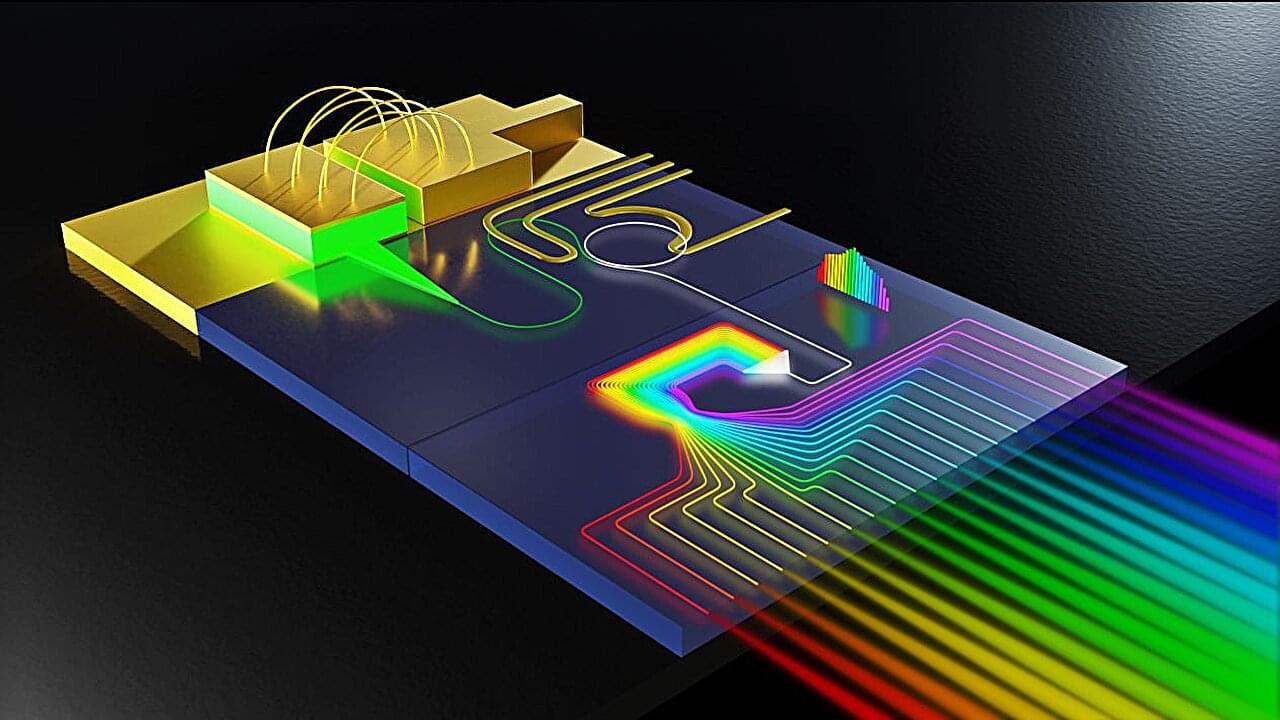
A few years ago, researchers in Michal Lipson’s lab noticed something remarkable. They were working on a project to improve LiDAR, a technology that uses lightwaves to measure distance. The lab was designing high-power chips that could produce brighter beams of light.

Quantum Tunneling Experiments Earn Team The Nobel Prize in Physics
Briton John Clarke, Frenchman Michel Devoret and American John Martinis won the Nobel Prize in Physics on Tuesday for putting quantum mechanics into action and enabling the development of all kinds of digital technology from cellphones to a new generation of computers.
The Nobel jury noted that their work had “provided opportunities for developing the next generation of quantum technology, including quantum cryptography, quantum computers and quantum sensors”
Quantum mechanics describes how differently things work on incredibly small scales.
High-power electrically pumped microcombs
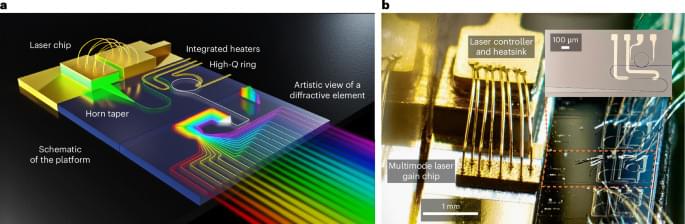
Combining a low-coherence source with silicon nitride ring resonators featuring normal group velocity dispersion enables electrically pumped, high-power microcombs, providing on-chip power up to 158 mW and high-coherence comb lines with linewidths as narrow as 200 kHz.
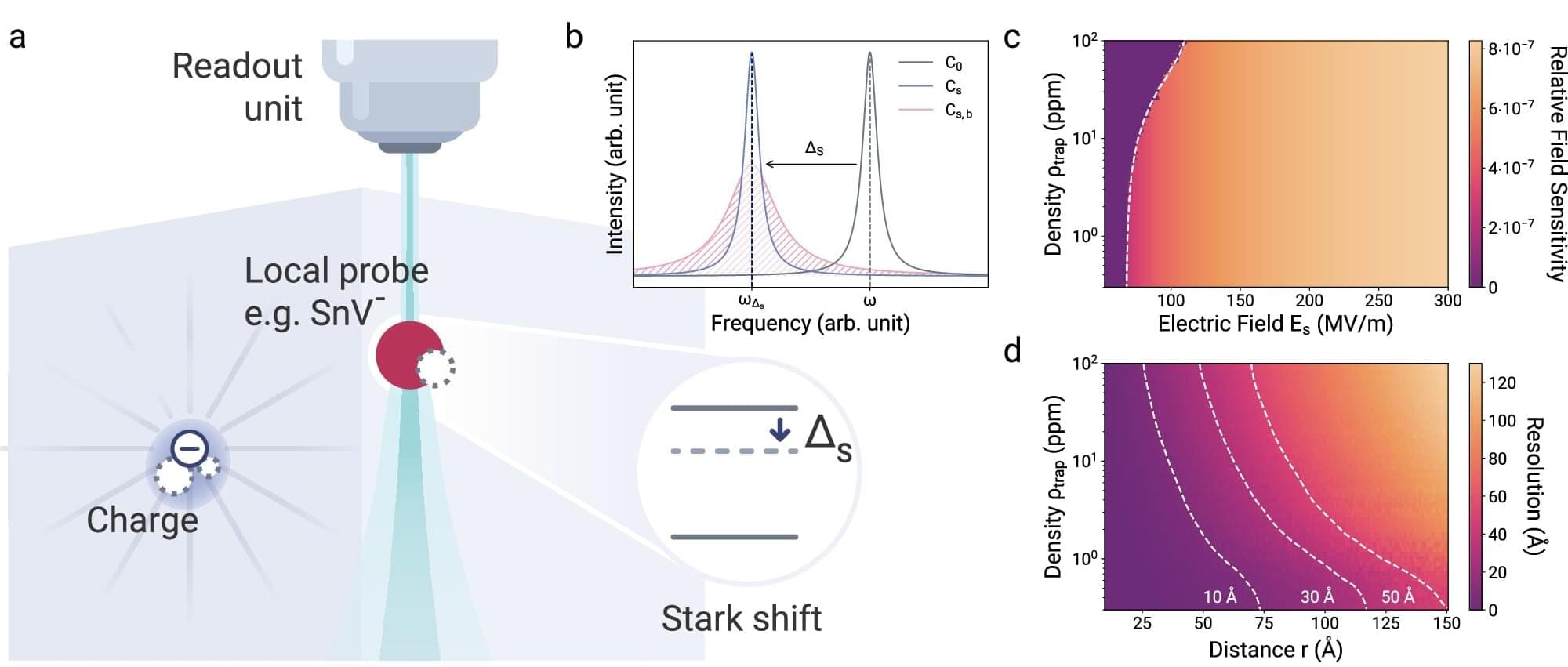
Physicists develop new quantum sensor at the atomic lattice scale
From computer chips to quantum dots—technological platforms were only made possible thanks to a detailed understanding of the used solid-state materials, such as silicon or more complex semiconductor materials. This understanding also includes being able to identify and control irregularities in the crystal lattice of such materials.
If, for example, an atom is missing in the lattice structure of the crystals, a single electron and thus an electric charge can become trapped there. Such charge traps generate electromagnetic noise that limits the functionality of these materials. However, it is extremely difficult to locate these charge traps on an atomic scale.
Researchers from the “Integrated Quantum Photonics” group at the Department of Physics at Humboldt-Universität zu Berlin (HU) and the “Joint Lab Diamond Nanophotonics” at the Ferdinand-Braun-Institut, led by Prof. Dr. Tim Schröder, have developed a new sensor that can detect such individual electrical charges more precisely than ever before.
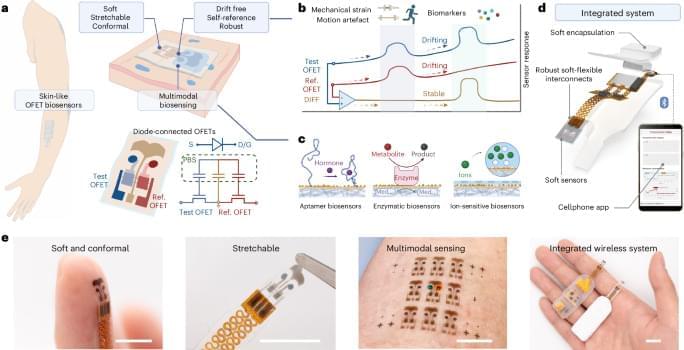
Skin-like drift-free biosensors with stretchable diode-connected organic field-effect transistors
Using extended-gate capacitive coupling and diode connection, stretchable biosensors with a built-in differential circuit design can be created that can offer low signal distortion under bias stress instability, uniaxial strain, compression and temperature variations.
This Tiny Microchip Can Heal Live Tissue with a Single Touch
We might truly be living in the future, with the advent of a new nanochip technology which can instantaneously heal live tissue, and which is taking the medical and tech industries by a storm this week.
At Ohio State University, a team has developed a prototype for what is being called Tissue Nanotransfection, or TNT. The small hand-held device simply sits on the skin, and then an intense electrical field is generated which, while hardly registering to the patient, delivers specific genetic material to the tissue directly beneath.