Toggle light / dark theme

42,300 Transistor Megaprocessor Is Complete

Hmmm; okay.


As it turns out, the answer is not 42, it’s 42.3 — thousand. That’s how many discrete transistors spread across the 30 m2 room housing this massive computation machine. [James Newman’s] Megaprocessor, a seriously enlarged version of a microprocessor, is a project we’ve been following with awe as it took shape over the last couple of years.

[James] documented his work in great detail, and by doing so, took us on a journey through the inner workings of microprocessors. His monumental machine is now finished, and it’s the ultimate answer to how a processor – and pretty much everything that contains a processor – works.

Everyone of the ~42,300 transistors were hand-soldered to one of the massive PCBs, which look more like interactive circuit diagrams than actual circuit boards. This incredible amount of discrete transistors makes up the thousands of logic gates that eventually form the Megaprocessor’s registers, its arithmetic logic unit, its sequence control and also: its 256 bytes of RAM. Each logic gate displays the current IO state through LEDs, which also turns the RAM into a gigantic LED wall on which you can play Tetris. Despite its complexity, the Megaprocessor is pretty much self-documenting. [James] mounted all PCBs on large frames, which add up to a 10m long and 2m tall “computation display”. Detailed diagrams show the information flow between the functional blocks – and through the room.

System controls robots with the brain

More update on controlling drones with BMI.


Using wireless interface, operators control multiple drones by thinking of various tasks.

A researcher at Arizona State University has discovered how to control multiple robotic drones using the human brain.

A controller wears a skull cap outfitted with 128 electrodes wired to a computer. The device records electrical brain activity. If the controller moves a hand or thinks of something, certain areas light up.

Google Tests Post-Quantum Crypto

Good article overall; and yes QC is still evolving. However, to state Quantum networking is in its infancy is a wrong & misleading comment. Since 2009, Quantum Internet has been in beta at Los Alamos Labs. And, researchers will tell you that QC development can as far back as 1970s and the first official QC was introduced in 2009 when the first universal programmable quantum computer was introduced by University of Toronto’s Kim Luke.


Google has launched a two-year Chrome trial aimed at safeguarding the Internet against quantum computers, which security experts predict will shred all data.

Forget Iron Man: skintight suits are the future of robotic exoskeletons

Children with a rare neurological disease were recently given the chance to walk for the first time thanks to a new robotic exoskeleton. These devices – which are essentially robotic suits that give artificial movement to a user’s limbs – are set to become an increasingly common way of helping people who’ve lost the use of their legs to walk. But while today’s exoskeletons are mostly clumsy, heavy devices, new technology could make them much easier and more natural to use by creating a robotic skin.

Exoskeletons have been in development since the 1960s. The first one was a bulky set of legs and claw-like gloves reminiscent of the superhero, Iron Man, designed to use hydraulic power to help industrial workers lift hundreds of kilogrammes of weight. It didn’t work, but since then other designs for both the upper and lower body have successfully been used to increase people’s strength, help teach them to use their limbs again, or even as a way to interact with computers using touch or “haptic” feedback.

These devices usually consist of a chain of links and powered joints that align with the user’s own bones and joints. The links are strapped securely to the user’s limbs and when the powered joints are activated they cause their joints to flex. Control of the exoskeleton can be performed by a computer – for example if it is performing a physiotherapy routine – or by monitoring the electrical activity in the user’s muscles and then amplifying the force they are creating.

Microsoft uses BBC Micro Bit and virtual reality to prepare autistic kids for jobs

Good work by Microsoft.


Autism is a spectrum disorder, meaning not all people that meet the classification have identical behaviors. Some of these folks are very functional, while others may struggle more to socialize, or not be able to hold jobs.

According to Microsoft, 85 percent of those with Autism do not hold full-time employment. This is unfortunate, as some of those with the classification are likely falling through the cracks — capable of work, but not equipped. Luckily, the Windows-maker, in association with CASPA and Dennis Publishing, is aiming to change this with some unlikely tools — the BBC Micro Bit and HTC Vive virtual reality solution.

“The participants — aged between seven and 19 — were taught to code using the BBC micro: bit — a programmable mini-computer that features an LED display, accelerometer, compass, micro USB plug and external battery pack. They learned to light up the LEDs, and change that display by moving and turning the micro: bit”, says Microsoft.

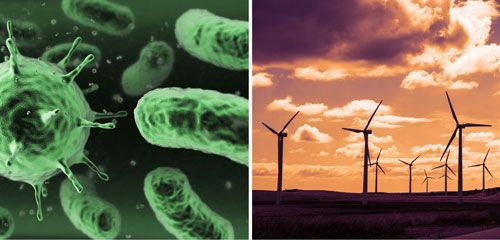
Scientists simulate tiny bacteria-powered ‘windfarm’ to power micromachines

A team of scientists from Oxford University has shown how the natural movement of bacteria could be harnessed to assemble and power microscopic ‘windfarms’ — or other man-made micromachines such as smartphone components.

The study, published in the journal Science Advances (“Active micromachines: Microfluidics powered by mesoscale turbulenceence”), uses computer simulations to demonstrate that the chaotic swarming effect of dense active matter such as bacteria can be organised to turn cylindrical rotors and provide a steady power source.

Scientists simulate tiny bacteria-powered windfarm

Scientists simulate tiny bacteria-powered ‘windfarm’.

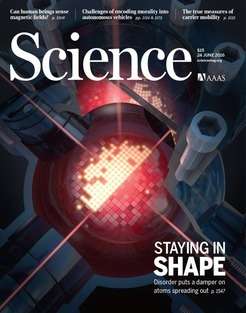
Scientists obtain evidence of many-body localization in a closed quantum system

Finding evidence of many-body localization in a closed quantum system.


During equilibration ordinary many-body systems lose all information about the initial state. Every morning we experience an example for this behaviour. Milk poured into a cup of coffee mixes perfectly and after some time it is impossible to say how exactly the two fluids were put together. The same behaviour holds for almost all quantum systems. However, recently a new phenomenon called “many-body localization” has been predicted theoretically, which allows well insulated quantum systems to preserve memory of the initial state forever. Now a team of scientists around Dr. Christian Groß and Professor Immanuel Bloch (Director at MPQ and Chair of Quantum Optics at LMU Munich), in cooperation with David Huse (Princeton University), has obtained evidence of such a behaviour in a two-dimensional quantum system of cold rubidium atoms trapped in an optical lattice.

The scientists observed that – beyond a certain degree of disorder imprinted on the particle ensemble in the beginning – the system would relax into a steady state still containing detailed microscopic information about its past. “We were able to observe the transition from a thermalized state into a many-body localized phase”, Christian Groß points out. “It is the first observation of that kind in a regime that is not accessible with state-of-the-art simulations on classical computers.” The experiment is not only of fundamental interest; the results might also lead to new ways for storing quantum information.

Motivated by the foundational problem of how interacting particles behave in a disordered system, in the 1950s the American physicist Philip Warren Anderson discovered the famous localization phenomenon for non-interacting particles, now called “Anderson localization”. Here, disorder prevents the particles to move and consequently all transport is stopped. But what happens when disorder comes together with interactions? Will interactions lead to transport and thermalization, or will the localization persist even at high energies? So far, there is no theoretical model that faithfully predicts the evolution of a closed quantum system in more than one dimension under these conditions, although, the possibility for localization has been theoretically suggested.