Want to simulate the creation of the Universe — use QC.
Scientists have for the first time simulated the creation of particle and antiparticle pairs in a quantum computer.
(Photo : gr8effect / Pixabay)
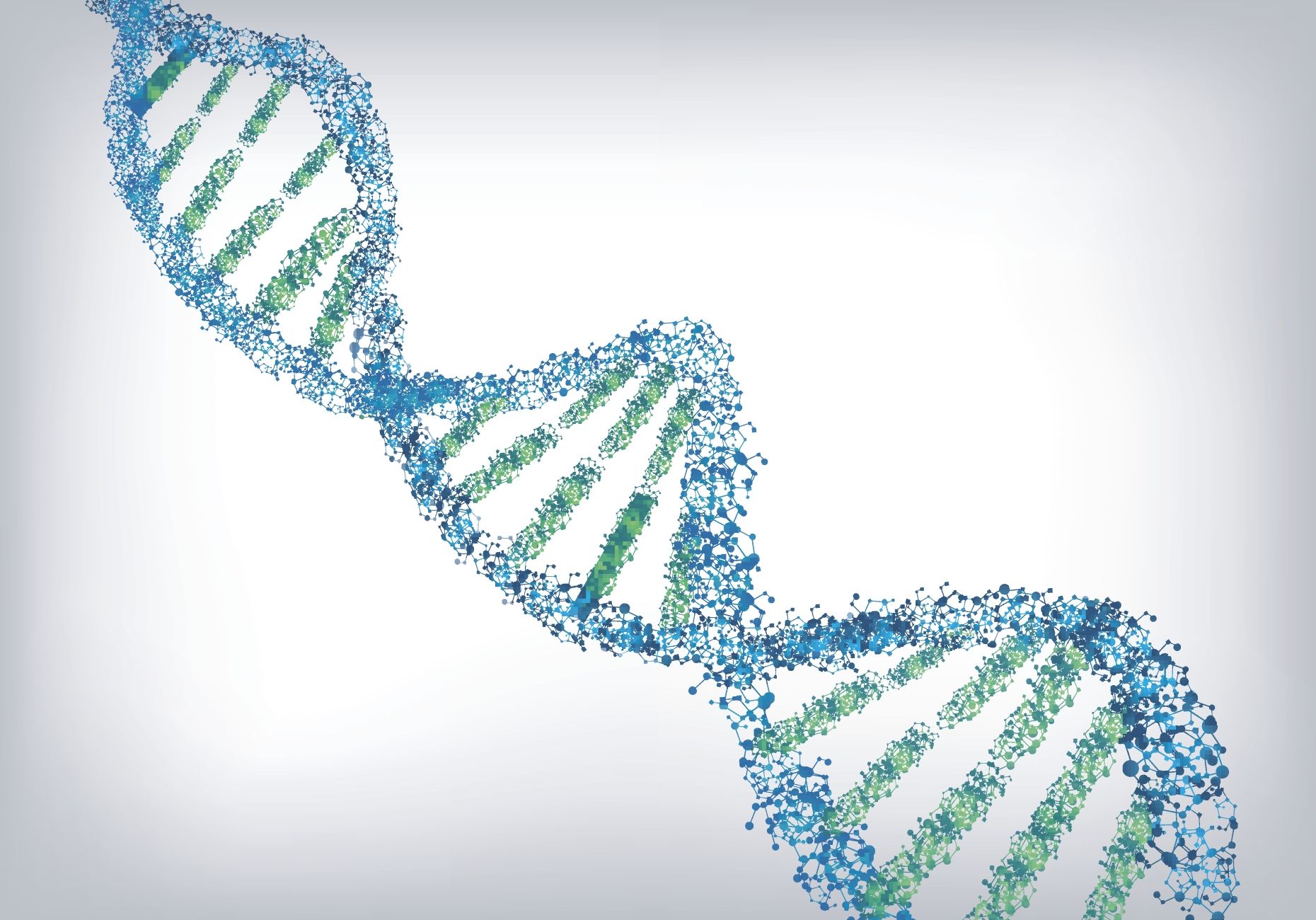
Definitely been seeing great research and success in Biocomputing; why I have been looking more and more in this area of the industry. Bio/ medical technology is our ultimate future state for singularity. It is the key that will help improve the enhancements we need to defeat cancer, aging, intelligence enhance, etc. as we have already seen the early hints already of what it can do for people, machines and data, the environment and resources. However, a word of caution, DNA ownership and security. We will need proper governance and oversight in this space.
© iStock/ Getty Images undefined How much storage do you have around the house? A few terabyte hard drives? What about USB sticks and old SATA drives? Humanity uses a staggering amount of storage, and our needs are only expanding as we build data centers, better cameras, and all sorts of other data-heavy gizmos. It’s a problem scientists from companies like IBM, Intel, and Microsoft are trying to solve, and the solution might be in our DNA.
A recent Spectrum article takes a look at the quest to unlock the storage potential of human DNA. DNA molecules are the building blocks of life, piecing our genetic information into living forms. The theory is that we can convert digital files into biological material by translating it from binary code into genetic code. That’s right: the future of storage could be test tubes.
In April, representatives from IBM, Intel, Microsoft, and Twist Bioscience met with computer scientists and geneticists for a closed door session to discuss the issue. The event was cosponsored by the U.S. Intelligence Advanced Research Projects Activity (IARPA), who reportedly may be interested in helping fund a “DNA hard drive.”

We’re on a roll with QC.
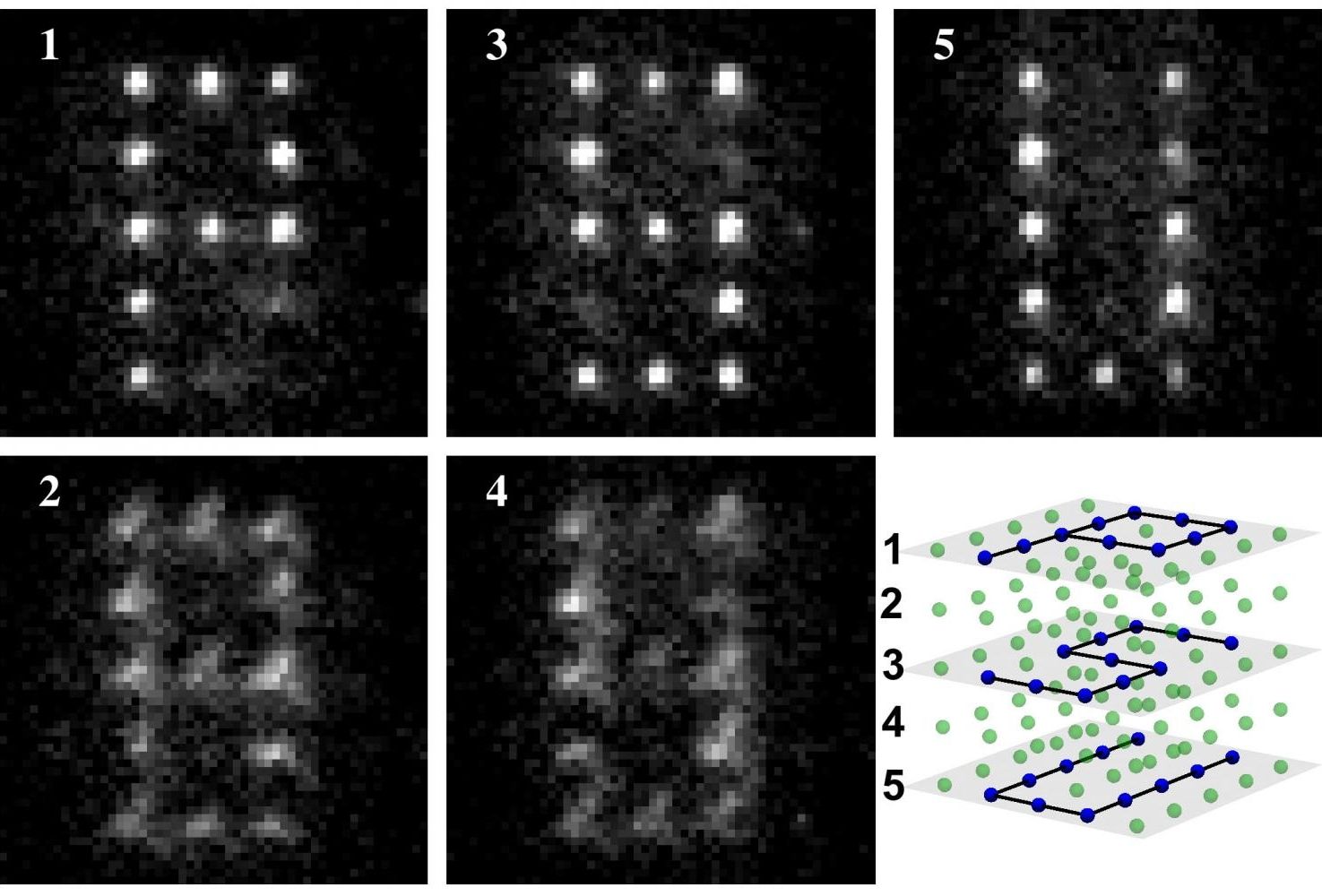
The era of quantum computers is one step closer as a result of research published in the current issue of the journal Science. The research team has devised and demonstrated a new way to pack a lot more quantum computing power into a much smaller space and with much greater control than ever before. The research advance, using a 3-dimensional array of atoms in quantum states called quantum bits—or qubits—was made by David S. Weiss, professor of physics at Penn State University, and three students on his lab team. He said “Our result is one of the many important developments that still are needed on the way to achieving quantum computers that will be useful for doing computations that are impossible to do today, with applications in cryptography for electronic data security and other computing-intensive fields.”
The new technique uses both laser light and microwaves to precisely control the switching of selected individual qubits from one quantum state to another without altering the states of the other atoms in the cubic array. The new technique demonstrates the potential use of atoms as the building blocks of circuits in future quantum computers.
The scientists invented an innovative way to arrange and precisely control the qubits, which are necessary for doing calculations in a quantum computer. “Our paper demonstrates that this novel approach is a precise, accurate, and efficient way to control large ensembles of qubits for quantum computing,” Weiss said.

We now have a way to do tracibility in QC.
Shutterstock.
Chinese scientists won a major victory recently, by proving that the Majorana fermion — a particle we’ve found tantalizing hints of for years — genuinely exists. This discovery has huge implications for quantum computing, and it might change the world. But how?
A Majorana fermion is weird even by the standards of quantum physics. If you remember your high school physics, you remember that atomic particles like protons and electrons have a charge, positive or negative. The Majorana fermion, however, doesn’t have a charge, which allows it to be matter and anti-matter at the same time. Yes, that is incredibly confusing, even to quantum physicists, and they’re still arguing over how that even works.
This video is worthless. I hear a person who is out of touch with the QC work and isn’t even aware all of the work going on. Frankly, QC is being worked on by big tech (Amazon, Google, Microsoft, D-Wave, IBM), governmental labs and incubators, limited set of start ups who are also (in many cases tied to big tech), and university research labs. Therefore, I don’t really find this soapbox video that informative as well as not in touch with where QC is today. It appears to me that this guy has sour grapes over not being engaged.
At least if you’re going to get on a soapbox and try to talk about QC like you’re somehow an expert or informed; at least make sure you know what has been shown, reported, and in development currently that has been publically announced so that you don’t look like you’re an un-informed consultant doing a superficial presentation and didn’t even bother doing the due diligence 1st. Otherwise, you just discredited your VC/ firm to the public and to those working on QC.
watch time: 28 minutes
One of the key insights that legendary physicist and Nobel Prize laureate Richard Feynman had was that quantum mechanics (the branch of physics that deals with subatomic particles, uncertainty principle, and many other concepts beyond classic physics) is just way too complicated to simulate using traditional computers.
Nature, of course, can handle these complex calculations — computers however can’t do those same calculations (or would take a prohibitively long time and amount of resources to do so). But this isn’t just about being able to do more with computers in a faster (or smaller) way: It’s about solving problems that we couldn’t solve with traditional computers; it’s about a difference of kind not just degree.
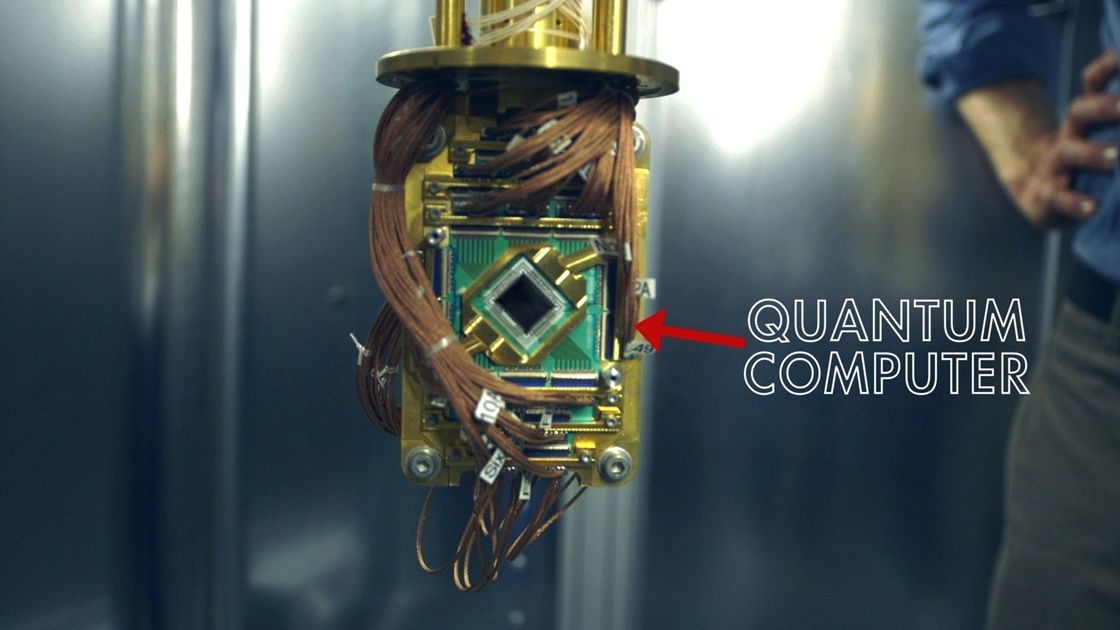
Nice.
Quantum computing makes small, but significant progress.
A high-energy physics experiment has been completed using a simple quantum device that, if scaled up, could potentially greatly outperform a conventional computer.
Physicists from the Institute for Quantum Optics and Quantum Information at the Austrian Academy of Sciences have used the quantum computer to simulate the spontaneous creation of particle-antiparticle pairs.

It would seem that no one’s immune from the effects imposed by our increasingly sophisticated artificial intelligence and robotics — not even doctors. As research from Indiana University has revealed, a new computer program is doing a better job than doctors when it comes to both diagnosing and treating health conditions — and by a significant margin.
The system, which uses decision making processes similar to the Jeopardy-bot, Watson, was recently given the task of analyzing and predicting the health outcomes of 500 real individuals. After plugging in the relevant data — which mostly had to do with clinical depression and chronic diseases like high blood pressure and diabetes — researchers Kris Hauser and Casey Bennett compared the outcomes to the simulated treatment prescriptions.
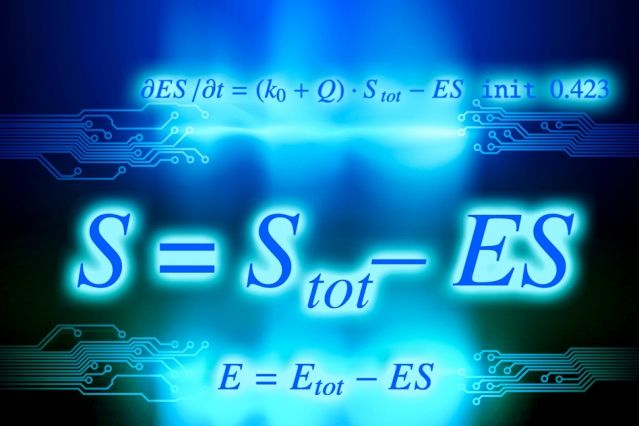
A transistor, conceived of in digital terms, has two states: on and off, which can represent the 1s and 0s of binary arithmetic.
But in analog terms, the transistor has an infinite number of states, which could, in principle, represent an infinite range of mathematical values. Digital computing, for all its advantages, leaves most of transistors’ informational capacity on the table.
In recent years, analog computers have proven to be much more efficient at simulating biological systems than digital computers. But existing analog computers have to be programmed by hand, a complex process that would be prohibitively time consuming for large-scale simulations.
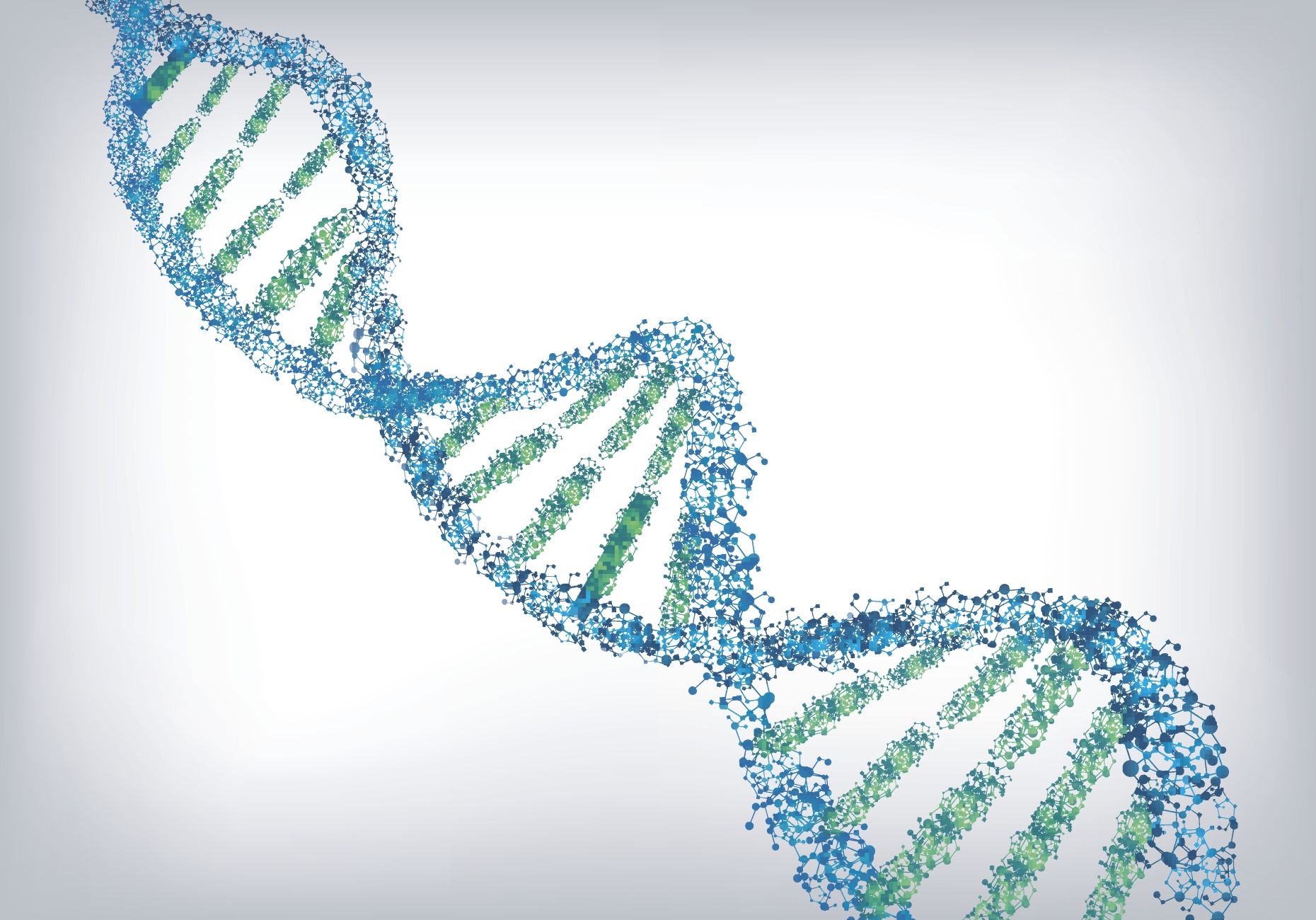 © iStock/ Getty Images undefined How much storage do you have around the house? A few terabyte hard drives? What about USB sticks and old SATA drives? Humanity uses a staggering amount of storage, and our needs are only expanding as we build data centers, better cameras, and all sorts of other data-heavy gizmos. It’s a problem scientists from companies like IBM, Intel, and Microsoft are trying to solve, and the solution might be in our DNA.