Toggle light / dark theme

Searching for the Chemistry of Life: Possible New Way to Create DNA Base Pairs

In the search for the chemical origins of life, researchers have found a possible alternative path for the emergence of the characteristic DNA pattern: According to the experiments, the characteristic DNA base pairs can form by dry heating, without water or other solvents. The team led by Ivan Halasz from the Rudjer Boskovic Institute and Ernest Mestrovic from the pharmaceutical company Xellia presents its observations from DESYs X-ray source PETRA III in the journal Chemical Communications.

“One of the most intriguing questions in the search for the origin of life is how the chemical selection occurred and how the first biomolecules formed,” says Tomislav Stolar from the Rudjer Boskovic Institute in Zagreb, the first author on the paper. While living cells control the production of biomolecules with their sophisticated machinery, the first molecular and supramolecular building blocks of life were likely created by pure chemistry and without enzyme catalysis. For their study, the scientists investigated the formation of nucleobase pairs that act as molecular recognition units in the Deoxyribonucleic Acid (DNA).

Our genetic code is stored in the DNA as a specific sequence spelled by the nucleobases adenine (A), cytosine ©, guanine (G) and thymine (T). The code is arranged in two long, complementary strands wound in a double-helix structure. In the strands, each nucleobase pairs with a complementary partner in the other strand: adenine with thymine and cytosine with guanine.

Nanoscale machines convert light into work

“In previous work, the researchers discovered that when optical matter is exposed to circularly polarized light, it rotates as a rigid body in the direction opposite the polarization rotation. In other words, when the incident light rotates one way the optical matter array responds by spinning the other. This is a manifestation of “negative torque”. The researchers speculated that a machine could be developed based on this new phenomenon.

In the new work, the researchers created an optical matter machine that operates much like a mechanical machine based on interlocking gears. In such machines, when one gear is turned, a smaller interlocking gear will spin in the opposite direction. The optical matter machine uses circularly polarized light from a laser to create a nanoparticle array that acts like the larger gear by spinning in the optical field. This “optical matter gear” converts the circularly polarized light into orbital, or angular, momentum that influences a nearby probe particle to orbit the nanoparticle array (the gear) in the opposite direction.”


Researchers have developed a tiny new machine that converts laser light into work. These optically powered machines self-assemble and could be used for nanoscale manipulation of tiny cargo for applications such as nanofluidics and particle sorting.

“Our work addresses a long-standing goal in the nanoscience community to create self-assembling that can perform work in conventional environments such as room temperature liquids,” said research team leader Norbert F. Scherer from the University of Chicago.

Scherer and colleagues describe the new nanomachines in Optica. The machines are based on a type of matter known as optical matter in which metal nanoparticles are held together by light rather than the that hold together the atoms that make up typical matter.

Engineers create nanoparticles that deliver gene-editing tools to specific tissues and organs

One of the most remarkable recent advances in biomedical research has been the development of highly targeted gene-editing methods such as CRISPR that can add, remove, or change a gene within a cell with great precision. The method is already being tested or used for the treatment of patients with sickle cell anemia and cancers such as multiple myeloma and liposarcoma, and today, its creators Emmanuelle Charpentier and Jennifer Doudna received the Nobel Prize in chemistry.

While is remarkably precise in finding and altering genes, there is still no way to target treatment to specific locations in the body. The treatments tested so far involve removing or immune system T cells from the body to modify them, and then infusing them back into a patient to repopulate the bloodstream or reconstitute an immune response—an expensive and time-consuming process.

Building on the accomplishments of Charpentier and Doudna, Tufts researchers have for the first time devised a way to directly deliver gene-editing packages efficiently across the and into specific regions of the brain, into immune system cells, or to specific tissues and organs in mouse models. These applications could open up an entirely new line of strategy in the treatment of neurological conditions, as well as cancer, infectious disease, and autoimmune diseases.

‘Re-writing the code of life’: Nobel chemistry prize goes to genome editing pioneers

The genetic editing technique has contributed to new cancer therapies and has the potential to be used in curing inheritable diseases.


Two women were awarded the Nobel Prize in chemistry Wednesday for their pioneering work on genome editing, which has the life-saving potential to be used to cure genetic diseases.el Prize in chemistry Wednesday for their pioneering work on genome editing, which has the life-saving potential to be used to cure genetic diseases.el Prize in chemistry on Wednesday for developing a method for genome editing that could be used to cure many diseases.

Inflight fiber printing toward array and 3D optoelectronic and sensing architectures

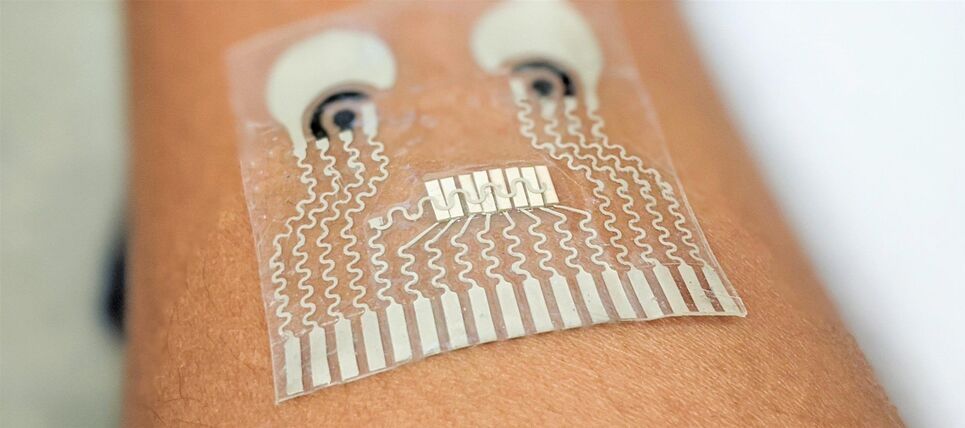
Scalability and device integration have been prevailing issues limiting our ability in harnessing the potential of small-diameter conducting fibers. We report inflight fiber printing (iFP), a one-step process that integrates conducting fiber production and fiber-to-circuit connection. Inorganic (silver) or organic {PEDOT: PSS [poly(3,4-ethylenedioxythiophene) polystyrene sulfonate]} fibers with 1- to 3-μm diameters are fabricated, with the fiber arrays exhibiting more than 95% transmittance (350 to 750 nm). The high surface area–to–volume ratio, permissiveness, and transparency of the fiber arrays were exploited to construct sensing and optoelectronic architectures. We show the PEDOT: PSS fibers as a cell-interfaced impedimetric sensor, a three-dimensional (3D) moisture flow sensor, and noncontact, wearable/portable respiratory sensors. The capability to design suspended fibers, networks of homo cross-junctions and hetero cross-junctions, and coupling iFP fibers with 3D-printed parts paves the way to additive manufacturing of fiber-based 3D devices with multilatitude functions and superior spatiotemporal resolution, beyond conventional film-based device architectures.

Small-diameter conducting fibers have unique morphological, mechanical, and optical properties such as high aspect ratio, low bending stiffness, directionality, and transparency that set them apart from other classes of conducting, film-based micro/nano structures (1–3). Orderly assembling of thin conducting fibers into an array or three-dimensional (3D) structures upscales their functional performance for device coupling. Developing new strategies to control rapid synthesis, patterning, and integration of these conducting elements into a device architecture could mark an important step in enabling new device functions and electronic designs (4, 5). To date, conducting micro/nanoscaled fibers have been produced and assembled in a number of ways, from transferring of chemically grown nanofibers/wires (6, 7), writing electrohydrodynamically deposited lines (8, 9), to drawing ultralong fibers (10, 11), wet spinning of fibers (12–14), and 2D/3D direct printing (15–18).

Giant electrochemical actuation in a nanoporous silicon-polypyrrole hybrid material

The absence of piezoelectricity in silicon makes direct electromechanical applications of this mainstream semiconductor impossible. Integrated electrical control of the silicon mechanics, however, would open up new perspectives for on-chip actuorics. Here, we combine wafer-scale nanoporosity in single-crystalline silicon with polymerization of an artificial muscle material inside pore space to synthesize a composite that shows macroscopic electrostrain in aqueous electrolyte. The voltage-strain coupling is three orders of magnitude larger than the best-performing ceramics in terms of piezoelectric actuation. We trace this huge electroactuation to the concerted action of 100 billions of nanopores per square centimeter cross section and to potential-dependent pressures of up to 150 atmospheres at the single-pore scale. The exceptionally small operation voltages (0.4 to 0.9 volts), along with the sustainable and biocompatible base materials, make this hybrid promising for bioactuator applications.

An electrochemical change in the oxidation state of polypyrrole (PPy) can increase or decrease the number of delocalized charges in its polymer backbone (1). Immersed in an electrolyte, this is also accompanied by a reversible counter-ion uptake or expulsion and thus with a marcroscopic contraction or swelling under electrical potential control, making PPy one of the most used artificial muscle materials (15).

Here, we combine this actuator polymer with the three-dimensional (3D) scaffold structure of nanoporous silicon (68) to design, similarly as found in many multiscale biological composites in nature (9), a material with embedded electrochemical actuation that consists of a few light and abundant elemental constituents (i.e., H, C, N, O, Si, and Cl).

A New Chemical ‘Tree of The Origins of Life’ Reveals Our Possible Molecular Evolution

One of the greatest mysteries in our Universe is right here on our own doorstep. No, closer — it’s in every fibre of our being.

At least 3.7 billion years ago, a few simple molecules worked together to create something new. Then a few more. And, somehow, these snowballing combinations eventually produced the first very basic living organisms that would evolve and branch out to become all life on Earth.

We don’t know the order it happened in; heck, we don’t even know when or where it happened. But new research is showing us the possibilities.

/* */