This non-invasive approach shows promise for prostate cancer, reducing side effects and improving outcomes.
Researchers have discovered that combining focused ultrasound with a small-molecule therapy can shrink prostate cancer tumors in lab models.


Alopecia refers to hair loss and can affect the scalp, eyebrows, eyelashes, and other areas of the body. There are different types of alopecia including androgenetic alopecia, alopecia areata, anagen effluvium, and frontal fibrosing alopecia (FFA). Each form of disease refers to where and how hair is lost. This type of categorization helps physicians best diagnose and treat patients. Frontal fibrosing alopecia was first recognized in the early 1990s and still puzzles scientists and physicians. It is characterized by progressive loss with hair follicles becoming inflamed and destroyed. Eyebrow thinning is also a common symptom along with skin redness and scaling, and wrinkling.
Unfortunately, the cause of FFA is unknown and is a type of scarring hair loss, which means that the hair cannot grow back. This particularly distressing condition is thought to be the result of an autoimmune disorder. Many scientists believe FFA is caused by hormonal imbalances or genetic predispositions. Scientists are currently trying to find ways to cure or permanently treat FFA. Treatment options to date include topical corticosteroids, oral medication, light therapy, and hair transplantation. However, all of these treatments work to relieve symptoms, delay hair loss, or replace hair loss. Since FFA is a chronic condition, symptoms can progress over time and with early intervention, patients can significantly delay hair loss. The lack of sufficient treatment is still a concern, and many researchers are investigating how to overcome this disease and avoid hair loss.
A recent paper in JAMA Dermatology, by Dr. Christos Tziotzios and others, reported a change in two areas of the human genome that can influence alopecia risk. This is a major advance in the field of alopecia and can be used to enhance treatment. Tziotzios is a Consultant Dermatologist and Senior Lecturer at St. John’s Institute of Dermatology in the United Kingdom (UK). He specializes in general dermatology and hair and scalp disorders including FFA in both biological males and females.

Science and Technology: Gene Therapy apparently Cure Blindness in Children.
S eye, very early in life, to treat a severe form of the condition.‘.
An experimental trial of gene therapy has helped four toddlers — born with one of the most severe forms of childhood blindness — gain “life-changing improvements” to their sight, according to doctors at Moorfields Eye Hospital in London.
The rare genetic condition means the babies’ vision deteriorated very rapidly from birth.
Before the therapy, they were registered legally blind and only just able to distinguish between dark and light. After the infusion, all parents reported improvements — with some of their young children now able to begin to draw and write.

Very excellent.
Arc Institute researchers have developed a machine learning model called Evo 2 that is trained on the DNA of over 100,000 species across the entire tree of life. Its deep understanding of biological code means that Evo 2 can identify patterns in gene sequences across disparate organisms that experimental researchers would need years to uncover. The model can accurately identify disease-causing mutations in human genes and is capable of designing new genomes that are as long as the genomes of simple bacteria.
Evo 2’s developers—made up of scientists from Arc Institute and NVIDIA, convening collaborators across Stanford University, UC Berkeley, and UC San Francisco—will post details about the model as a preprint on February 19, 2025, accompanied by a user-friendly interface called Evo Designer. The Evo 2 code is publicly accessible from Arc’s GitHub, and is also integrated into the NVIDIA BioNeMo framework, as part of a collaboration between Arc Institute and NVIDIA to accelerate scientific research. Arc Institute also worked with AI research lab Goodfire to develop a mechanistic interpretability visualizer that uncovers the key biological features and patterns the model learns to recognize in genomic sequences. The Evo team is sharing its training data, training and inference code, and model weights to release the largest-scale, fully open source AI model to date.
Building on its predecessor Evo 1, which was trained entirely on single-cell genomes, Evo 2 is the largest artificial intelligence model in biology to date, trained on over 9.3 trillion nucleotides—the building blocks that make up DNA or RNA—from over 128,000 whole genomes as well as metagenomic data. In addition to an expanded collection of bacterial, archaeal, and phage genomes, Evo 2 includes information from humans, plants, and other single-celled and multi-cellular species in the eukaryotic domain of life.

Unraveling the Genetic Risk of Cancer
Thousands of tiny changes in the DNA sequence of the human genome have been linked to an increased risk of cancer. However, until now, it has been unclear which of these changes directly contribute to the uncontrolled cell growth that defines the disease and which are simply coincidences or minor players.
Stanford researchers conducted the first large-scale analysis of these inherited genetic changes, known as single nucleotide variants. Their study identified fewer than 400 variants that play a key role in triggering and sustaining cancer growth. These variants influence several critical biological pathways, including those that control DNA repair, energy production, and how cells interact with their microenvironment.

PROVIDENCE, R.I. (WPRI) — Pancreatic cancer is the 10th deadliest form of cancer in the United States, according to the National Cancer Institute.
Fewer than 13% of those battling pancreatic cancer live for more than five years after their diagnosis. That’s likely because roughly 90% of diagnoses are made after the disease has already progressed to an advanced stage.
However, Judge Frank Caprio, who has been battling this “insidious disease” since 2023, said he never let those statistics bring him down.
New in JNeurosci: Researchers identified a new subset of neurons in mice that morphine may interact with to influence behavior. This neuron population could be a promising new opioid addiction treatment target.
▶️
Opioid use disorder constitutes a major health and economic burden, but our limited understanding of the underlying neurobiology impedes better interventions. Alteration in the activity and output of dopamine (DA) neurons in the ventral tegmental area (VTA) contributes to drug effects, but the mechanisms underlying these changes remain relatively unexplored. We used translating ribosome affinity purification and RNA sequencing to identify gene expression changes in mouse VTA DA neurons following chronic morphine exposure. We found that expression of the neuropeptide neuromedin S (Nms) is robustly increased in VTA DA neurons by morphine. Using an NMS-iCre driver line, we confirmed that a subset of VTA neurons express NMS and that chemogenetic modulation of VTA NMS neuron activity altered morphine responses in male and female mice. Specifically, VTA NMS neuronal activation promoted morphine locomotor activity while inhibition reduced morphine locomotor activity and conditioned place preference (CPP). Interestingly, these effects appear specific to morphine, as modulation of VTA NMS activity did not affect cocaine behaviors, consistent with our data that cocaine administration does not increase VTA Nms expression. Chemogenetic manipulation of VTA neurons that express glucagon-like peptide, a transcript also robustly increased in VTA DA neurons by morphine, does not alter morphine-elicited behavior, further highlighting the functional relevance of VTA NMS-expressing neurons. Together, our current data suggest that NMS-expressing neurons represent a novel subset of VTA neurons that may be functionally relevant for morphine responses and support the utility of cell type-specific analyses like TRAP to identify neuronal adaptations underlying substance use disorder.
Significance Statement The opioid epidemic remains prevalent in the U.S., with more than 70% of overdose deaths caused by opioids. The ventral tegmental area (VTA) is responsible for regulating reward behavior. Although drugs of abuse can alter VTA dopaminergic neuron function, the underlying mechanisms have yet to be fully explored. This is partially due to the cellular heterogeneity of the VTA. Here, we identify a novel subset of VTA neurons that express the neuropeptide neuromedin S (NMS). Nms expression is robustly increased by morphine and alteration of VTA NMS neuronal activity is sufficient to alter morphine-elicited behaviors. Our findings are the first to implicate NMS-expressing neurons in drug behavior and thereby improve our understanding of opioid-induced adaptations in the VTA.
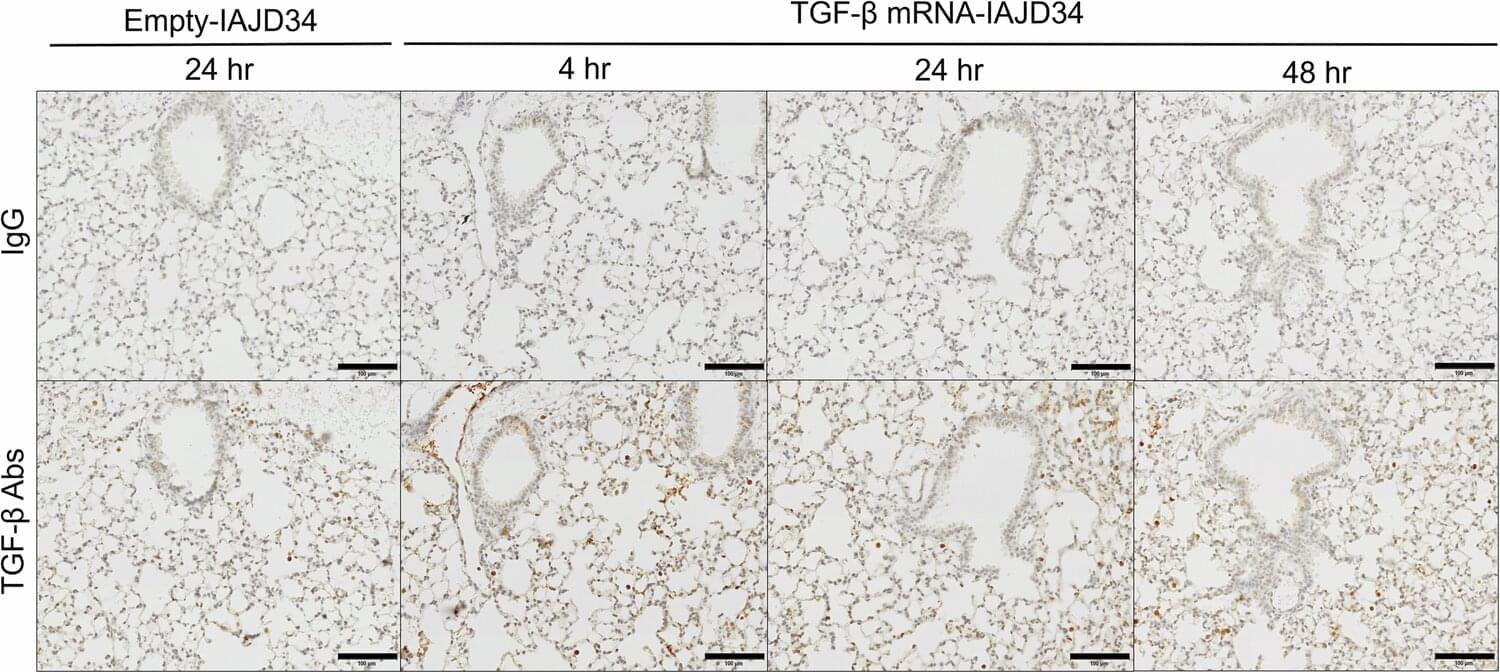
A combination of mRNA and a new lipid nanoparticle could help heal damaged lungs, according to new research from the Perelman School of Medicine at the University of Pennsylvania. Viruses, physical trauma, or other problems can have a serious impact on the lungs, and when the damage is in the lower regions, traditional treatments, like inhaled medication, might not work. The study, published in Nature Communications, provides a proof of concept for an injectable therapy.
“The lungs are hard-to-treat organs because both permanent and temporary damage often happen in the deeper regions where medication does not easily reach,” said study author Elena Atochina-Vasserman, MD, Ph.D., research assistant professor of Infectious Diseases at Penn and scientist at the Penn Institute for RNA Innovation. “Even drugs delivered intravenously are spread without specificity. That makes a targeted approach like ours especially valuable.”
Lung damage can result from a variety of causes ranging from physical accidents that cause inflammation of the lungs to respiratory viruses like COVID, flu, and RSV. Viruses alone can usher in an inflammatory response setting off a buildup of fluid in the airways, excess mucus, cell death, and damage to the lining of the lungs. Whether acute or chronic, weakened lungs can be life threatening. Respiratory diseases were the third leading cause of death worldwide even before the pandemic, according to previous research.
Scientists have created a hydrogel that strengthens bones in weeks. Bone density increased by 5X in a lab.
A groundbreaking injectable hydrogel may soon offer a faster, more effective treatment for osteoporosis, a condition that weakens bones and increases fracture risk.
Developed by researchers at EPFL in Switzerland and startup Flowbone, this new hydrogel, made from hyaluronic acid and hydroxyapatite nanoparticles, mimics bone’s natural minerals and strengthens fragile areas. In lab tests on rats, the treatment increased bone density by up to three times within weeks. When combined with the osteoporosis drug Zoledronate, bone density at the injection site increased nearly fivefold, potentially reducing the risk of fractures far more quickly than current medications.
While the hydrogel is not a permanent fix, researchers believe it could revolutionize osteoporosis management by complementing existing drug therapies and speeding up recovery. Given that osteoporosis affects millions worldwide—especially postmenopausal women—this breakthrough could significantly lower the risk of life-threatening fractures. The team now aims to secure regulatory approval and begin clinical trials, bringing this promising technology one step closer to real-world use. If successful, it could redefine how osteoporosis is treated, offering patients faster relief and stronger bones.
Managing osteoporotic patients at immediate fracture risk is challenging, in part due to the slow and localized effects of anti-osteoporotic drugs. Combining systemic anti-osteoporotic therapies with local bone augmentation techniques offers a promising strategy, but little is known about potential interactions. We hypothesized that integrating systemic treatments with local bone-strengthening biomaterials would have an additive effect on bone density and structure. This study investigated interactions and synergies between systemic therapies and injectable biomaterials, HA2 and HA2-ZOL, designed for local bone strengthening. HA2-ZOL incorporates Zoledronate, a bisphosphonate, to enhance anti-resorptive effects. These materials were tested in an in vivo rat model of osteoporosis using microCT and histology.
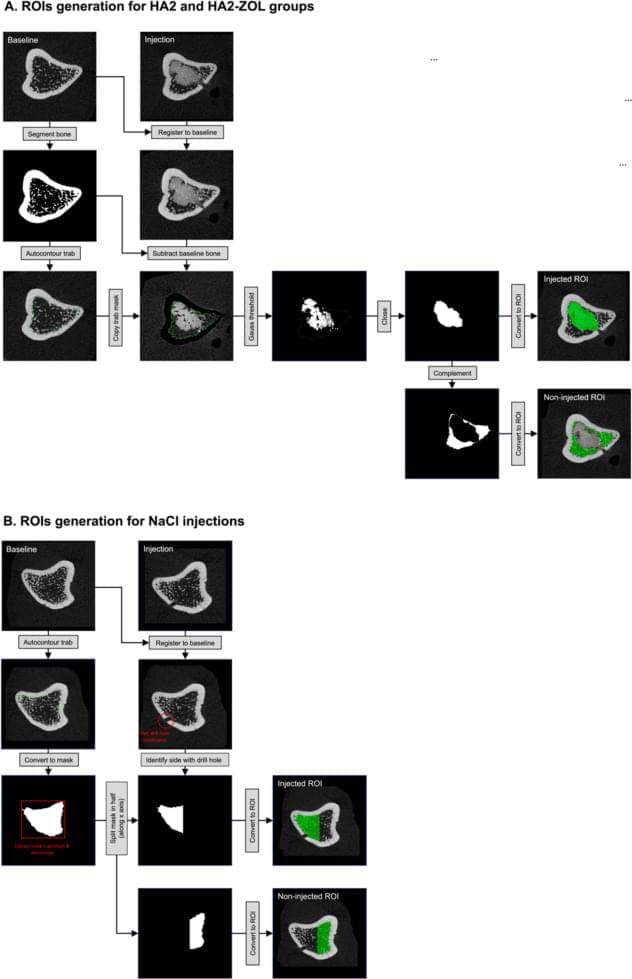
Thirty-six ovariectomized Wistar rats were treated systemically with vehicle (VEH), alendronate (ALN), or parathyroid hormone (PTH). One week later, their tibiae were randomly assigned to local treatment groups: HA2, HA2-ZOL, or NaCl control. Bilateral injections targeted metaphyseal trabecular bone, with microCT scans tracking changes over 8 weeks. Regions of interest (ROIs) were identified and analyzed for bone volume fraction (BV/TV), tissue mineral density (TMD), and trabecular morphology. Histological analyses were performed at week 8 to assess bone structure and mineral inclusions.
Silicon Valley elites are quietly appointing themselves ancestors of the future.
As American fertility rates continue to hit record lows — well below the “replacement rate” from one generation to the next — the pronatalism movement has found a foothold in the tech world.
Elon Musk — who apparently now has 13 children — has openly endorsed the movement, which believes in pumping out babies to fight societal collapse. OpenAI CEO Sam Altman has said, “Of course I’m going to have a big family” and is investing in experimental fertility technology.