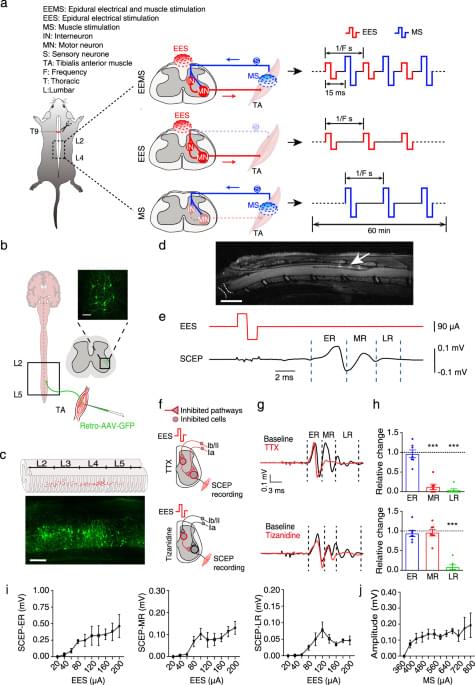
UCLA researchers have made a significant breakthrough in stroke rehabilitation by developing a drug, DDL-920, that replicates the effects of physical therapy in mice. This discovery could pave the way for new treatments that enhance recovery for stroke patients.
Key Findings:
- Understanding Stroke-Induced Brain Disconnection: The study revealed that strokes can disrupt brain connections far from the initial damage site, particularly affecting parvalbumin neurons. These neurons are crucial for generating gamma oscillations—brain rhythms essential for coordinated movements.
- Role of Physical Rehabilitation: Physical therapy was found to restore gamma oscillations and repair connections in parvalbumin neurons, leading to improved motor functions in both mice and human subjects.
New research shows that the adult brain can generate new neurons that integrate into key motor circuits. The findings demonstrate that stimulating natural brain processes may help repair damaged neural networks in Huntington’s and other diseases.
“Our research shows that we can encourage the brain’s own cells to grow new neurons that join in naturally with the circuits controlling movement,” said a senior author of the study, which appears in the journal Cell Reports. “This discovery offers a potential new way to restore brain function and slow the progression of these diseases.”
It was long believed that the adult brain could not generate new neurons. However, it is now understood that niches in the brain contain reservoirs of progenitor cells capable of producing new neurons. While these cells actively produce neurons during early development, they switch to producing support cells called glia shortly after birth. One of the areas of the brain where these cells congregate is the ventricular zone, which is adjacent to the striatum, a region of the brain devastated by Huntington’s disease.
Human cyborgs are individuals who integrate advanced technology into their bodies, enhancing their physical or cognitive abilities. This fusion of man and machine blurs the line between science fiction and reality, raising questions about the future of humanity, ethics, and the limits of human potential. From bionic limbs to brain-computer interfaces, cyborg technology is rapidly evolving, pushing us closer to a world where humans and machines become one.
Reducing high blood pressure substantially lowers the risk of dementia and cognitive impairment without dementia, according to the results of a phase 3 clinical trial involving almost 34,000 patients, published in Nature Medicine. These findings highlight the potential importance of widespread adoption of more intensive blood pressure control among patients with hypertension to reduce the global disease burden of dementia.
It is estimated that the global number of people with dementia will rise from 57.4 million in 2019 to 152.8 million by 2050, with the greatest impact being in low-to middle-income countries. Previous research suggests that lifestyle interventions, such as eating a healthy diet and exercising regularly, could be the most effective way to reduce the growing global incidence of dementia.
Research has also found that people with untreated hypertension have a 42% greater risk of developing dementia in their lifetime than healthy study participants. However, only a few randomized controlled trials have tested the effect of medications that reduce blood pressure on the risk of dementia, and none have looked at it as a primary trial endpoint.
Researchers at MIT have developed a noninvasive medical monitoring device powerful enough to detect single cells within blood vessels, yet small enough to wear like a wristwatch. One important aspect of this wearable device is that it can enable continuous monitoring of circulating cells in the human body. The technology was reported in npj Biosensing.
The device—named CircTrek—was developed by researchers in the Nano-Cybernetic Biotrek research group, led by Deblina Sarkar, assistant professor at MIT and AT&T Career Development Chair at the MIT Media Lab. This technology could greatly facilitate early diagnosis of disease, detection of disease relapse, assessment of infection risk, and determination of whether a disease treatment is working, among other medical processes.
Whereas traditional blood tests are like a snapshot of a patient’s condition, CircTrek was designed to present real-time assessment, referred to in the npj Biosensing paper as having been “an unmet goal to date.” A different technology that offers monitoring of cells in the bloodstream with some continuity, in vivo flow cytometry, “requires a room-sized microscope, and patients need to be there for a long time,” says Kyuho Jang, a Ph.D. student in Sarkar’s lab.
Artificial intelligence (AI) shows tremendous promise for analyzing vast medical imaging datasets and identifying patterns that may be missed by human observers. AI-assisted interpretation of brain scans may help improve care for children with brain tumors called gliomas, which are typically treatable but vary in risk of recurrence.
Investigators from Mass General Brigham and collaborators at Boston Children’s Hospital and Dana-Farber/Boston Children’s Cancer and Blood Disorders Center trained deep learning algorithms to analyze sequential, post-treatment brain scans and flag patients at risk of cancer recurrence.