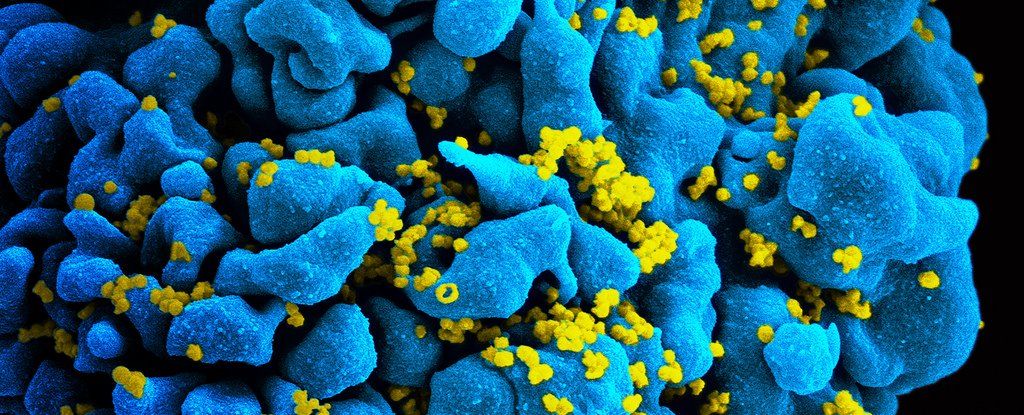
Carl June and his colleagues at the University of Pennsylvania have been making waves since they published some successes fighting leukemia with a revolutionary new method. They removed patients’ T cells and genetically modified them to target and kill the cancer. When the T cells were reintroduced into the patients’ bloodstreams, their cancer was often sent into complete remission.
Could similar modifications to the immune system’s fighter pilots provide revolutionary cures for other cancers and even other diseases?
The U. Penn researchers are applying a similar technique to that other hardest-to-treat disease, HIV/AIDS. They recently completed a Phase 1 clinical trial in which they removed HIV-positive patients’ T cells and genetically modified a portion of them to include a rare HIV-resistant genetic mutation of the CCR5 gene (called delta 32).
Crimea, it’s the most serious crisis in relations between the West and Russia since the Cold War. And until it’s over, risk aversion should remain the play of the day, analysts say. http://www.cnbc.com/id/101498478
Nanobionic superplants. Nanotechnology + synthetic biology creates plants capable of supercharged energy production or as sensors for explosives. http://www.kurzweilai.net/nanobionic-superplants
The complexity in biology is astounding. That is why biologists are thankful that model organisms, like the roundworm Caenorhabditis elegans, can be used to breakdown biological processes into simpler units.
C. elegans is a particular favourite. It grows in the exact same way from a single fertilised egg cell to 959 cells as an adult. Its body is transparent which has allowed scientists to map its growth and study internal changes to great detail.
In a paper published in Nature recently, En-Zhi Shen at the National Institute of Biological Sciences in Beijing and colleagues have used C. elegans to make an intriguing discovery. Based on a process that occurs in each cell’s power house, mitochondria, they claim to be able to predict the lifespan of that organism.
In nature, electrons are found in pairs in orbit around the atom’s nucleus. A free radical is created when an atom has an unpaired electron whizzing around the nucleus. Inside mitochondria, there is formation of such free radicals called reactive oxygen species.
The mitochondria produces many types of reactive oxygen species (ROS) as by-products of the normal metabolic process, including superoxide, hydrogen peroxide, and nitric oxide. These free radicals propelled by their unpaired electrons seek to find other molecules in the cells from whom they can steal an electron and thereby damage them. Thus, free radicals can damage DNA and stop proteins and lipids from performing their functions in the cell. This process of stealing electrons from functional molecules by reactive oxygen species and its resulting damage is known as oxidative stress.
Shen thought that if they were able to measure the amount of oxidative stress in the worms they may be able to predict how long they would live. Shen had previously discovered that the mitochondria in cells produce sudden short bursts of free radicals which could be counted.
When Shen studied C. elegans with added proteins that glow in the dark because of oxidative stress, she could detect levels of oxidative stress by measuring the flashes of light, termed mitoflash, emitted by proteins which detect free-radicals produced by the mitochondria. The more mitoflashes that happen within a certain window of time, the higher the amount of free radicals produced by the mitochondria.
Using the mitoflash method, an individual worm can be observed during the entirety of its 21-day lifespan. These worms are at the peak of their reproductive ability during the second and third day of their lives. Soon after this, the worms start their steady decline towards old age and by about the fifteenth day most of them are considered old.
Shen discovered that there were two periods in the lifespan of the worm when oxidative stress increased. The first was around the third day, when the worms are laying their eggs and the other was around the fifteenth day when the worms were old.
They then compared these finding using other worms who were engineered to have longer or shorter lifespans. Consistently, they found that worms with low amounts of mitoflashes during the third day of their lives lived longer compared to worms with higher mitoflashes. Interestingly, the number of mitoflashes on ninth day was not predictive of lifespan. Shen, therefore, thinks that oxidative stress levels of a worm during early life can determine how long they can live.
Telling age in a flash
Shen’s work improves on previous worm studies by hinting that free radicals produced by mitochondria especially in early life may be a central mechanism driving the decline during ageing.
Also, the results of this study agree with the free radical theory of ageing, which assumes that the diseases of ageing result due to the increasing inability of cells to repair damage caused by oxidative stress. This theory predicts that organisms that have long lives must lower their oxidative stress by producing more antioxidants.
Unfortunately, this doesn’t happen in real life. Human beings live much longer lives in spite of producing much fewer antioxidants compared to rats, hamsters, mice and rabbits. And studies involving dietary supplementation of antioxidants show an inverse relationship between antioxidant levels and life span. The claim that oxidative stress in early life may be a predictor of lifespan may work in some worms but it will certainly be of no use in humans.
The authors do not work for, consult to, own shares in or receive funding from any company or organisation that would benefit from this article. They also have no relevant affiliations.
By combining a synthetic scaffolding material with gene delivery techniques to direct stem cells into becoming new cartilage, Duke University researchers are getting closer to being able to generate replacement cartilage where it’s needed in the body.
Performing tissue repair with stem cells typically requires applying copious amounts of growth factor proteins — a task that is very expensive and becomes challenging once the developing material is implanted within a body.
In a new study, however, Duke researchers found a way around this limitation by genetically altering the stem cells to make the necessary growth factors all on their own.
QUOTATION(S): “…Now, for the first time, we are observing the brain at work in a global manner with such clarity that we should be able to discover the overall programs behind its magnificent powers…”
AND
“…When Queen Victoria was in her prime, an Englishman, Charles Darwin, discovered a fundamental truth that shook mankind so severely that it remains today a matter of extreme distress and massive denial. Darwin realized that life on our planet is not the recent and fixed product of deity-mediated special creation, but has been constantly changing over a long span of time … The paleontologist who followed Darwin have taught us that time has no respect for species. Whole dynasties of life have been swept away and replaced with new ones. More than 65 million years ago, the world was filled with swift, deadly meat-eaters, including huge tyrannosaurs stalking elephant-sized horned dinosaurs and duck-billed herbivores. Flying pterosaurs were as big and heavy as sailplanes. Small, graceful, predaceous dinosaurs had binocular vision, big brains, and grasping hands. After 170 million years of successful evolution, they achieved the height of variation and power. Resplendent and numerous on the fertile Cretaceous plains, how could it be that within a few years they all would be gone forever? This chilling story suggests a ticking clock for humanity, as well; dare we think of our own extinction? There is ticking clock for humanity, and it may be mere seconds before midnight. TOMORROW IS UPON US, AND WHAT IS ABOUT TO HAPPEN IN THE NEW DAY IS FAR, FAR STRANGER THAN MOST PEOPLE DARE TO THINK … Even Darwin did not realize how right he was, or how far evolution will take us. We should not fault Darwin for his lack of vision. Darwin lived in a time when the modern scientific revolution was just beginning. It was also a time of steam engines, gas lamps, and phrenology. Science, in our late 20th century sense, was still a few years away. Yet even today, few nonscientists have more than an inkling of how life evolved or how technologies such as the automobile, the light switch, or the airplane actually work … WE LIVE IN A HIGH-TECHNOLOGY WORLD, WITH LITTLE APPRECIATION FOR HOW THINGS GOT THE WAY THEY ARE…”
AND
“…Man, incurable futurist, is the only traditionalist animal…”
AND
“…A person’s world equates to the size his (her) own vocabulary…”
CITATION(S): “…Wealth is concentrated and portable. MIT faculty and alumni produce as much wealth as all but Twenty-Two Countries In The World…”
AND
“… [The human being] experiences himself, his thoughts and feelings as something separated from the rest — a kind of optical delusion of our consciousness. This delusion is a kind of prison for us, restricting us to our personal desires and to affection for a few persons nearest to us. Our task must be to free ourselves from this prison by widening our circle of compassion to embrace all living creatures and the whole of nature in its beauty…”
AND
“…Yet the opportunities and challenges do not pause. The forces of change are in fact accelerating as technology, communications, and mobility link us in a blurring and buzzing globalizing world.… The image of this future became clearer when we and 40 executives and thought leaders closely examined five specific technology areas and explored their implications for society, business, and government. We examined biotechnology, cyber-technology, nanotechnology, ubiquitous sensing, and wild cards from science and technology. We asked the thought leaders to apply their projections in five crosscutting areas to identify the key technology convergences that would most affect or disrupt society in 2025: economy and wealth, energy and the environment, health and demographics, infrastructure, and governance .… We learned that the technologies were changing in ways that made traditional distinctions between disciplines and areas of science decreasingly relevant. Biotechnologists regularly describe nano-scale developments. Nanotechnologists apply insights from genome sequencing. Research is spread, enhanced, and stolen with cyber tools. Research will lead to carbon-free or carbon-neutral technologies that disrupt industries and policies. The blurring of boundaries between sciences are creating convergences. Breakthroughs across disciplines are stimulating accelerating insights and applications…”
AND
“…Knowledge is being created at such a rate that much of what we know will soon be obsolete .… The technological developments maturing between now and 2025 and the innovative ways they may be applied reflect an acceleration and shift that can seem both promising and challenging to decision makers. In the Industrial Age, developments in steam power, combustion engines, automobiles, aerospace, and telephony seemed slow to mature – their development and spread required large industrial infrastructures. In the Information Age, developments in bio, nano, cyber, and sensors are possible with a smaller and more differentiated infrastructure, and they are occurring simultaneously around the globe. Global information networks are increasing the pace of this technological innovation. This deeper, more widely spread development of knowledge is different from our recent past and portends further changes .… The convergences of bio, nano, cyber, sensors and wild card technologies are causing even greater acceleration of change. But at the same time, knowledge is being created at such a rate that much of what we know about these technologies and their application rapidly becomes obsolete as it is overtaken by newer discoveries. Our institutions will be challenged to respond to the combination of these technological changes and the many other drivers of change simultaneously. We expect many systems and institutions to be desynchronized by these changes and efforts to resynchronize them will add to the sense of disruption that many people feel .… Many thought leaders we worked with in this effort are highly optimistic. Nearly all who contributed to these findings see technological developments as promising, and as stimuli for new opportunities. At the same time, some cautioned about vulnerabilities and called for leadership and action to address these vulnerabilities before we feel their impact. This report serves as one input to decision makers who can aid us in adapting with the changes and creating our future…”
AND
“… In the mid-1980s a study by Shell suggested that the average corporate survival rate for large company was about half as long as that of a human being. Since then the pressures on firms have increased enormously from all directions ─ with the inevitable result that business life expectancy is reduced still further. Many studies look at the changing composition of key indices and draw attention to the demise of what were often major firms and in their time key innovators. For example, Foster and Kaplan point out that of the 500 companies originally making up the Standard & Poor 500 list in 1957, only 74 remained on the list through to 1977. Of the top 12 companies which make up the Dow Jones Index in 1900 only one ─ General Electric ─ survives today. Even apparently robust giants like IBM, GM or Kodak can suddenly display worrying sings of mortality, whilst for small firms the picture is often considerably worse since they lack the protection of a large resource base … Some firms have had to change dramatically to stay in business. For example, a company founded in the early nineteenth century, which had Wellington boots and toilet paper amongst its product range, is now one of the largest and most successful in the world of telecommunications business. Nokia began life as a lumber company, making the equipment and supplies needed to cut down forests in Finland. It moved through into paper and from there into the ‘paperless office’ world of IT ─ and from there into mobile telephones … Another mobile phone player ─ Vodafone Airtouch ─ grew to its huge size by merging with a firm called Mannesmann which, since its birth in 1870s, has been more commonly associated with the invention and production of steel tubes! TUI owns Thomsom (the travel group) in the UK, and is the largest European travel and tourism services company. Its origins, however, lie in the mines of old Prussia where it was established as a public sector state lead mining and smelting company!…”
NEWEST, PRACTICAL PRINCIPALS (TENETS) TO SEIZE SUSTAINABLE PROFESSIONAL, MANAGERIAL AND BUSINESS SUCCESS TENTES: (21) Step outside the boundaries of the framework’s system when seeking a problem’s solution. (22) Within zillion tiny bets, raise the ante and capture the documented learning through frenzy execution. (23) “…Moonshine…” and “…Skunks-work…” and “…Re-Imagineer…” it all, holding in your mind the motion-picture image that, regardless of the relevance of “…inputs…” and “…outputs,…”, entails that the highest relevance is within the sophistication within the THROUGHPUT.
BOOK(S): What Matters Now: How to Win in a World of Relentless Change, Ferocious Competition, and Unstoppable Innovation… by Gary Hamel. ISBN-13: 978–1118120828.
N.B.: Quotations, Citations and Success Tenets are by the Futuretronium Book.
Regards,
Mr. Andres Agostini Risk-Management Futurist and Success Consultant http://lnkd.in/bYP2nDC
There are certain words that you would never want to hear coming from a healthcare provider. “Salvage chemotherapy” and “Hail Mary transplant” would rank high on that list for most of us.
And yet it was patients who weren’t even eligible for these treatments or for whom they’d already failed who participated in a recent clinical trial for a cell therapy treatment for adult B-cell acute lymphoblastic leukemia, or B-ALL, led by Michel Sadelain at Memorial Sloan Kettering Cancer Center.
Nearly 90 percent achieved complete remission of the disease, the researchers reported today in Science Translational Medicine.
THE OMNISCIENT TRUTH ABOUT OUTER-SPACE INTELLIGENCE AND WHAT THE OFFICIAL ESTABLISHMENT HAS TO DECLARE ABOUT IT! BY MR. ANDRES AGOSTINI.
I have the glory to have read every book by Dr. Raymond Kurzweil with the sole exception of “Transcend.”
Dr. Kurzweil is an engineer graduate from grandiose M.I.T. (the technological avant-garde within the Ivy League universities).
Beyond his many inventions, patents, and scientific breakthroughs and discoveries, please remember that Ray holds 19 doctoral degrees among many other amenities.
I exactly relish the way he exercises his mind. And instead of fighting sourly against his contrarians, he kindly and respectfully invites them to lavishly publish the opposing views on books and blogs.
Ray is a pervasive sage by any known or unknown measure. He is now the Chief Engineer Officer at Google and the Chairman of the Singularity University (founded by him with the institutional backing of NASA and Google).
We all like the Founding Fathers, especially Jefferson and Franklin. But tons of Americans and others seem to frequently and prevalently ignore this Hi-Tech Founding Father.
Within his duties at Google, he is embarked into the greatest scientific advancement in order to transform any illness or biological cause of death (natural death) into a superseded cure (outright state of well-being), radically.
HE IS INTO STRINGENT R&D&I TO MAKE HUMAN DEATH A THING OF THE PAST.
I also argue that he will be auspiciously fighting against challenges and problems in order to systemically and systematically reverse-engineer biology and the human brain with the utter purpose of seizing the correct software templates for Strongest Quantum Supercomputing.
In “The Singularity Is Near: When Humans Transcend Biology” (ISBN-13: 978–0143037880) book, Ray argues that most extraterrestrial beings might, just might, exhibit a grayish look because they are the trans-exobiologicals stemming from [outer-space and infinitely beyond] advanced exobiological civilizations.
Trans-exobiologicals are exobiologicals who have transcended their own exobiology.
Having said that and since the advent of his landmark book (I wish all fact-driven books were written like this canonical marvel), he has given many interviews and speeches about The Technological Singularity.
As a process of that, one day Ray ended up giving a seminal keynote to the upper management and scientists at SETI Institute. SETI, an American Organization, stands for Search For Extraterrestrial Intelligence.
Conversely, the about one-hour talk was about the Technological Singularity and the Law of Accelerating Returns as it posited by Ray himself.
Towards the end of the keynote, one or two SETI scientists told Ray that, as per their own research, they were considering as a probable and plausible scenario to be that extraterrestrials’ domicile was within the immeasurable limits of Dark Matter and Dark Energy.
AS A CONSULTANT, MANAGER, STRATEGIST AND RESEARCHER, ANDRES WORKS AND HAS WORKED WITH INSTITUTIONS ─ AND THE RESPECTIVE EXECUTIVES OF SAID ORGANIZATIONS ─ SUCH AS:
► Toyota,
► Mitsubishi,
► World Bank,
► Shell,
► Statoil,
► Total,
► Exxon,
► Mobil,
► PDVSA, Citgo,
► GE,
► GMAC,
► TNT Express,
► AT&T
► GTE,
► Amoco,
► BP,
► Abbot Laboratories,
► World Health Organization,
► Ernst Young Consulting,
► SAIC (Science Applications International Corporation),
Bioprinting, or the process of creating human tissues through 3D printers, is a highly contested area of technological innovation. Theoretically it could save the economy billions on a global scale, whilst boosting weak or war-torn countries’ access to more affordable health care and provision, whether producing prosthetic limbs or highly customised fully-working human organs.
From a technological perspective, the rise and development of 3D printing and its capabilities will play an undeniable part in our future lives. But how does the process work?
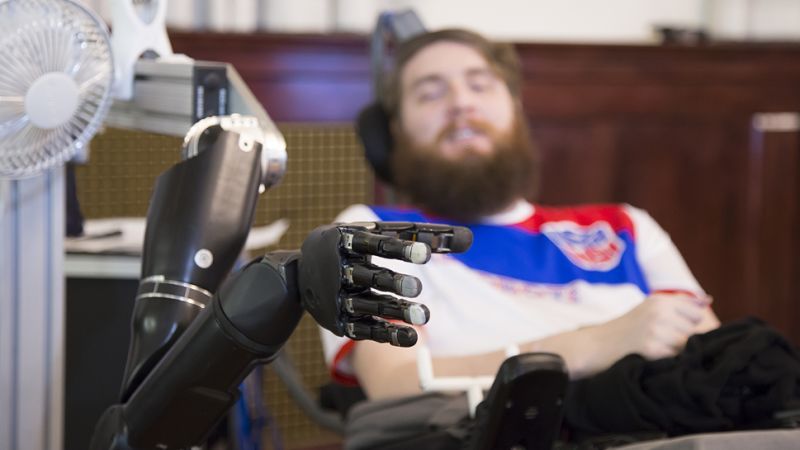
Not content with only building gigantic horror-bots that will one day rule your city with a literal iron fist, DARPA has teamed up with the Pentagon to get a little smaller - implantable-brain-robot smaller. Hopefully, this new project will help treat memory loss in soldiers injured in combat (and not turn them into weird DARPA-slavebots).
Though Medtronic Inc. (MDT) has already created robot brain implants to treat the symptoms of Parkinson’s, not much work has gone into using these robots to restore memories lost in traumatic injuries. DARPA is using funding from President Obama’s BRAIN Initiative to develop implantable probes that could apply this same Medtronic science to memory loss.
QUOTATION(S): “…We won’t just experience 100 years of progress in the twenty-first century ─ it will be more like 20,000 years of progress…”
CITATION(S): “…If it seems like your world has been topsy-turvy over the past few years … Consider what’s coming. Your genetic code will be imprinted on and ID card … For better and worse. Medicines will be tailored to your genes and will help prevent specific diseases for which you may be at risk. (But … your insurance company and your prospective employer may also find out that you are genetically disposed to, say, heart disease, or breast cancer, or Alzheimer’s.)…” AND “…The lesson of the last three decades is that nobody can drive to the future on cruise control…”
BOOK(S): Present Shock: When Everything Happens Now by Douglas Rushkoff. ISBN-13: 978–1591844761
Regards,
Mr. Andres Agostini Risk-Management Futurist and Success Consultant http://lnkd.in/bYP2nDC