Toggle light / dark theme

The bionic skin that can feel a tumor

Nice!


Our skin is our largest organ. A gateway between our brain and the rest of the world.

Imagine then a scene where skin could communicate what’s going on inside a human body. It could inform surgeons, provide alerts when our body is about to fall ill, or even diagnose diseases inside another human being, simply through the sense of touch.

University of Tokyo scientist Takao Someya is making that scene a reality.

An Interview with the Advocates of the Major Mouse Testing Program Team

New MMTP Interview on Fightaging! discussing longevity, advocacy and the urgent need to support research!


By way of following on from today’s AMA over at /r/futurology, I recently had the chance to ask a few questions of the Major Mouse Testing Program (MMTP) volunteers, a mix of scientists and advocates who aim to do their part to speed up progress towards effective treatments for the causes of aging. The group formed six months ago or so, and are presently seeking funds for their first mouse studies through crowdfunding with the Lifespan.io organization. The initial focus is on senolytic treatments capable of removing senescent cells from old tissues. I encourage you all to take a look at the details of their research proposal.

Growth in the number of dysfunctional, senescent cells is a contributing cause of degenerative aging, involved in the progression and pathology of all of the common age-related diseases. A growing body of evidence supports the outright removal approach as a way to minimize or eliminate this portion of the aging process. Unfortunately there is — as ever in the aging research field — a paucity of funding and always the need for more and better animal data in order to pull in other players with deep pockets. At this stage in the progression from laboratory to clinic, prior to the involvement of any large institutions or companies, all such efforts are important work. I’m pleased to have been able to contribute to this Major Mouse Testing Program fundraiser, and hope to see great things from this group in the future.

How did the Major Mouse Testing Program come about? How did you meet and what made you decide to undertake this particular project?

Elena: I have been collaborating with the International Longevity Alliance (ILA) for about 3 years. It is an international non-for-profit organization with the head office in Paris, our goal is to support innovative biomedical technologies to address aging. At the beginning, the core team had a lot of discussions with other pro-longevity organizations and with the scientific community to identify the bottlenecks that impede the development of the technologies to slow down, postpone and reverse age-related damage to health. And we learned that one of the barriers was the deficiency in robust animal trials for a long list of promising interventions. Then one of the Founding Board Members, Edouard Debonneuil, came in with the idea that the ILA could start its own fundraising project to support this kind of research. This is how MMTP was started.

Should we synthesise a human genome?

As specialists gather in private to discuss a grand plan for constructing a human genome, Drew Endy and Laurie Zoloth argue that such an enormous moral gesture should not be discussed behind closed doors.

Credit: Mario Tama/Getty Images.

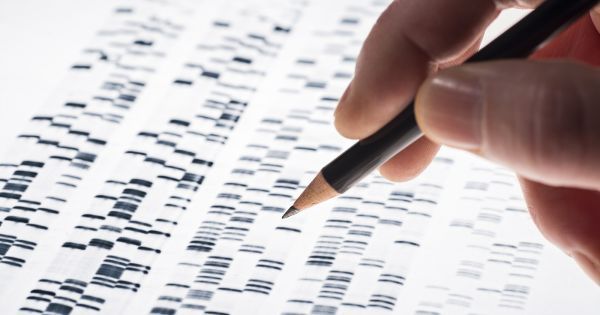
At Harvard today, an invitation-only group of about 150 scientists, lawyers, and entrepreneurs, met to discuss if and how to construct from scratch an entire human genome – the heritable genetic material that in nature is transferred from parents to children.

MMTP AMA Senolytics: Seek and Destroy! • /r/Futurology

On Reddit Futurology today!


The Major Mouse Testing Program is an ambitious project of the International Longevity Alliance, featuring an international team of scientists and advocates testing therapies against aging decline. This experiment is is lead by world class stem cell researcher Dr Alexandra Stolzing and was inspired by our scientific advisor and colleague Dr Aubrey De Grey.

The Major Mouse Testing Program is seeking to speed up scientific progress in the field of regenerative medicine and bio-gerontology. After ILA experts conducted an analysis of delays preventing the development of life extension technologies, it was shown that a serious problem was the lack of robust animal data for the potential of different compounds to promote health and extend maximum lifespan. Without this data promising interventions cannot enter clinical trials and become available to the general public.

The MMTP is currently running a crowdfunding campaign at https://www.lifespan.io/campaigns/the-major-mouse-testing-program/

Scientists Hold Secret Meeting to Consider Creating a Synthetic Human Genome

George Church, a professor of genetics at Harvard Medical School and an organizer of the proposed project, said there had been a misunderstanding. The project was not aimed at creating people, just cells, and would not be restricted to human genomes, he said. Rather it would aim to improve the ability to synthesize DNA in general, which could be applied to various animals, plants and microbes.


The project poses ethical issues about whether humans could be created without parents.

New Technique Enhances Nanomedicine

One of the hurdles of realizing the promise of nanoparticles is that scientists can’t view where they go or how the nanoparticles interact with structures once they are inside of the body. A new technique that involves injecting an acrylamide hydrogel into organs and tissues removed from mice allows researchers to image nanoparticles more than 25 times deeper than is possible with current methods, to a depth of more than 1 millimeter. Lipids are what cause tissues to look opaque. By using the hydrogel to bind all of the molecules together except for lipids, which washed away easily, the team, led by Warren C. W. Chan, were able to make the tissues look transparent but remain intact. The work, published in ACS Nano, may help researchers be able to tell if therapy-loaded nanoparticles are delivering the cargo to the desired destination. Check out the video below.

ExclusiveTechnologies.

Scientists from IISc are close to curing cancers

Nice!!!!


Develop microscopic vehicles that can carry anti-cancer drug molecules to affected cells

Indian scientists are closing in on a breakthrough in cancer treatment that will see a variety of cancers being cured using just a series of injections without side-effects on the body, that is characteristic of chemotherapy. The new technology has the potential to completely bypass chemotherapy.

A team of scientists from the Indian Institute of Science (IISc) in Bengaluru are on the verge of developing just such a non-invasive technique to deal with cancers.

Nanotechnology To Make Holographic Applications More Secure And Efficient

Making Holographic Apps more secured and efficient.


Since its birth, holograms have been extensively used to serve security systems and related purposes. The making of a hologram, dissecting it to pieces and again rejoining the blocks involves a steady orientation of lenses which encodes the information with depth perception that could be deciphered later according to requirement.

It’s hard to imagine a 21st century city running smooth without an immense use of holograms, small or big sized 2D cards with 3D engraved pictures that are present in credit cards, grocery objects, books, biomedical devices and in other objects requiring retrievable information to be stored.

In terms of concealing product information, these sticker based fancy stuffs were up to the mark, until technology escalated beyond imagination. Even a previously measured safe encryption suffered from threat and these tools became fragile. Researchers initialized various approaches to hit the safest and complex path, among which nanotechnology had an answer in store for them. A research team from the Harvard John A. Paulson School of Engineering and Applied Sciences had recently forced polarization to concise holograms, comprising of tiny light-polarization sensitive nanostructures to generate numerous ones depending upon the polarization configuration of light.

/* */