Toggle light / dark theme

The World’s Tiniest Light-Powered Engines Could Revolutionize Medicine

Nanomachines could revolutionize technology and modern medicine, if only we had viable power sources to make them move where we wanted them to go. Now scientists at the University of Cambridge have built the world’s tiniest engines, powered by light, as described in a new paper in the Proceedings of the National Academy of Sciences.

Dubbed “ANTs” (for actuating nano transducers), these itsy-bitsy devices could one day realize the vision of the 1966 classic film Fantastic Voyage, in which a miniaturized submarine crew travel through the body of an injured scientist to repair a blood clot in his brain—except there would be no need for shrunken human pilots. Like real ants, these nano engines can produce very large forces relative to their weight, according to lead researcher Jeremy Baumberg.

It works a bit like a spring mechanism. At the heart of the device are lots of charged gold nanoparticles, held together by a polymer gel that responds to changes in temperature. The gel is heated by zapping it with a laser. The polymer gel responds by expelling all its water in a fraction of a second and collapsing, much like coiling a spring. This stores elastic energy as the gold nanoparticles are smushed together into tight clusters.

Adult brain prunes branched connections of new neurons

When tweaking its architecture, the adult brain works like a sculptor—starting with more than it needs so it can carve away the excess to achieve the perfect design. That’s the conclusion of a new study that tracked developing cells in an adult mouse brain in real time.

New began with a period of overgrowth, sending out a plethora of neuronal branches, before the brain pruned back the connections. The observation, described May 2, 2016 in Nature Neuroscience, suggests that new cells in the have more in common with those in the embryonic brain than scientists previously thought and could have implications for understanding diseases including autism, intellectual disabilities and schizophrenia.

“We were surprised by the extent of the pruning we saw,” says senior author Rusty Gage, a professor in Salk’s Laboratory of Genetics and holder of the Vi and John Adler Chair for Research on Age-Related Neurodegenerative Disease.

Cognitive-behavioral therapy may help reduce memory problems in cancer survivors who have received chemotherapy

A new analysis indicates that a type of psychotherapy delivered by videoconference may help prevent some of the long-term memory issues caused by chemotherapy. Published early online in CANCER, a peer-reviewed journal of the American Cancer Society, the findings point to a noninvasive way to help cancer survivors manage some of the negative effects of their treatment.

It’s estimated that approximately half of cancer patients who receive chemotherapy develop long-lasting changes in memory function such as trouble remembering conversational content or steps in a task. While the memory problems tend to be mild, they diminish quality of life in areas of job performance and family and social life well beyond cancer treatment. The causes of this problem and reasons why it does not affect every survivor remain unknown, and there is currently limited research on treatments for it.

A team led by Robert Ferguson, PhD, who is currently at the University of Pittsburgh Cancer Institute but was at the Eastern Maine Medical Center and Lafayette Family Cancer Center in Bangor, Maine, while conducting this research, developed a cognitive-behavioral therapy called “Memory and Attention Adaptation Training” (MAAT), which helps cancer survivors to increase awareness of situations where memory problems can arise and to develop skills to either prevent memory failure or to compensate for memory dysfunction.

FDA new sheriff in town in Silicon Valley

Silicon Valley’s newest valley member; wonder if Google or eBay will send a “Welcome Basket” to the FDA?


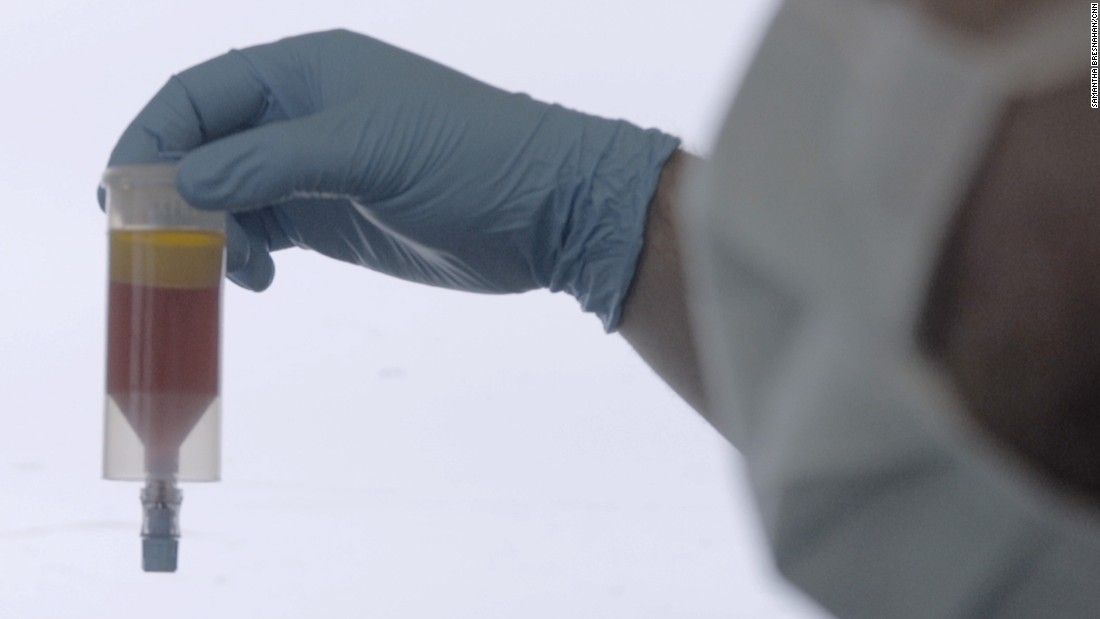
Helmy Eltoukhy’s company is on a roll. The start-up is a leading contender in the crowded field of firms working on “liquid biopsy” tests that aim to be able to tell in a single blood draw whether a person has cancer.

Venture investors are backing Guardant Health to the tune of nearly $200 million. Leading medical centers are testing its technology. And earlier this month, it presented promising data on how well its screening tool, which works by scanning for tiny DNA fragments shed by dying tumor cells, worked on an initial group of 10,000 patients with late-stage cancers.

Just one thing is holding the company back: Guardant Health has yet to get approval from Food and Drug Administration.

10 responses to “Hacking Aging”

What would you say if I told you that aging happens not because of accumulation of stresses, but rather because of the intrinsic properties of the gene network of the organism? I’m guessing you’d be like: surprised .

So, here’s the deal. My biohacker friends led by Peter Fedichev and Sergey Filonov in collaboration with my old friend and the longevity record holder Robert Shmookler Reis published a very cool paper. They proposed a way to quantitatively describe the two types of aging – negligible senescence and normal aging. We all know that some animals just don’t care about time passing by. Their mortality doesn’t increase with age. Such negligibly senescent species include the notorious naked mole rat and a bunch of other critters like certain turtles and clams to name a few. So the paper explains what it is exactly that makes these animals age so slowly – it’s the stability of their gene networks.

What does network stability mean then? Well, it’s actually pretty straightforward – if the DNA repair mechanisms are very efficient and the connectivity of the network is low enough, then this network is stable. So, normally aging species, such as ourselves, have unstable networks. This is a major bummer by all means. But! There is a way to overcome this problem, according to the proposed math model.

The model very generally describes what happens with a gene network over time – the majority of the genes are actually working perfectly, but a small number doesn’t. There are repair mechanisms that take care of that. Also, there are mechanisms that take care of defected proteins like heat shock proteins, etc. Put together all of this in an equasion and solve it, and bam! here’s an equasion that gives you the Gompertz law for all species that have normal aging, and a time independent constant for the negligibly senescent ones.

What’s the difference between those two aging regimes? The model suggests it’s the right combination of DNA repair efficiency and the combined efficiency of proteolysis and heat shock response systems, mediating degradation and refolding of misfolded proteins. So, it’s not the accumulation of damages that is responsible for aging, but rather the properties of the gene network itself. The good news is that even we are playing with a terrible hand at first, there is a chance we can still win by changing the features of our network and making it stable. For example, by optimizing misfolded protein response or DNA repair.

Discovery of a fundamental limit to the evolution of the genetic code

A study performed at IRB Barcelona offers an explanation as to why the genetic code stopped growing 3,000 million years ago. This is attributed to the structure of transfer RNAs—the key molecules in the translation of genes into proteins. The genetic code is limited to 20 amino acids—the building blocks of proteins—the maximum number that prevents systematic mutations, which are fatal for life. The discovery could have applications in synthetic biology.

Nature is constantly evolving—its limits determined only by variations that threaten the viability of species. Research into the origin and expansion of the are fundamental to explain the evolution of life. In Science Advances, a team of biologists specialised in this field explain a limitation that put the brakes on the further development of the genetic code, which is the universal set of rules that all organisms on Earth use to translate genetic sequences of nucleic acids (DNA and RNA) into the that comprise the proteins that undertake cell functions.

Headed by ICREA researcher Lluís Ribas de Pouplana at the Institute for Research in Biomedicine (IRB Barcelona) and in collaboration with Fyodor A. Kondrashov, at the Centre for Genomic Regulation (CRG) and Modesto Orozco, from IRB Barcelona, the team of scientists has demonstrated that the genetic code evolved to include a maximum of 20 and that it was unable to grow further because of a functional limitation of transfer RNAs—the molecules that serve as interpreters between the language of genes and that of proteins. This halt in the increase in the complexity of life happened more than 3,000 million years ago, before the separate evolution of bacteria, eukaryotes and archaebacteria, as all organisms use the same code to produce proteins from genetic information.

How AI will make information akin to electricity

Ask an Information Architect, CDO, Data Architect (Enterprise and non-Enterprise) they will tell you they have always known that information/ data is a basic staple like Electricity all along; and glad that folks are finally realizing it. So, the same view that we apply to utilities as core to our infrastructure & survival; we should also apply the same value and view about information. And, in fact, information in some areas can be even more important than electricity when you consider information can launch missals, cure diseases, make you poor or wealthy, take down a government or even a country.


What is information? Is it energy, matter, or something completely different? Although we take this word for granted and without much thought in today’s world of fast Internet and digital media, this was not the case in 1948 when Claude Shannon laid the foundations of information theory. His landmark paper interpreted information in purely mathematical terms, a decision that dematerialized information forever more. Not surprisingly, there are many nowadays that claim — rather unthinkingly — that human consciousness can be expressed as “pure information”, i.e. as something immaterial graced with digital immortality. And yet there is something fundamentally materialistic about information that we often ignore, although it stares us — literally — in the eye: the hardware that makes information happen.

As users we constantly interact with information via a machine of some kind, such as our laptop, smartphone or wearable. As developers or programmers we code via a computer terminal. As computer or network engineers we often have to wade through the sheltering heat of a server farm, or deal with the material properties of optical fibre or copper in our designs. Hardware and software are the fundamental ingredients of our digital world, both necessary not only in engineering information systems but in interacting with them as well. But this status quo is about to be massively disrupted by Artificial Intelligence.

A decade from now the postmillennial youngsters of the late 2020s will find it hard to believe that once upon a time the world was full of computers, smartphones and tablets. And that people had to interact with these machines in order to access information, or build information systems. For them information would be more like electricity: it will always be there, and always available to power whatever you want to do. And this will be possible because artificial intelligence systems will be able to manage information complexity so effectively that it will be possible to deliver the right information at the right person at the right time, almost at an instant. So let’s see what that would mean, and how different it would be from what we have today.

Scientists turn skin cells into heart and brain cells using only drugs — no stem cells required

Neurons created from chemically induced neural stem cells. The cells were created from skin cells that were reprogrammed into neural stem cells using a cocktail of only nine chemicals. This is the first time cellular reprogramming has been accomplished without adding external genes to the cells. (credit: Mingliang Zhang, PhD, Gladstone Institutes)

Scientists at the Gladstone Institutes have used chemicals to transform skin cells into heart cells and brain cells, instead of adding external genes — making this accomplishment a breakthrough, according to the scientists.

The research lays the groundwork for one day being able to regenerate lost or damaged cells directly with pharmaceutical drugs — a more efficient and reliable method to reprogram cells and one that avoids medical concerns surrounding genetic engineering.

/* */