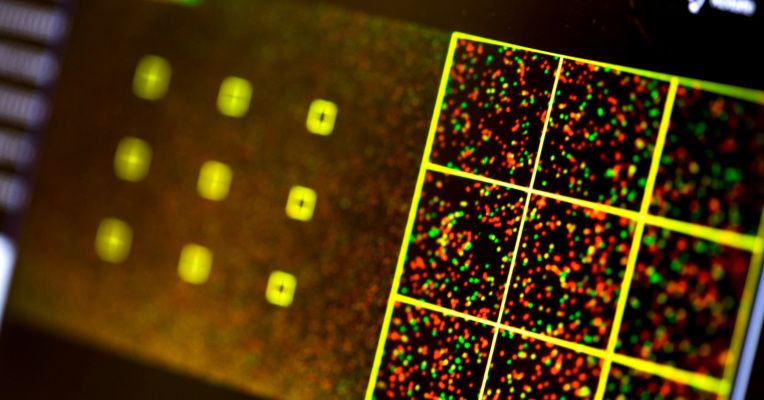
Researchers genetically modify piglets to be resistant to an incurable disease plaguing hog farms, Porcine Reproductive Respiratory Syndrome (PRSS). The researchers cut out a specific gene to cure the pigs.
Category: biotech/medical – Page 3,490
Regenerative Bandage Heals Wounds 4x Faster
Scientists from Northwestern University have been able to create a heat-sensitive bandage that coaxes naturally-occurring stem cells to heal wounds faster.
Technology that allows wounds to heal faster is in great need, especially for those patients that are susceptible to complications from seemingly simple injuries. For diabetics, small bruises and cuts can be life-threatening. What if there was a way to speed up healing these wounds?
The answer may lie in this new bandage. Researchers from Northwestern University have developed a heat-responsive bandage that helps wounds heal faster.
A new study looks for the cortical conscious network
New research published in the New Journal of Physics tries to decompose the structural layers of the cortical network to different hierarchies enabling to identify the network’s nucleus, from which our consciousness could emerge.
The brain is a very complex network, with approximately 100 billion neurons and 100 trillion synapses between the neurons. In order to cope with its enormous complexity and to understand how brain function eventually creates the conscious mind, science uses advanced mathematical tools. Ultimately, scientists want to understand how a global phenomenon such as consciousness can emerge from our neuronal network.
A team of physicists from Bar Ilan University in Israel led by Professor Shlomo Havlin and Professor Reuven Cohen used network theory in order to deal with this complexity and to determine how the structure of the human cortical network can support complex data integration and conscious activity. The gray area of the human cortex, the neuron cell bodies, were scanned with MRI imaging and used to form 1000 nodes in the cortical network. The white matter of the human cortex, the neuron bundles, were scanned with DTI imaging, forming 15,000 links or edges that connected the network’s nodes. In the end of this process, their network was an approximation of the structure of the human cortex.
Could an algorithm help to save people’s eyesight? Google thinks so
Google’s artificial intelligence research lab DeepMind is exploring whether its technology could be used to identify early signs of eye diseases that ophthalmologists might not spot.
DeepMind, which was acquired by Google in 2014, has struck an agreement with Moorfields Eye Hospital in London that gives it access to about a million anonymous retinal scans, which it will feed into its artificial intelligence software.
The algorithm will target two of the most common eye diseases: age-related macular degeneration and diabetic retinopathy, which affect more than 100 million people around the world.
Elephants With Prosthetic Legs
These elephants have a second chance to walk again, thanks to new prosthetic legs.
First DNA Sequencing in Space a Game Changer
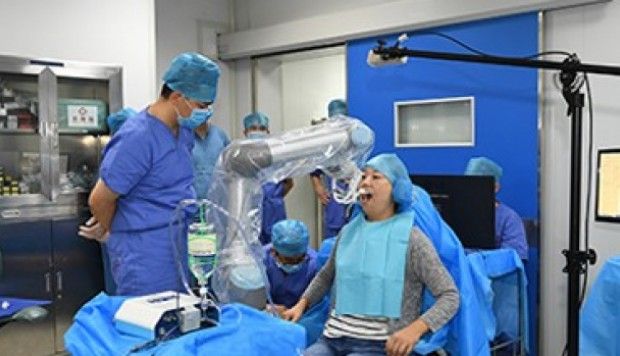
For the first time ever, DNA was successfully sequenced in microgravity as part of the Biomolecule Sequencer experiment performed by NASA astronaut Kate Rubins this weekend aboard the International Space Station. The ability to sequence the DNA of living organisms in space opens a whole new world of scientific and medical possibilities. Scientists consider it a game changer.
DNA, or deoxyribonucleic acid, contains the instructions each cell in an organism on Earth needs to live. These instructions are represented by the letters A, G, C and T, which stand for the four chemical bases of DNA, adenine, guanine, cytosine, and thymine. Both the number and arrangement of these bases differ among organisms, so their order, or sequence, can be used to identify a specific organism.
The Biomolecule Sequencer investigation moved us closer to this ability to sequence DNA in space by demonstrating, for the first time, that DNA sequencing is possible in an orbiting spacecraft.
Safer Gene Editing Without Cleaving DNA
It’s an add-on for CRISPR.
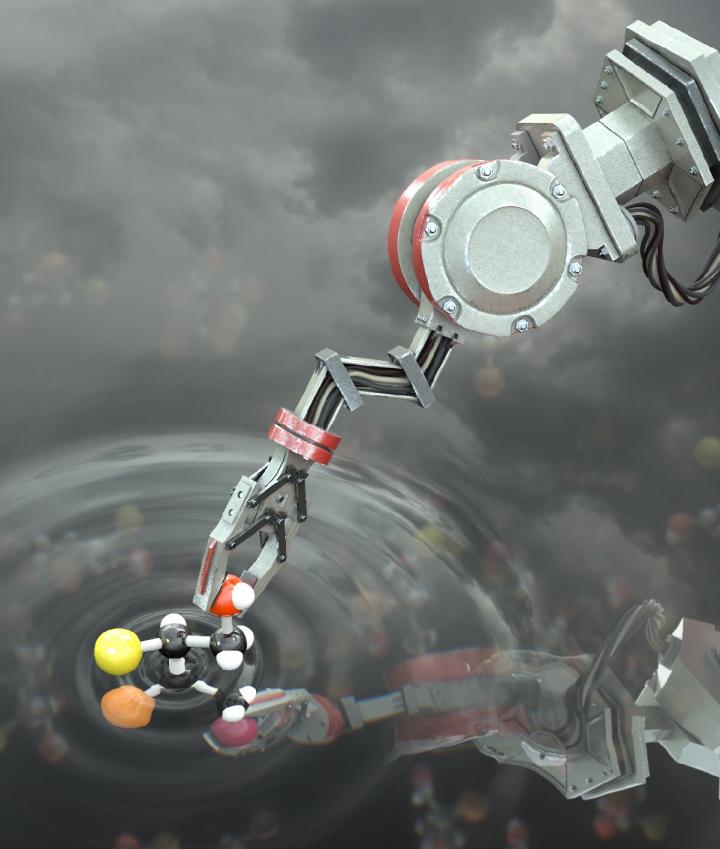
Researchers have created a new genome editing technique called Target-AID, which induces point mutations instead of cutting DNA
Gene editing technology has fantastic potential, but there are remaining issues and questions over safety and specificity. The major contender is currently CRISPR-Cas9, but this induces a double stranded break in DNA which is a slightly riskier approach — particularly if it cuts in other locations too that you don’t want it to. Research teams across the world are both optimising and customising the CRISPR system; creating more accurate versions or versions that regulate gene expression as opposed to editing it. One such team has now built an add-on to CRISPR, Target-AID.